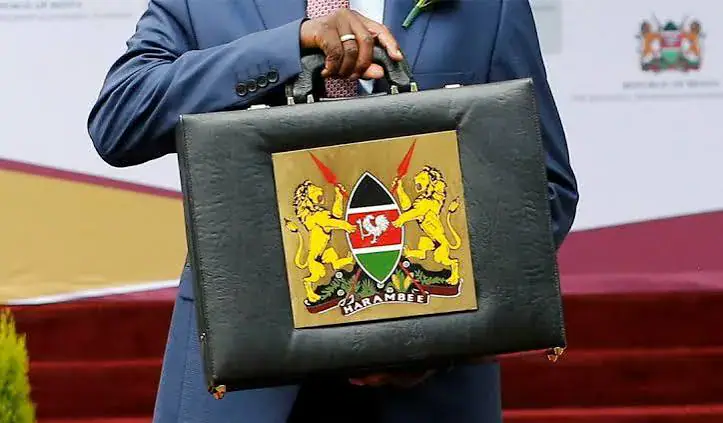
The National Treasury of Kenya has proposed a Kes 5.42 trillion spending plan for the financial year 2027/28, which is 23.6% of the country's GDP. This ambitious plan includes recurrent spending that is expected to cross the Kes 4.0 trillion mark for the first time. The proposed fiscal framework has significant implications for Kenyans, and experts are analyzing its potential impact.
The revenue projection for the 2027/28 financial year is Kes 4.004 trillion, and the actual outturn for the 2026/27 financial year is being closely monitored. The fiscal deficit is projected to be Kes 1.35 trillion, with a borrowing mix that has been adjusted from two months ago. External borrowing is now projected at Kes 423.8 billion, up from Kes 235.9 billion. This change in borrowing mix may have implications for the country's debt management.
Kenya's pensions industry has assets under management worth Kes 3.2 trillion as of June 2026, but coverage remains a significant challenge. Only 3 out of every 10 working-age Kenyans are in a formal pension scheme, according to official data. Experts are discussing ways to widen the distribution of pension and retirement preparation solutions, particularly in the informal sector, which has abysmal coverage.
Standard Chartered's Chief Executive in Kenya, Birju Sanghrajka, recently discussed the lender's strategy for the Kenyan market. The bank has been reclassified to the medium category by the Central Bank of Kenya, which may impact its operations. The parent firm has also exited or partially exited several African markets, including Angola, Cameroon, and Zimbabwe, which may have implications for the Kenyan market.
Small businesses in Kenya are seeking reliable connectivity to access the growing digital market and scale their operations. Safaricom PLC is offering solutions tailored to the needs of small businesses, taking into account their budget constraints. The company is also addressing cybersecurity threats, which have increased significantly in Kenya, with 2.3 billion cyber threats reported between April and June 2026.
The insurance sector in Kenya is undergoing a significant shift with the transition from IFRS4 to IFRS17, which brings about a standardized and market-consistent framework. The Group Chief Financial Officer of AAR Insurance, Hosea Kiprop, recently discussed the state of the industry and emerging trends. The sector is expected to benefit from this transition, which will improve accounting rules and provide a more accurate picture of the industry.
Quickmart, a retail chain, has launched a Kes 15 billion IPO, which is Kenya's first exit via the public markets by a PE fund. The offer is priced at Kes 7.50/share, floating 2.0 billion shares, which represents 50.0% stake. The retail chain's Chief Financial Officer discussed the issuance and underlying fundamentals, which may have implications for the Kenyan capital markets.
Key points
- The proposed fiscal framework for 2027/28 has significant implications for Kenyans.
- Kenya's pensions industry faces a significant challenge in terms of coverage.
- Small businesses in Kenya are seeking reliable connectivity to access the growing digital market.