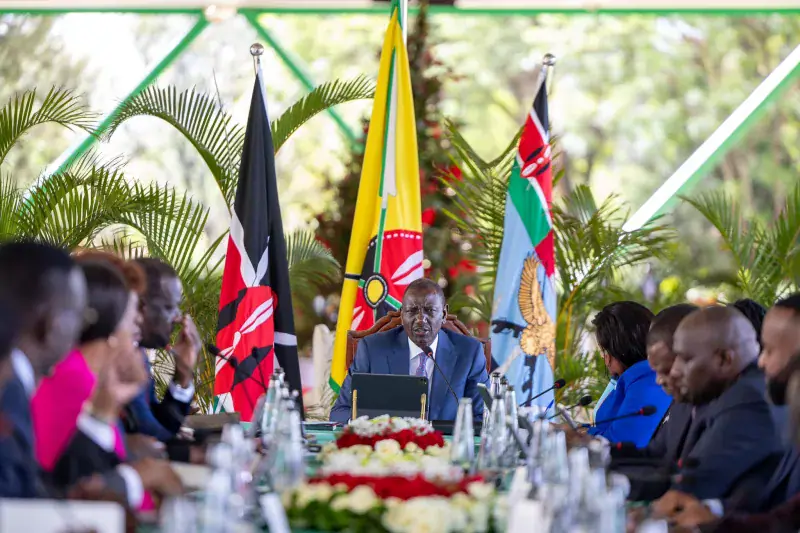
The High Court's 120-day deadline for President William Ruto to reconstitute his Cabinet in compliance with the two-thirds gender principle expired on October 28, with no evidence that the Executive has taken the required steps to remedy the constitutional violation. The order stemmed from a June 30 judgment in which Justices Eric Ogola, Stephen Githinji, and Jairus Ngaah declared the Cabinet unconstitutional under Article 27(8).
At the time of the ruling, the 25-member Cabinet comprised 18 men and seven women, meaning women held approximately 28% of positions against a constitutional ceiling of two-thirds for either gender. To comply, the underrepresented gender needed to occupy at least nine seats, a shortfall of two. The Cabinet composition had deteriorated since the judgment, with a subsequent reshuffle reducing the number of women Cabinet Secretaries from seven to six.
The petitioner, Katiba Institute, had welcomed the ruling while warning against delayed or technical compliance. The organization stated that the court had rejected the government's argument that the principle was subject to progressive realization. The petitioner had also signaled its intention to monitor the deadline, stating it would "pursue every available avenue of enforcement" if the President failed to act.
The respondents had advanced two principal defenses during the litigation, arguing that the gender principle was subject to progressive realization and that the Secretary to the Cabinet, a woman, should be counted as a Cabinet member to help meet the threshold. However, the court rejected both contentions, holding that the Secretary to the Cabinet is an administrative officer and not a member under Article 152(1) of the Constitution.
As the deadline approached, President Ruto declined to commit to reorganizing his Cabinet to comply with the ruling. Responding to a question during the Katiba @16 celebrations at the Kenyatta International Convention Centre in Nairobi on August 27, the President appeared to sidestep the matter, comparing the Cabinet issue to Parliament's own long-standing failure to meet the gender threshold.
The expiry of the deadline without compliance returns the dispute to the courts, where the petitioners must now decide whether to seek contempt proceedings or file a fresh enforcement action. Unlike the original judgment, the 120-day order carried no automatic sanction for non-compliance. Murang'a Senator Joe Nyutu said on the day after the deadline that the President retained the power to act immediately.
The composition of the Cabinet already sits at the constitutional maximum of 22 Cabinet Secretaries, meaning the President could not simply add two women without breaching the size limit. Compliance would require either replacing male secretaries with women or a broader reconfiguration.
Key points
- The High Court's 120-day deadline for President William Ruto to reconstitute his Cabinet expired on October 28.
- The Cabinet currently comprises 18 men and six women, falling short of the constitutional requirement.
- The petitioners must now decide whether to seek contempt proceedings or file a fresh enforcement action.