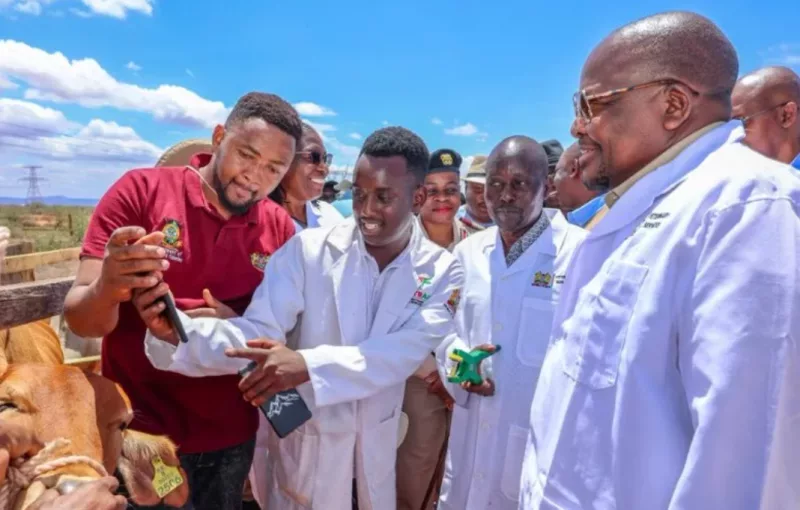
The Kenyan government is positioning the Bachuma National Livestock Quarantine Centre in Taita-Taveta county as a major gateway to international livestock markets. The facility is being commercialized to expand exports, create jobs, and improve returns for farmers. Agriculture and Livestock Development Cabinet Secretary Mutahi Kagwe said the centre will connect livestock producers with high-value markets while strengthening Kenya's ability to meet international animal-health and food-safety requirements.
The facility is being handed over to private investor Blue Mountain for commercialization as part of efforts to operationalize the national quarantine station and expand Kenya's livestock export capacity. Kagwe said the project is designed to deliver economic opportunities beyond the physical infrastructure, with farmers and communities expected to benefit from increased livestock trade. The project aims to create jobs, open markets, and put more money in the hands of livestock farmers and the local community.
The commercialization comes as the government seeks to strengthen the systems required to move Kenyan livestock into international markets, including quarantine, veterinary inspection, certification, and animal traceability. The Ministry of Agriculture and Livestock Development describes Bachuma as a national quarantine facility established to support compliance with international animal-health and trade standards, facilitate livestock health certification, and improve Kenya's livestock export competitiveness.
According to Principal Secretary for Livestock Development Jonathan Mueke, the scale of the market opportunity linked to the facility could be significant. An offtake arrangement cited during the event could generate demand for up to 100,000 cattle annually, while an order for goats and sheep from South Africa was cited at approximately KSh2 billion. The total opportunity unlocked through the facility was put at about KSh30 billion in potential value.
The government has been working towards the operationalization of Bachuma for several years. In November last year, the State Department for Livestock Development held a public participation forum on the proposed lease arrangement for the facility. The government said the private investor would complete pending works and manage the quarantine station, while the facility was intended to increase access for Kenyan animals and animal products to local and international markets.
The facility was developed as a Vision 2030 flagship project aimed at supporting Kenya's livestock export industry. Government plans have envisaged quarantine and holding facilities for cattle, sheep, goats, and camels, alongside veterinary and support infrastructure. The State Department has previously projected that, once operational, the facility could process about 500,000 sheep and goats, 50,000 cattle, and 10,000 camels annually.
Beyond the quarantine centre itself, the government is also seeking to build a more organized livestock supply chain capable of serving large export orders. Kagwe said the government is pursuing a County Livestock Investment Company model covering 23 Arid and Semi-Arid Land counties. The model is intended to create farmer-owned commercial vehicles through which livestock can be aggregated, marketed, and sold to larger buyers, with farmers able to benefit from profits through dividends or bonuses.
Key points
- The Bachuma National Livestock Quarantine Centre is expected to unlock Sh30 billion in potential value from livestock exports.
- The facility will provide quarantine, inspection, and certification services for livestock destined for export, strengthening Kenya's ability to meet international animal-health and food-safety requirements.
- The government is pursuing a County Livestock Investment Company model to create a more organized livestock supply chain capable of serving large export orders.