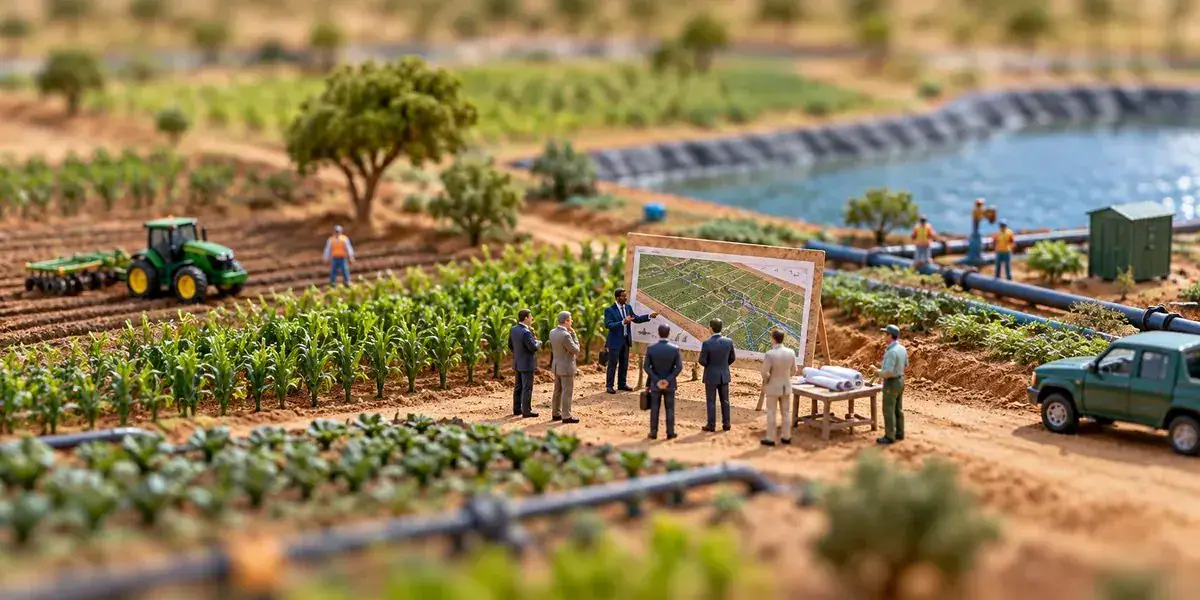
Kenya's agricultural land has become a sought-after investment opportunity for the country's high-net-worth individuals, according to a report by Knight Frank. The 2026 Wealth and Investment Trends report found that farmland attracted 29% of wealth-manager responses when measuring sectors clients were considering for investment. This growing interest is driven by the desire for tangible assets that can generate income and preserve capital. Agricultural land offers a unique combination of limited supply and potential for long-term appreciation.
Food production remains the primary motivation behind farmland investments by high-net-worth individuals in Kenya. Mark Dunford, Knight Frank's chief executive officer, noted that investors are seeking assets that can provide a stable source of income and preserve their capital. Agricultural land offers a tangible holding that can provide a steady stream of income through crop yields and livestock production. Additionally, farmland can provide collateral for borrowing and can be passed down intact across generations.
Some high-net-worth investors in Kenya are acquiring large tracts of agricultural land near satellite towns and growth corridors, where infrastructure and population growth are expected to support future values. The government's efforts to increase irrigation and food production are also driving interest in farmland investments. The government is targeting 1.5 million acres under irrigation, and private investors are already cultivating roughly 6,000 acres at the Galana-Kulalu project.
Environmental and sustainability benefits are also driving interest in farmland investments in Kenya. Knight Frank's 2026 findings show that environmental income is strengthening farmland's appeal, with tree planting and afforestation attracting 63% of responses. Potential carbon-credit income attracted 50% of responses, while environmental and sustainability benefits attracted a further 44%. This suggests that landowners may combine food production with forestry and carbon-market revenues to create a more sustainable and profitable investment model.
However, weather risk remains a central consideration for investors in Kenya's agricultural land. Climate variability can affect crop yields, operating costs, and valuations, making it essential for investors to conduct thorough due diligence on irrigation, soil quality, insurance, and farm operators. Despite these challenges, farmland investments offer a unique combination of defensive wealth preservation and productive investment, making it an attractive option for high-net-worth individuals.
The appeal of farmland investments in Kenya is also driven by the country's food-security priorities. The government is working to increase food production and reduce reliance on imports, creating a wider commercial context for farmland investments. Private investors are already capitalizing on this trend, with many acquiring large tracts of agricultural land to cultivate crops and raise livestock.
In conclusion, Kenya's agricultural land is emerging as a leading alternative asset theme for high-net-worth investors, driven by food production, wealth preservation, and environmental benefits. While weather risk and due diligence remain key considerations, the potential for long-term appreciation and sustainable returns make farmland investments an attractive option for those seeking to diversify their portfolios.
Key points
- Food production drives wealth-manager interest in farmland investments.
- Environmental and sustainability benefits are increasingly important for farmland investors.
- Weather risk remains a central consideration for investors in Kenya's agricultural land.