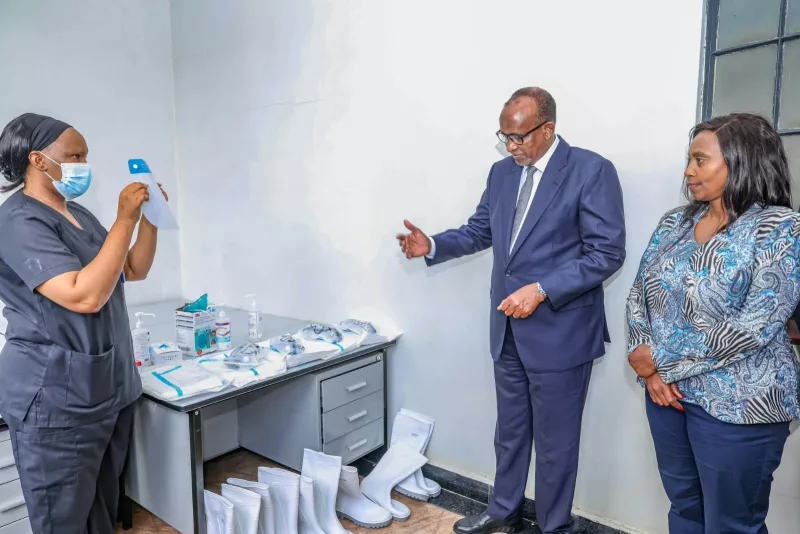
Kenya has stepped up preparations to combat the Ebola Virus Disease (EVD) by designating 241 beds across five health facilities. The facilities include Kenyatta National Hospital (KNH), Moi Teaching and Referral Hospital, National Police Hospital, Port Reitz Hospital, and The Nairobi Hospital. This move comes after the country confirmed its first imported Ebola case.
The Nairobi Hospital has the largest capacity, with 130 beds designated for Ebola patients, followed by Moi Teaching and Referral Hospital with 50 beds and National Police Hospital with 49 beds. KNH has been allocated eight beds, while Port Reitz Hospital has four beds. Health Cabinet Secretary Aden Duale stated that the available capacity will be increased through the establishment of additional facilities as the situation evolves.
In addition to the designated facilities, the Ministry of Health has also identified five temporary isolation centres for suspected Ebola cases. These centres include Malaba Health Centre, Busia Border, and Kocholia. Alupe Sub-County Hospital in Busia county is currently undergoing renovations to enable it to manage Ebola cases. These measures aim to enhance the country's response to the Ebola threat.
The first imported Ebola case in Kenya was confirmed a day prior to the announcement of the designated facilities. The patient, who was diagnosed at The Nairobi Hospital, later died and was given a safe and dignified burial organised by the Ministry of Health and the Kenya Red Cross Society. Duale commended the health workers at The Nairobi Hospital for their role in identifying and diagnosing the case.
The Ministry of Health has identified 57 contacts of the confirmed Ebola case, an increase from the initial 55. Ten contacts have been traced and placed under quarantine at the National Police Service Hospital in Nairobi, where they are undergoing daily symptom monitoring. Efforts to trace the remaining contacts are ongoing.
To prevent the spread of Ebola, Kenya has enhanced screening of travellers from the Ebola disease epicentre at Jomo Kenyatta International Airport, Gate 16, and other points of entry. The Ministry of Health has urged Kenyans to remain calm and vigilant, practise strict hand hygiene, and avoid contact with people displaying symptoms of illness.
The Ministry has advised the public to promptly report suspected symptoms or possible exposure to health authorities and seek care at recognised health facilities. Kenyans are also urged to rely on official communication channels for updates and information on the outbreak. A toll-free health line (719) has been established for assistance.
Key points
- Kenya has designated 241 beds across five health facilities to manage Ebola Virus Disease (EVD).
- The Ministry of Health has identified 57 contacts of the confirmed Ebola case.
- Kenya has enhanced screening of travellers from the Ebola disease epicentre.