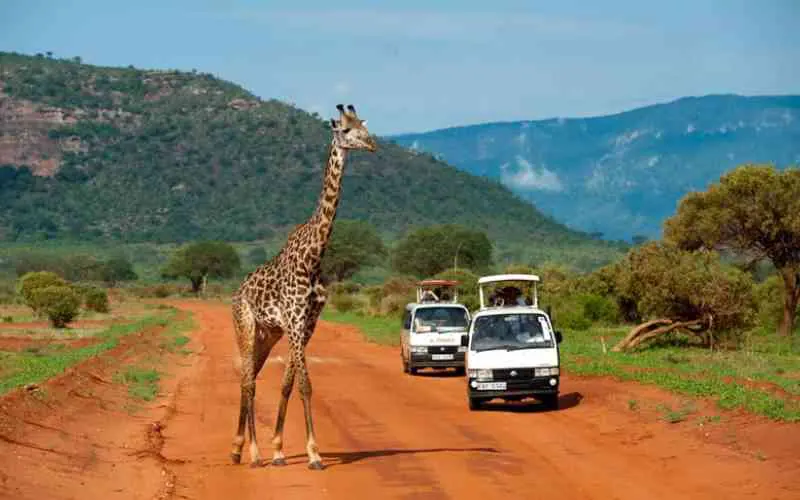
Kenya has been ranked eighth among countries in Eastern and Southern Africa for its conservation efforts, with nearly 14 per cent of its land classified as protected or conserved areas. This ranking is based on the Biodiversity Outlook for Eastern and Southern Africa (BOESA) report launched by the Regional Centre for Mapping of Resources for Development (RCMRD) in Nairobi. The report provides a snapshot of the region's natural wealth and progress in conserving forests, wildlife habitats, and marine ecosystems.
The BOESA report shows that 13.94 per cent of Kenya's terrestrial area and 0.59 per cent of its marine area are covered by protected and conserved areas. This puts Kenya behind countries such as Seychelles, Tanzania, Namibia, Zambia, Botswana, Mozambique, and Malawi in terms of terrestrial conservation coverage. Seychelles leads the table with 68.12 per cent of its land covered, followed by Zambia at 41.27 per cent, Tanzania at 39.95 per cent, and Namibia at 39.92 per cent.
The report identifies 41 protected and conserved areas in Kenya, covering approximately 82,185 square kilometres. To reach the 30 per cent conservation target under Target 3 of the Kunming-Montreal Global Biodiversity Framework, Kenya would need an additional 16.06 percentage points of its territory to be conserved. The global framework aims to have at least 30 per cent of terrestrial, inland water, marine, and coastal areas effectively conserved by 2030.
The BOESA report is a valuable tool for conservation planning and policy decisions, bringing together maps, scientific data, and regional experiences. The report's regional platform includes a tracker that monitors countries' progress towards the 30 per cent target. This will enable countries to track their progress and make informed decisions about conservation efforts.
The launch of the BOESA report comes ahead of the 17th Conference of the Parties to the Convention on Biological Diversity (COP17), scheduled for October in Yerevan, Armenia. The meeting will include the first global review of collective progress in implementing the Kunming-Montreal framework. Sanne Willems, Regional Partnerships official at the European Union Delegation to Kenya, emphasized the importance of translating data into information that policymakers and communities can use.
RCMRD Director General Emmanuel Nkurunziza stated that BOESA aims to make information on the region's natural resources more accessible to policymakers, conservation practitioners, researchers, development partners, and communities. The outlook relies heavily on geospatial information and Earth observation technologies to map ecosystems, monitor protected areas, and provide evidence for conservation decisions.
The Nairobi launch of the BOESA report was held alongside a regional workshop on integrated landscape-seascape modelling for climate-resilient development, running from September 22 to 24. The workshop examined how terrestrial and marine systems can be considered together in addressing climate resilience and food-system vulnerabilities. The RCMRD platform is designed as a continuing regional resource, with new data, evidence, and tools expected to be added over time.
Key points
- Kenya ranks eighth in Eastern and Southern Africa for conservation efforts, with 13.94% of its land classified as protected or conserved areas.
- The BOESA report provides a snapshot of the region's natural wealth and progress in conserving forests, wildlife habitats, and marine ecosystems.
- Kenya needs an additional 16.06 percentage points of its territory to reach the 30 per cent conservation target under Target 3 of the Kunming-Montreal Global Biodiversity Framework.