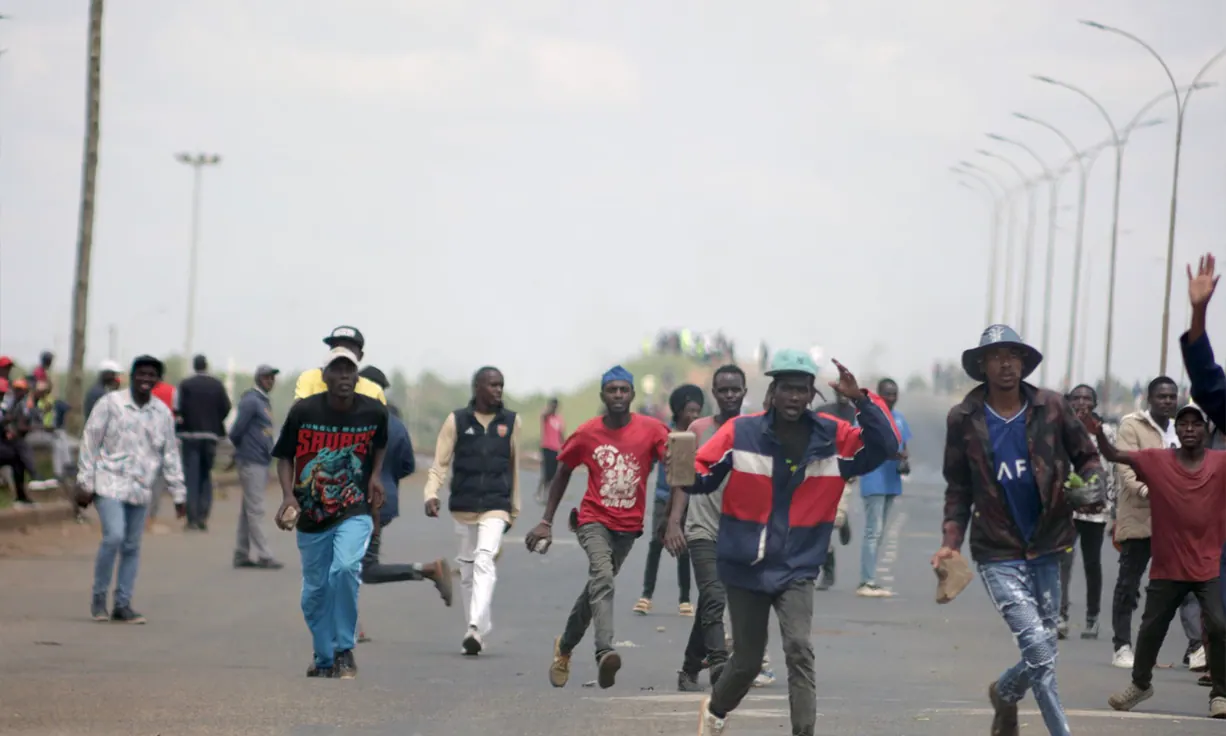
Kenya is heading towards the August 10, 2027, general elections with increasing concerns about potential violence in various parts of the country. Recent weeks have witnessed violent incidents during political rallies in Homa Bay, Embu, and Garissa, sparking fears that competitive politics may trigger insecurity as witnessed in previous elections.
According to the National Human Rights Commission (KNCHR), at least 11 people have lost their lives since February this year due to incidents linked to political rallies. The commission has warned that rising tensions in areas such as the Turkana and West Pokot border, Isiolo, Embu, and other counties are a sign of danger that needs to be addressed early before the elections.
The National Commission for Cohesion and Integration (NCIC) has cautioned politicians against using inflammatory language and recruiting youth to carry out attacks against opponents. NCIC Chairman Kepha Nyamweya Omae urged politicians to involve young people in democracy through legitimate means rather than using them as tools for violence.
Security experts say that areas prone to election violence in Kenya have remained largely unchanged over the years. Expert George Musamali notes that Nairobi, parts of the Rift Valley, Mombasa, Homa Bay, Migori, Kisii, and Kiambu continue to be seen as high-risk areas for witnessing violence.
The areas identified as having a high likelihood of experiencing political violence include Nairobi, Nakuru, Kericho, Kisumu, Uasin Gishu, Mombasa, Homa Bay, Migori, Kisii, Kiambu, parts of the Rift Valley, Turkana-West Pokot, Isiolo, Embu, Kitengela, Bungoma, Kakamega, Nandi, and Marsabit. These areas have been identified due to their history of election violence, political tensions, land disputes, ethnic differences, and political competition.
Human rights activist Ernest Cornel notes that violence can occur between different communities or even within the same community based on conflicting political and social interests. He cites land and border disputes that have been ongoing for a long time, which can be exploited by politicians to incite violence.
As election campaigns begin to gain momentum, stakeholders, including politicians, civil society, and security agencies, are being urged to work together to prevent a repeat of the country's history of violence. The question now is whether Kenya will heed these warning signs or wait until another tragedy occurs.
Key points
- The National Human Rights Commission has reported at least 11 deaths since February linked to political violence.
- Security experts warn that areas prone to election violence have remained largely unchanged over the years.
- The 2007/2008 election violence resulted in approximately 1,300 deaths and displaced over 650,000 people.