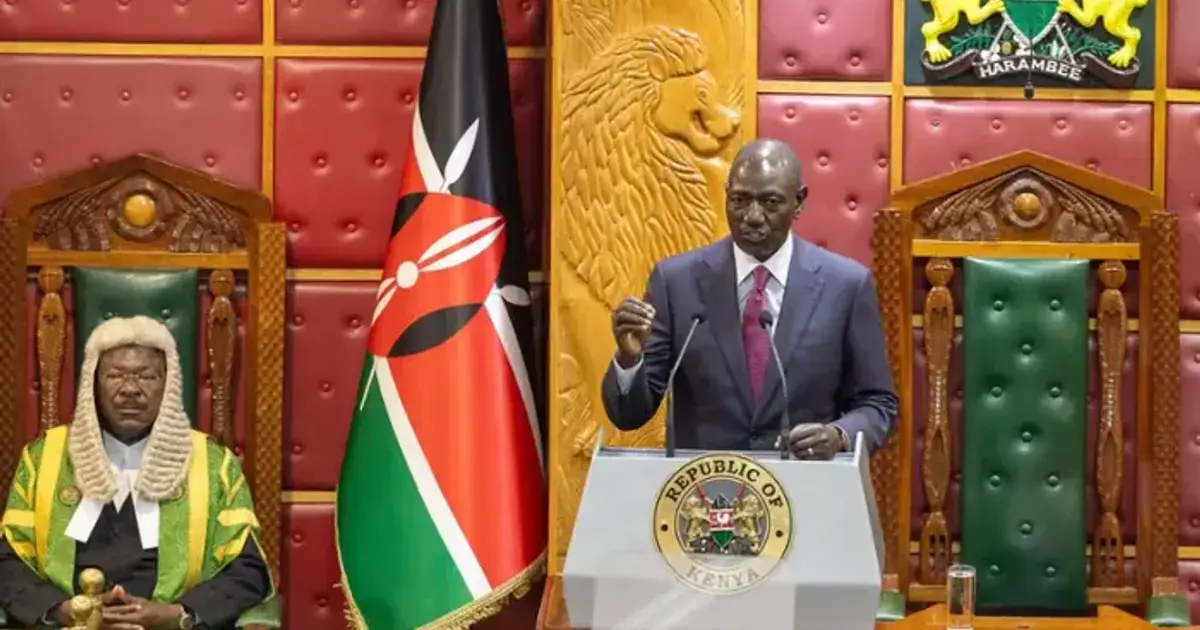
The High Court of Kenya has ruled that President William Ruto's creation of seven new State Departments was unconstitutional, as it bypassed the Public Service Commission (PSC) and excluded public participation. The ruling, delivered by Justice Roselyne Aburili on November 26, 2026, found that the establishment process was fatally flawed, effectively nullifying the legal standing of the seven entities. This decision delivers a major legal setback to the Executive's administrative restructuring.
The affected State Departments include: State Department for Public Investments and Assets Management, State Department for National Government Coordination, State Department for Justice, Human Rights and Constitutional Affairs, State Department for Aviation and Aerospace Development, State Department for Science, Research and Innovation, State Department for Special Programmes, and State Department for Children Welfare Services. The future of the Principal Secretaries appointed by President Ruto to head these departments is now uncertain.
The disputed administrative changes date back to June 9, 2025, when Chief of Staff and Head of Public Service Felix Koskei issued an official circular announcing wide-ranging realignments within the national government. The changes were formalized through Executive Order No. 1 of 2025, which notified all Cabinet Secretaries, Principal Secretaries, and Heads of State Corporations of the newly established State Departments and the transfer of key executive functions.
The legal petition challenging the Executive Order was filed by citizen Francis Wanjiku, who argued that the President's unilateral creation of the departments bypassed mandatory legal procedures. Justice Aburili agreed with Wanjiku's arguments, affirming that executive authority cannot be exercised outside established legal frameworks. This ruling adds to mounting judicial scrutiny facing President Ruto's administration regarding compliance with constitutional governance standards.
The nullification of the seven State Departments comes at a time when President Ruto's administration faces a legal challenge over the composition of his Cabinet. In a separate constitutional setback, the High Court previously declared the Cabinet's composition unconstitutional for failing to adhere to the mandatory two-thirds gender rule. Wanjiku hailed the court's intervention as a critical triumph for constitutionalism and accountable governance.
The creation of the seven State Departments was intended to streamline service delivery and realign government priorities. However, critics argued that the presidency had overstepped its constitutional bounds by unilaterally creating public offices without institutional checks. The court's ruling has thrown the tenure of several senior government officials into immediate uncertainty pending any appeal or regularization.
The decision is a significant check on presidential powers, emphasizing that executive authority must be exercised within the limits of the Constitution and the law. As the administration considers its next steps, it remains to be seen how it will address the court's concerns and rectify the situation. For now, the ruling stands as a major victory for constitutionalism and the rule of law in Kenya.
Key points
- The High Court of Kenya has nullified President William Ruto's creation of seven new State Departments due to a violation of constitutional procedures.
- The affected departments include State Department for Public Investments and Assets Management and State Department for Science, Research and Innovation.
- The ruling adds to mounting judicial scrutiny facing President Ruto's administration regarding compliance with constitutional governance standards.