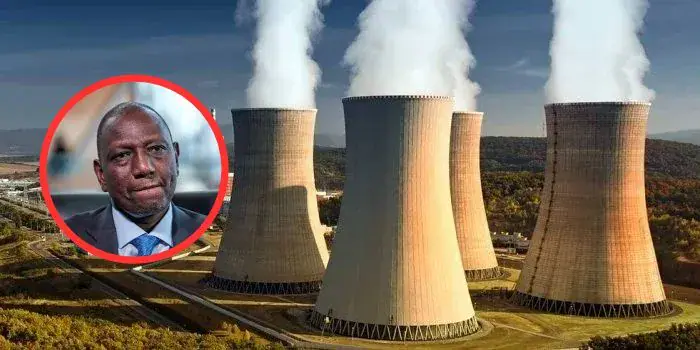
Russia's state-owned nuclear corporation, Rosatom, is actively negotiating with four African countries - Uganda, Ethiopia, Ghana, and Egypt - to build large nuclear power plants. This development has raised concerns in Kenya, which has not been included in these talks despite its own ambitions to develop nuclear energy. Rosatom's chief executive, Alexei Likhachev, stated that Russia can supply nuclear plants of varying sizes and configurations tailored to each partner country's specific needs.
Uganda and Ethiopia are among the countries currently in negotiations with Rosatom, while Egypt is already hosting Russia's El Dabaa nuclear project. Ghana is also discussing a large-scale facility with Rosatom. In addition to land-based plants, Russia is promoting floating nuclear power technology in Africa, with nine countries showing strong interest. Detailed talks are underway with Egypt, Tanzania, Togo, and Namibia on this matter.
The talks follow the third Russia-Africa Summit in Moscow, where nuclear cooperation was a prominent agenda item. Kenyan President William Ruto attended the summit and met with Russian President Vladimir Putin, highlighting Kenya's ongoing pursuit of investment ties with Moscow. Despite this, Kenya was not included in the nuclear power talks with Rosatom.
Kenya continues to plan for nuclear energy, with a proposed 2,000 MW plant in Siaya County slated for construction in 2027 and commissioning by 2034. The country also intends to build its first nuclear research reactor at Konza Technopolis, with construction expected to start in 2027. This reactor will support scientific research and training in Kenya.
Africa currently operates a single nuclear power plant - South Africa's Koeberg - highlighting the continent's limited nuclear capacity and the strategic importance of new projects. Rosatom's negotiations with other African countries demonstrate Russia's commitment to expanding its nuclear energy presence on the continent.
Rosatom's offer of customizable nuclear plants could be attractive to African countries seeking to develop their energy sectors. The company's experience in building nuclear power plants, such as the El Dabaa project in Egypt, could also provide assurance to partner countries.
Kenya's exclusion from Rosatom's nuclear power talks raises questions about the country's nuclear energy ambitions. Despite its plans for a 2,000 MW plant and a nuclear research reactor, Kenya's absence from these talks may hinder its progress in developing its nuclear energy sector.
Key points
- Russia's Rosatom is negotiating nuclear plant projects with Uganda, Ethiopia, Ghana, and Egypt, but Kenya is not included in these talks.
- Kenya continues to plan for nuclear energy, with a proposed 2,000 MW plant and a nuclear research reactor.
- Africa currently operates only one nuclear power plant, highlighting the continent's limited nuclear capacity and the need for new projects.