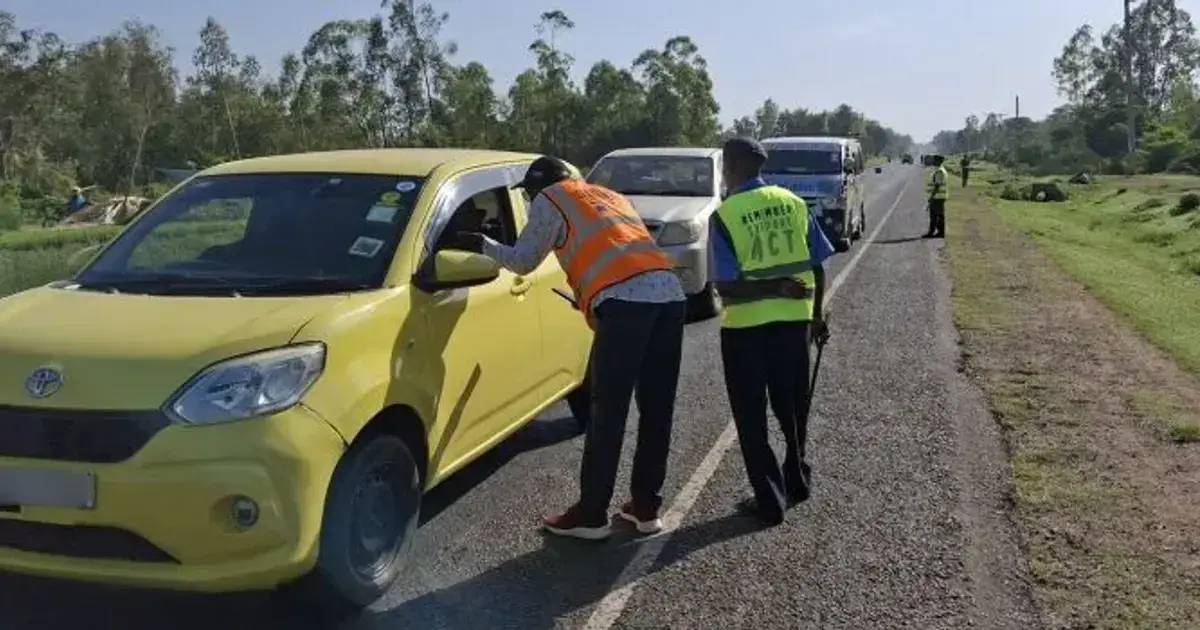
The National Transport and Safety Authority (NTSA) of Kenya, in collaboration with a multi-agency team, recently conducted a rigorous night-time compliance check along Nairobi's Southern Bypass. During the operation, 13 motor vehicles were impounded due to glaring safety and documentation violations. The crackdown is part of the nationwide safety initiative dubbed "Msimu Bila Ajali, Usalama Barabarani," aimed at curbing escalating road fatalities and clamping down on rogue motorists.
The localized sweep on the Southern Bypass comes against the backdrop of a catastrophic spike in road traffic accidents nationwide. Following a devastating succession of mass-fatality crashes, including a horrific collision at Salama in Makueni County on October 3 that claimed 17 lives, and another catastrophic accident on the Nairobi-Mombasa highway that left 23 people dead, NTSA officially urged the state to declare road crashes a national disaster. This move aims to mobilize urgent government action, secure adequate funding, and ensure coordinated enforcement.
According to NTSA, 2,150 people lost their lives on Kenyan roads during the first half of the year, driven heavily by human error, lane indiscipline, drunk driving, and speeding. Pedestrians and motorcyclists continue to form the highest percentage of casualties, prompting authorities to target nocturnal and long-distance hazards relentlessly. The urgency of the situation is clear, with transport officials arguing that ordinary containment methods are no longer sufficient.
The multi-agency sweep on the Southern Bypass laid bare a catalog of blatant disregard for traffic laws. Major safety concerns observed included motorists driving under the influence of alcohol and individuals operating automobiles with expired driving licences. Beyond driver-related infractions, several vehicles failed basic inspection thresholds, including units bearing expired inspection stickers, automobiles operating entirely without insurance, and others contravening specific insurance terms.
Technical defects were also a primary focus, featuring broken headlights and severely cracked windscreens that pose visibility hazards during night travel. NTSA has repeatedly emphasized that evening and late-night hours remain statistically the deadliest periods on Kenyan roads. By deploying increased personnel and resources during high-risk windows, the authority aims to proactively disrupt critical risk factors before they translate into tragic crashes.
The Southern Bypass sweep serves as an early indicator of how strictly authorities intend to enforce the newly introduced Msimu Bila Ajali framework. The nationwide campaign outlines seven core pillars that multi-agency teams are scrutinizing, including speed violation detection, speed limiter functionality, public transport documentation, vehicle capacity control, driver documentation, passenger compliance, and breathalyser screening.
While road safety advocates have applauded the sweeping interventions, public reactions remain mixed, with some commentators calling for equal focus on rogue commercial matatus and long-distance buses. Roads and Transport Cabinet Secretary Davis Chirchir condemned the recurring loss of life, emphasizing that the transport sector can no longer operate under normal business paradigms.
Key points
- NTSA impounds 13 vehicles during a night-time compliance check on Nairobi's Southern Bypass.
- Kenya's transport sector urges the government to declare road crashes a national disaster.
- The nationwide campaign, "Msimu Bila Ajali, Usalama Barabarani," aims to curb road fatalities.