Kenya has confirmed its first imported Ebola case, involving a Kenyan citizen who had lived in the Democratic Republic of Congo for seven years. The patient traveled from the DRC via Uganda before flying to Nairobi on October 3. Upon arrival, the patient underwent routine screening at Jomo Kenyatta International Airport. Later, the patient sought care at Nairobi Hospital after developing symptoms such as fever, chills, severe fatigue, and sore throat.
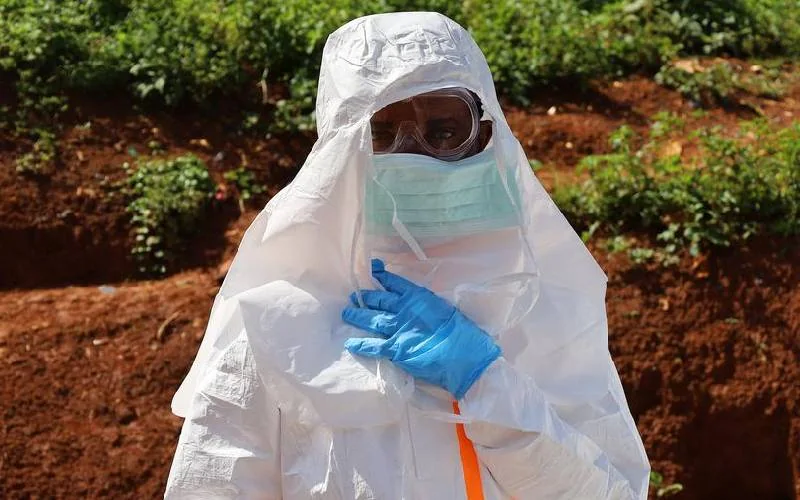
Health Cabinet Secretary Aden Duale reported that doctors isolated the patient, collected samples, and confirmed Ebola Bundibugyo virus disease after testing at the National Virology Reference Laboratory and KEMRI. Unfortunately, the patient subsequently died. The Ministry of Health has since launched a comprehensive response effort, including contact tracing and quarantine of exposed individuals.
The Ministry of Health has identified a total of 57 contacts, including family members, health workers, and others who may have been exposed during the patient’s journey. Ten people were placed in quarantine facilities as a precaution, while authorities continue heightened surveillance at borders and airports linked to Ebola-affected regions. By October 6, the government had screened more than 52,000 travelers and tested 267 samples.
Public awareness and understanding of Ebola transmission have been identified as key concerns. Residents in Nairobi and Eastleigh have expressed confusion about how Ebola spreads, with some linking it to uncleanliness or sharing drinks, while others have heard rumors that the virus comes from monkeys or gorillas. Health officials have clarified that Ebola spreads through direct contact with blood, body fluids, or contaminated objects, not by casual proximity.
The Ministry of Health has urged anyone who develops symptoms after possible exposure or travel from affected areas to seek medical care immediately. The ministry has also set up a toll-free line (719) for reliable information and to address public concerns. Health officials have emphasized that early symptoms of Ebola overlap with many common illnesses, making it crucial for the public to be informed and vigilant.
Quarantine will remain a precautionary measure while contacts are monitored for symptoms, and preparations are underway for a safe, dignified burial of the deceased patient. The government has trained 4,971 health workers on Ebola prevention and management as part of its intensified response efforts. Ongoing monitoring and surveillance at border points and airports will stay heightened, especially for routes linked to countries reporting Ebola transmission.
The Kenyan government has made significant efforts to respond quickly and effectively to the first imported Ebola case. With continued public cooperation and awareness, the country aims to contain the spread of the virus and prevent further transmission. Key to this effort is the collaboration between health officials, the public, and other stakeholders in identifying and managing potential cases.
Key points
- The patient, a Kenyan citizen, had lived in the Democratic Republic of Congo for seven years before traveling to Nairobi, where they developed symptoms and were later confirmed to have Ebola.
- The Ministry of Health has identified 57 contacts and placed 10 people in quarantine facilities as a precaution, while screening over 52,000 travelers and testing 267 samples by October 6.
- Health officials have emphasized that Ebola spreads through direct contact with blood, body fluids, or contaminated objects, not by casual proximity, and have urged the public to seek medical care if symptoms develop after possible exposure.