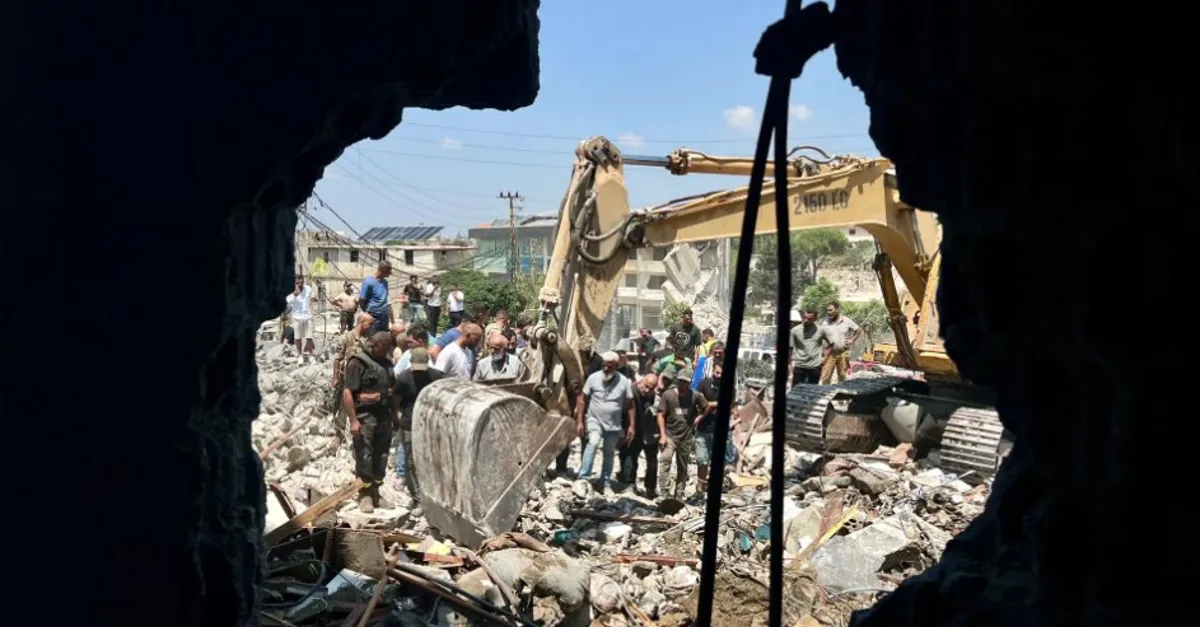
Israeli forces have continued their attacks on several areas in southern Lebanon, with artillery fire and airstrikes targeting various towns. According to Lebanon's National News Agency, the town of Hadatha was hit with artillery fire, accompanied by heavy machine gun fire. The town of Al-Manouri and Wadi Zubqin also came under artillery fire. These attacks have contributed to the escalating tensions in the region.
The Israeli warplanes carried out two raids on the triangle area between the towns of Barashit and Kunin in the Bint Jbeil district. Another airstrike targeted the town of Al-Manouri, located south of the city of Tyre. These airstrikes have caused significant concern among local residents, who fear for their safety. The situation remains volatile, with no clear indication of when the attacks will cease.
The Israeli warplanes also carried out a second airstrike on the town of Kfar Tebnit, which had previously been targeted by a missile that failed to explode. In addition, Israeli forces conducted a massive explosion operation in the town of Kunin in the Bint Jbeil district. These actions have been met with concern from local authorities and residents.
The ongoing Israeli attacks have raised concerns about the implementation of a framework agreement signed between Lebanon and Israel in June, under US mediation. The agreement outlines security arrangements, including the gradual deployment of the Lebanese army and the withdrawal of Israeli forces. However, the implementation of the agreement has faced obstacles, and the recent attacks have cast doubt on the prospects for a peaceful resolution.
The Lebanese army has been working to maintain stability in the region, despite the challenges posed by the Israeli attacks. The army has been deployed in various areas, with the aim of protecting civilians and maintaining order. However, the Israeli actions have made it difficult for the Lebanese army to effectively carry out its duties.
The situation in southern Lebanon remains tense, with residents living in fear of further attacks. The international community has called for restraint and a return to negotiations. The Lebanese government has also urged the international community to pressure Israel to cease its attacks and respect Lebanon's sovereignty.
The recent attacks have also raised concerns about the humanitarian situation in southern Lebanon. Many residents have been displaced, and there are concerns about access to basic necessities such as food, water, and medical care. The situation requires a swift and peaceful resolution to prevent further humanitarian suffering.
Key points
- Israeli forces have continued their attacks on several areas in southern Lebanon, including artillery fire and airstrikes on various towns.
- The implementation of a framework agreement signed between Lebanon and Israel in June has faced obstacles, and the recent attacks have cast doubt on the prospects for a peaceful resolution.
- The situation in southern Lebanon remains tense, with residents living in fear of further attacks and concerns about the humanitarian situation.