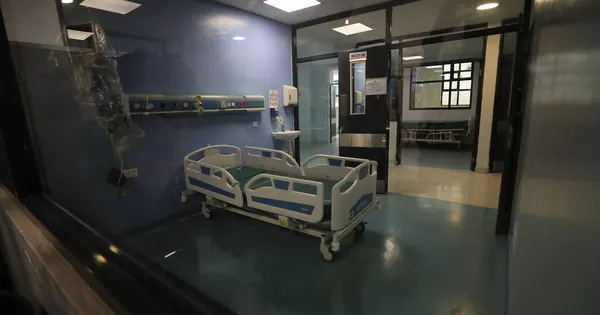
Kenya's health authorities have confirmed the country's first imported case of Bundibugyo Ebola virus disease. The case was reported in a Nairobi hospital, where a man had been admitted and later died. According to the country's health authorities, the case was confirmed on October 7, 2026. The hospital has been equipped with an isolation ward for Ebola patients. The Kenyan government has taken measures to prevent the spread of the disease.
The patient who died was being treated at Nairobi Hospital. The hospital has taken steps to ensure that all necessary precautions are taken to prevent the spread of the disease. An isolation ward has been set up for Ebola patients. The Kenyan government has assured the public that it is doing everything possible to contain the outbreak. The Ministry of Health has urged the public to remain calm and to take precautions to prevent the spread of the disease.
The Bundibugyo Ebola virus disease is a type of Ebola virus that was first identified in 2007 in the Democratic Republic of Congo. It is a highly infectious and deadly disease that can cause severe illness and death in humans. The disease is spread through direct contact with infected bodily fluids, such as blood, sweat, and saliva. The Kenyan government has taken measures to educate the public on the symptoms of the disease and how to prevent its spread.
The Kenyan government has also taken steps to enhance surveillance and screening at airports and other entry points to prevent the spread of the disease. The government has also provided training to healthcare workers on how to handle suspected cases of Ebola. The World Health Organization (WHO) has been working closely with the Kenyan government to provide technical assistance and support to contain the outbreak.
The confirmation of the case has raised concerns among the public, with many people calling for increased measures to prevent the spread of the disease. The Kenyan government has assured the public that it is doing everything possible to contain the outbreak and prevent further spread of the disease. The government has also urged the public to remain calm and to take precautions to prevent the spread of the disease.
The Kenyan Ministry of Health has activated its emergency response plan to contain the outbreak. The plan includes enhanced surveillance, contact tracing, and isolation of suspected cases. The ministry has also provided personal protective equipment (PPE) to healthcare workers and has set up a team to monitor the situation. The government has also urged the public to report any suspected cases of Ebola to the authorities.
The Kenyan government has urged the public to take precautions to prevent the spread of the disease, including washing hands regularly, avoiding close contact with anyone who is sick, and avoiding contact with infected bodily fluids. The government has also urged the public to seek medical attention immediately if they experience symptoms of the disease, such as fever, vomiting, and diarrhea. The situation is being closely monitored, and the government is working to contain the outbreak.
Key points
- The Kenyan government has confirmed its first imported case of Bundibugyo Ebola virus disease in a Nairobi hospital.
- The government has taken measures to prevent the spread of the disease, including enhancing surveillance and screening at airports.
- The public has been urged to take precautions to prevent the spread of the disease and to report any suspected cases to the authorities.