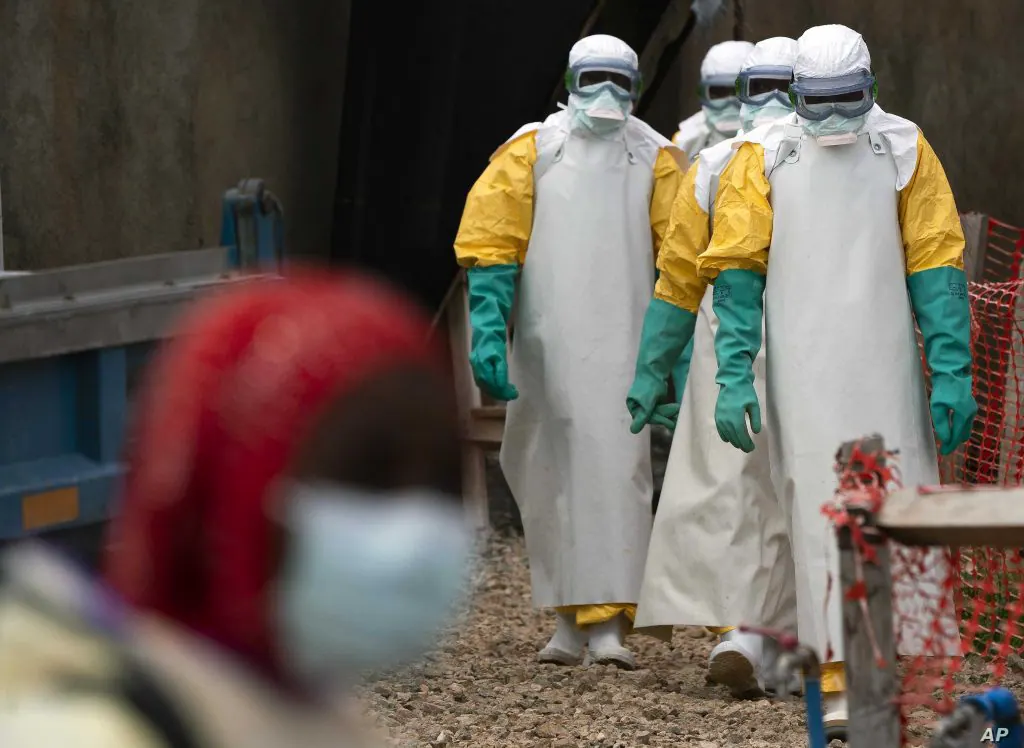
Kenya has reported its first fatal case of Ebola, a Kenyan citizen who had been living in the Democratic Republic of Congo for seven years. The individual fell ill about a month ago and sought medical treatment at multiple facilities in Congo before traveling to Nairobi. Health Minister Aden Duale stated that the patient had boarded a commercial flight from Congo through Uganda and was not flagged by public screening procedures at the airport.
The patient was admitted to Nairobi Hospital after showing symptoms of hemorrhagic fever, and laboratory tests confirmed a positive result for the rare Bundibugyo strain of the Ebola virus. Despite medical interventions, the patient died on Monday. Health officials have confirmed that burial arrangements will take place within 24 hours, following mandatory public safety protocols. The Kenyan government has placed the nation on high alert and initiated aggressive tracking protocols.
Authorities have identified 28 direct contacts, including family members and medical personnel who cared for the patient. An additional 23 passengers who shared the same flight from Uganda are also being traced. Ministry Director Patrick Amoth outlined the quarantine protocol, stating that these contacts will remain in isolation for 21 days and will only be released after testing negative for the virus. This move aims to prevent further spread of the virus.
Kenya is now the fourth nation to register an Ebola case in the current epidemic, which originated in eastern Congo in mid-May. Previous international spread included 20 recorded cases in Uganda and a single case in France. Prior to this event, active cases outside Congo had ceased after Uganda declared its outbreak over in late August. The broader crisis in Congo has claimed over 4,000 lives this year alone.
Experts classify this event as part of the fastest-growing Ebola outbreak in recorded history. The World Health Organization has issued warnings that the epidemic could surpass all previous records as it continually outpaces containment and tracking efforts. Public health challenges are compounded by the fact that the outbreak stems from the rare Bundibugyo virus, a strain that currently lacks any approved vaccine or specific medical treatment.
Clinical trials for experimental vaccines and therapies are underway in Congo's Ituri province, the epicenter of the crisis. The Kenyan government, in collaboration with international health organizations, is working to enhance screening procedures and strengthen its response to the outbreak. Neighboring countries are also on high alert, taking measures to prevent the spread of the virus.
The Kenyan health ministry is working closely with the World Health Organization and other international partners to contain the outbreak. The government has assured the public that it is taking all necessary measures to prevent further spread of the virus. As the situation continues to unfold, the international community remains vigilant, providing support to affected countries to combat the epidemic.
Key points
- Kenya confirms first Ebola fatality, a citizen who recently traveled from DRC.
- The patient was not flagged by public screening procedures at the airport.
- The Kenyan government has initiated aggressive tracking protocols to contain the outbreak.