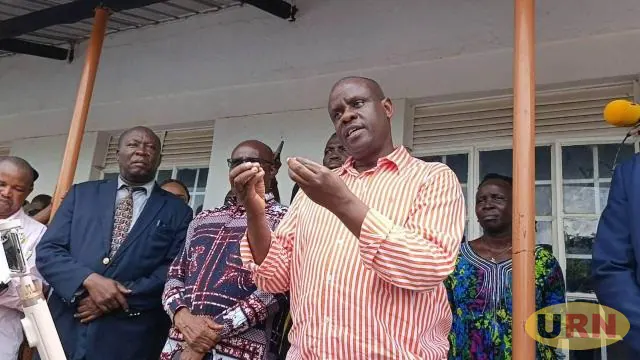
Church of Uganda Archbishop Stephen Kazimba Mugalu has called for dialogue between the government, parents, and school administrators to resolve the ongoing dispute over school fees and Parents-Teachers Association (PTA) contributions in Uganda. Speaking at the Kitgum Diocese headquarters, Kazimba warned that a blanket restriction on contributions could leave some institutions struggling to provide basic services. He suggested that parents should be allowed to support school development where such contributions are agreed upon by parents and school governing bodies.
The dispute over school fees and PTA contributions has been escalating, with Minister of State for Local Government Balaam Barugahara leading a countrywide campaign to challenge what he describes as illegal charges in government-aided schools. Barugahara has warned head teachers against imposing additional fees on learners and has ordered investigations and action against officials accused of violating government policy. In Bududa, the Ministry of Local Government found learners being charged 150,000 shillings at Bududa Secondary School, despite the institution being government-aided.
The campaign has triggered tensions in several parts of the country, with parents, school administrators, and religious leaders holding emergency meetings to discuss the issue. At Kaliro High School in eastern Uganda, parents complained that high charges were forcing some children out of school, while school administrators argued that the money was needed to meet costs not covered by government funding. The dispute has exposed a difficult question at the heart of the controversy: how government-aided schools should meet expenses when government funding does not cover all their staffing and operational needs.
Archbishop Kazimba expressed concern about reports of head teachers being arrested over contributions that had been agreed upon by parents and school governing bodies. He urged government officials to engage parents, teachers, and school administrators before taking action against head teachers. Kazimba warned that creating an environment in which teachers and head teachers constantly fear arrest could discourage them from taking decisions needed to keep schools functioning.
The Education Act provides an exception allowing management of schools to receive voluntary contributions from parents and well-wishers for emergencies or urgent matters concerning a school. However, the distinction between compulsory charges and voluntary contributions is at the centre of the current dispute. The government has maintained that parents should not be compelled to pay additional charges for education in government-aided schools.
State Minister for Water and Environment Beatrice Atim Anywar responded to Archbishop Kazimba's remarks, calling for greater harmony between parents and teachers. Anywar said disputes within schools could ultimately affect children's academic performance and urged the Archbishop to continue advocating dialogue after his retirement. The relationship between parents, teachers, and school administrators needs to be strengthened, she added.
The emerging dispute goes beyond the question of whether parents should pay school fees, and is increasingly about who should finance the gap between what government promises to provide in government-aided schools and what schools say they actually need to function. Head teachers have told the Equal Opportunities Commission that inadequate government funding has left some government-aided schools struggling with understaffing, ageing infrastructure, utilities, maintenance, and other operational costs.
Key points
- Archbishop Kazimba urges dialogue to resolve school fees dispute.
- Government campaign against illegal charges sparks tensions.
- Dispute exposes gap in government funding for schools.