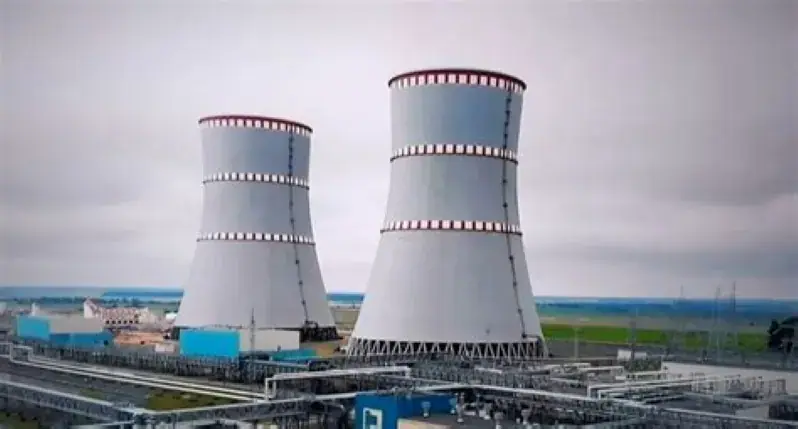
Kazakhstan has set an ambitious target to complete its first two nuclear power plants, Balkhash and Moyinkum, by 2035. This move is part of the country's efforts to strengthen its electricity security and meet the rising demand for power. The country's Minister of Energy, Erlan Akkenzhenov, outlined the plan, highlighting the importance of these projects in diversifying the energy mix and supporting industrial growth.
The first facility, the Balkhash nuclear power plant, will be built by a Russian-led consortium headed by state nuclear giant Rosatom. The plant will be located in the Zhambyl district of Almaty Region, near the village of Ulken on Lake Balkhash's western shore. It will host two VVER-1200 Generation III+ reactors with a combined capacity of about 2,400 MW. Construction is expected to start in 2027, with the first reactor projected to enter commercial operation in the mid-2030s.
The second plant, named Moyinkum, is under negotiation with China National Nuclear Corporation (CNNC). Discussions are ongoing to finalize the agreement, technical parameters, and schedule. Although no final contract or design details have been confirmed, Moyinkum is also slated for the Zhambyl District in the Almaty Region, mirroring the location chosen for the first plant. However, its capacity and reactor type remain undefined.
Both projects will be overseen by the newly created Agency for Atomic Energy, which took over nuclear project responsibility from the Ministry of Energy earlier this year. This move is expected to streamline the development and implementation of nuclear energy projects in Kazakhstan. The agency will play a crucial role in ensuring the successful completion of the Balkhash and Moyinkum plants.
Kazakhstan also plans to establish a strategic uranium reserve by the end of 2027 to secure fuel for three future nuclear plants. This move was announced by Deputy Prime Minister and Minister of National Economy Serik Zhumangarin. The reserve will ensure a stable supply of uranium, a critical component for nuclear power generation.
If realized, the two plants could add roughly 4,800 MW of capacity, helping to diversify the energy mix away from ageing coal plants and supporting industrial growth and urbanization. The development of nuclear power plants is expected to have a positive impact on Kazakhstan's economy and energy sector, providing a reliable source of electricity and reducing the country's reliance on coal-fired power plants.
The successful completion of the Balkhash and Moyinkum nuclear power plants will mark a significant milestone in Kazakhstan's energy sector. The projects will not only enhance electricity security but also contribute to the country's economic growth and development. With the support of international partners, including Rosatom and CNNC, Kazakhstan is poised to become a major player in the nuclear energy sector.
Key points
- Kazakhstan aims to complete its first two nuclear power plants, Balkhash and Moyinkum, by 2035 to boost electricity security.
- The Balkhash plant will be built by a Russian-led consortium headed by Rosatom, while Moyinkum is under negotiation with China's CNNC.
- The two plants could add roughly 4,800 MW of capacity, helping to diversify the energy mix away from ageing coal plants.