The Karimjee Foundation and Glasgow University recently celebrated a decade of collaboration on a conservation education program. The partnership, which began in 2016, provides funding for Tanzanian students to pursue a Master's degree in Conservation Management of African Ecological Systems at Glasgow University. The program includes a year of study in Glasgow and a second year of practical training in Tanzania, where students work on a research project.
The program was conceived by Yusuf Karimjee, Chairman of the Karimjee Jivanjee Foundation, and Marcus Borner of the Frankfurt Zoological Society. They believed that Tanzanians were best placed to protect the country's ecosystems. The program aims to equip Tanzanian students with world-class conservation skills and return them to their home country to apply their knowledge. To date, 25 students have completed the program, and all are working in conservation in Tanzania.
The partnership has yielded impressive results, with many graduates going on to pursue PhD studies. In total, 11 graduates have continued to PhD studies, and collectively, they have published 16 scientific papers and presented over 20 research papers at conferences. Yusuf Karimjee expressed his pride in the program's achievements, saying that the graduates are the heart of the initiative and have a deep sense of responsibility to apply their skills in conservation.
The program has not only produced skilled conservation scientists but also contributed to the development of Tanzania's conservation sector. Graduates are now working in various roles, including teaching conservation science and contributing to research that informs wildlife management and community safety. The program has helped to build a critical mass of Tanzanian conservation scientists, which is essential for the country's conservation efforts.
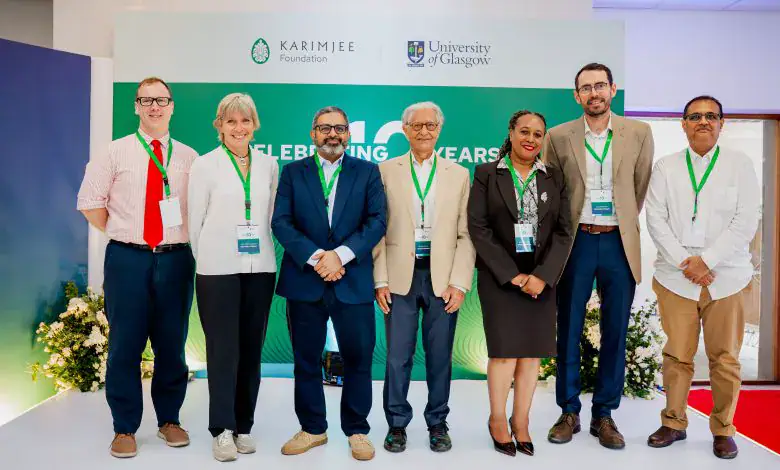
The celebration event, which took place at the Karimjee Foundation offices in Dar es Salaam, brought together past and present students, university representatives, conservation stakeholders, and foundation members. The event provided an opportunity for stakeholders to reflect on the program's achievements and discuss ways to shape its next phase. Yusuf Karimjee encouraged graduates, stakeholders, and university staff to continue working together to drive conservation progress in Tanzania.
The Karimjee Foundation covers all tuition fees and living expenses for the students, providing up to two scholarships each year. The program's success is a testament to the power of partnerships in driving conservation education and capacity building in Tanzania. The foundation's commitment to supporting Tanzanian conservation scientists has had a lasting impact on the country's conservation sector.
As the program looks to the future, it is clear that its impact will continue to be felt in Tanzania's conservation sector. With a strong foundation of skilled conservation scientists, the country is better equipped to address its conservation challenges and protect its natural resources. The partnership between the Karimjee Foundation and Glasgow University serves as a model for effective collaboration in conservation education and capacity building.
Key points
- The Karimjee Foundation and Glasgow University's conservation education partnership has produced 25 Tanzanian conservation scientists over the past decade.
Reporting sources
- Karimjee Foundation, Chuo Kikuu Glasgow wafurahia miaka 10 ya ushirkiano · habarileo.co.tz