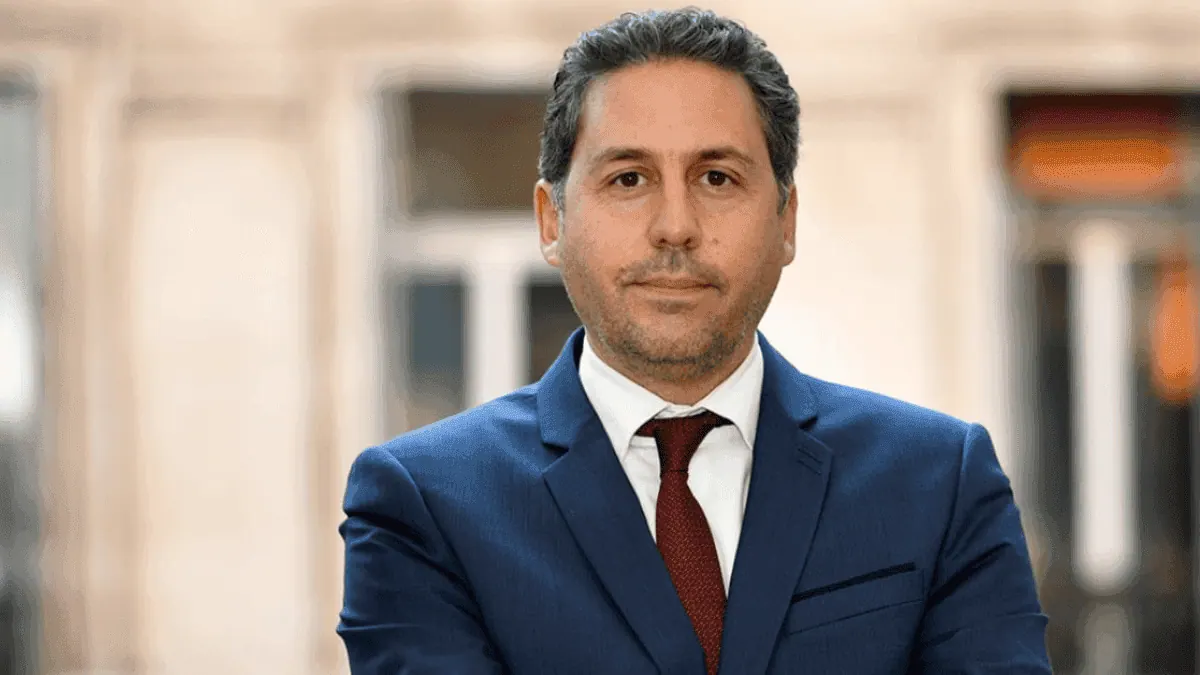
Algerian writer and former French ambassador Karim Amellal has shared his insights on the recent controversy surrounding Jordan Bardella, president of France's far-right National Rally party. Bardella is facing allegations of making anti-Semitic remarks between 2013 and 2015, which he strongly denies. Amellal, who has written extensively on French politics, believes that the allegations do not come as a surprise to those familiar with the National Rally's history.
The controversy has sparked a heated debate in France, particularly with the presidential election approaching in 2027. Marine Le Pen, the National Rally's candidate, is currently leading in the polls. Amellal notes that while Marine Le Pen has made efforts to distance the party from its extremist past, the allegations against Bardella raise questions about the party's ideological evolution. He emphasizes that the National Rally's founders and early members had strong ties to anti-Semitic and racist ideologies.
Amellal highlights that Marine Le Pen has made significant efforts to "de-demonize" the party and broaden its appeal. The party's name change and public statements have contributed to its transformation, but Amellal cautions that this does not necessarily mean that all elements of its past have been erased. He cites examples of National Rally candidates in the 2024 legislative elections who made racist, anti-Semitic, or xenophobic comments.
The allegations against Bardella are particularly significant, as he is the current president of the National Rally. Amellal stresses that even if Bardella is cleared of the allegations, the controversy sheds light on the ideological environment in which some young National Rally members were immersed during that time. Bardella has consistently denied the allegations and presents himself as a strong opponent of anti-Semitism.
Amellal also points to the influence of far-right ideologue Alain Soral, who was close to the National Front before breaking away in 2009. Soral's ideas continue to have an impact on certain extreme right-wing circles, which Bardella was part of at the time. This contrasts with Bardella's current stance, where he openly supports Israel and presents himself as an adversary of anti-Semitism.
The controversy raises broader questions about the National Rally's commitment to combating extremism and its ability to distance itself from its past ideology. Amellal wonders how far the party has truly moved away from its National Front roots and whether it has become more mainstream. The allegations against Bardella have sparked a national conversation about the far-right's influence in French politics.
The situation remains uncertain, with an investigation and potential judicial proceedings to determine the facts. Amellal's comments add to the ongoing debate, emphasizing that those familiar with the National Rally's history are not surprised by the allegations. The party's future and its ability to address concerns about extremism will likely continue to be a topic of discussion in the coming months.
Key points
- Karim Amellal believes that the allegations against Jordan Bardella are not surprising given the National Rally's history.
- Marine Le Pen has made efforts to distance the party from its extremist past, but the allegations raise questions about the party's ideological evolution.
- The controversy highlights the challenges faced by the National Rally in addressing concerns about extremism and its ability to distance itself from its past ideology.