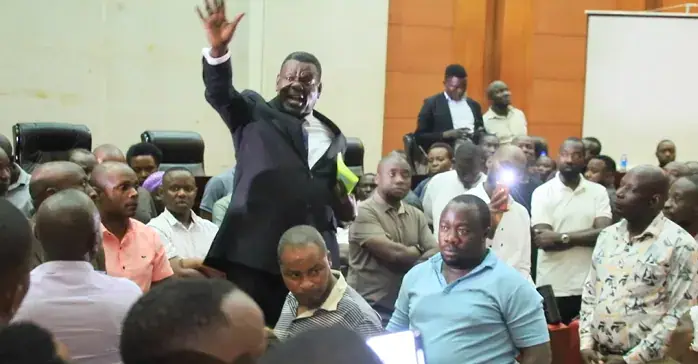
Kampala traders have refused to call off their strike despite a second meeting with Prime Minister Robinah Nabbanja, who attempted to address their concerns over taxation and treatment by Uganda Revenue Authority (URA) officials. The traders insist they will not return to business until President Yoweri Museveni addresses their complaints. Nabbanja acknowledged several trader complaints, including excessive taxation on goods imported through Kenya and alleged harassment by tax officials.
The traders also complained about delays in clearing merchandise by URA, dissatisfaction with the Electronic Fiscal Receipting and Invoicing Solution (EFRIS), and a lack of transparency among some URA officials. Additionally, they objected to an extra tax on imported clothing introduced to protect local manufacturers. Nabbanja told the traders that some matters required Museveni's intervention, with the President expected to provide guidance on disputed tax policies.
During the meeting, Nabbanja directed URA to release traders' goods held in warehouses within three days, provided they complied with the law, and called for the reopening of shops. She also instructed URA Commissioner General John Musinguzi to address complaints against an official identified as Sharifah, whom traders accused of mistreating them during tax enforcement operations.
The Prime Minister referred the traders' grievances, including cases involving arrested colleagues, to a committee chaired by Commerce Minister Sanjay Tanna. The committee includes KACITA chairman Issa Sekitto, Federation of Uganda Traders Associations (FUTA) chairman John Kabanda, and businessman Hamis Kiggundu, representing building owners. However, traders led by Sekitto remained unconvinced, maintaining that reopening without a clear resolution would amount to surrendering their demands.
The traders insist the strike will continue until Museveni personally addresses their concerns and provides a lasting solution to taxation challenges. The standoff puts the government under pressure to balance revenue collection, protection of local industries, and the survival of businesses dependent on imported merchandise. Traders appear unwilling to exchange their closed shops for another round of promises.
Nabbanja's intervention marks the second engagement in two days as the government struggles to end the business shutdown that has paralyzed parts of downtown Kampala. At the time of the meeting, Museveni was engaged with Tanzanian President Samia Suluhu Hassan and other officials. The traders' strike has significant implications for the local economy, with many businesses affected by the shutdown.
The situation remains unresolved, with traders refusing to reopen their shops until their demands are met. The government's efforts to address their concerns have so far been unsuccessful, and the strike continues to have a significant impact on the local economy.
Key points
- The traders' strike has significant implications for the local economy, with many businesses affected by the shutdown.
- The government is under pressure to balance revenue collection, protection of local industries, and the survival of businesses dependent on imported merchandise.
- The traders insist that the strike will continue until President Museveni personally addresses their concerns and provides a lasting solution to taxation challenges.
Reporting sources
- Traders refuse to reopen shops despite Nabbanja’s fresh intervention · 100.2 Galaxy FM