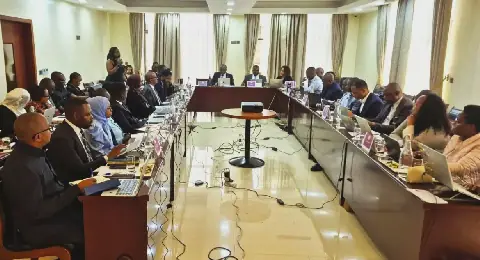
The Botswana Congress Party has submitted a position paper to the All-Party Conference, proposing stricter regulations on political funding. The party aims to increase transparency in political financing by requiring political organisations to disclose their donors and expenditures. The proposed Political Parties Act would also curb the built-in advantages of incumbency by limiting the use of public office, official transport, and state media for campaign purposes. This move is intended to level the playing field for all political parties.
The BCP's proposal includes a framework for public financing of political parties, with a two-part funding model. Qualifying parties would receive government funding in proportion to their share of the vote, as well as a flat base allocation. This model aims to reduce the reliance of smaller parties on wealthy benefactors and ensure that parties have a stable source of funding. The party also proposes an independent regulator to monitor compliance and act on breaches.
The BCP wants substantial political donations to be disclosed, with foreign and anonymous contributions banned outright. The party also proposes ceilings on campaign expenditure to prevent an arms race between parties. These measures aim to increase transparency and accountability in political financing. The proposed regulator would be responsible for enforcing these rules and taking action against parties that breach them.
A key aspect of the BCP's proposal is the conduct of those already in office. The party wants legislation that explicitly prohibits campaigning with government resources and sets clear rules on the president's and cabinet ministers' use of public office, official vehicles, and state media during electoral contests. This aims to draw a firm line between the business of governing and the business of party politics.
The backdrop to the BCP's proposal is a legal framework that exists largely on paper. Botswana passed the Political Party Funding Act in 2024, providing for government financial support to qualifying political parties. However, the law has not been brought into effect due to financial constraints. The Minister for State President, Defence and Security, Moeti Mohwasa, has acknowledged the gaps in the private side of the ledger, including the lack of binding requirements for parties to disclose their donors.
The BCP's submission is part of a broader negotiation on electoral reforms. The All-Party Conference has reached consensus on several proposed reforms, including the introduction of an electronic voters' roll and the acceptance of passports and driver's licences as voter identification. The parties have also agreed to retain manual voting and counting for the next general elections. Other agreed proposals include transparent ballot boxes and the establishment of an Electoral Tribunal to handle election petitions.
The fate of the BCP's ideas will be decided in the National Assembly, where the government intends to present the electoral reform package during the Budget Session next year. The party has made its case for a political system in which money can be traced from donor to ballot, and in which the advantages of office are counted as a cost to fair competition.
Key points
- The Botswana Congress Party proposes stricter regulations on political funding to increase transparency and accountability.
- The party aims to curb the built-in advantages of incumbency by limiting the use of public office, official transport, and state media for campaign purposes.
- The proposed regulations include a two-part funding model, disclosure of substantial donations, and ceilings on campaign expenditure.
Reporting sources
- BCP pushes to pry open the books on political Money · weekendpost.co.bw