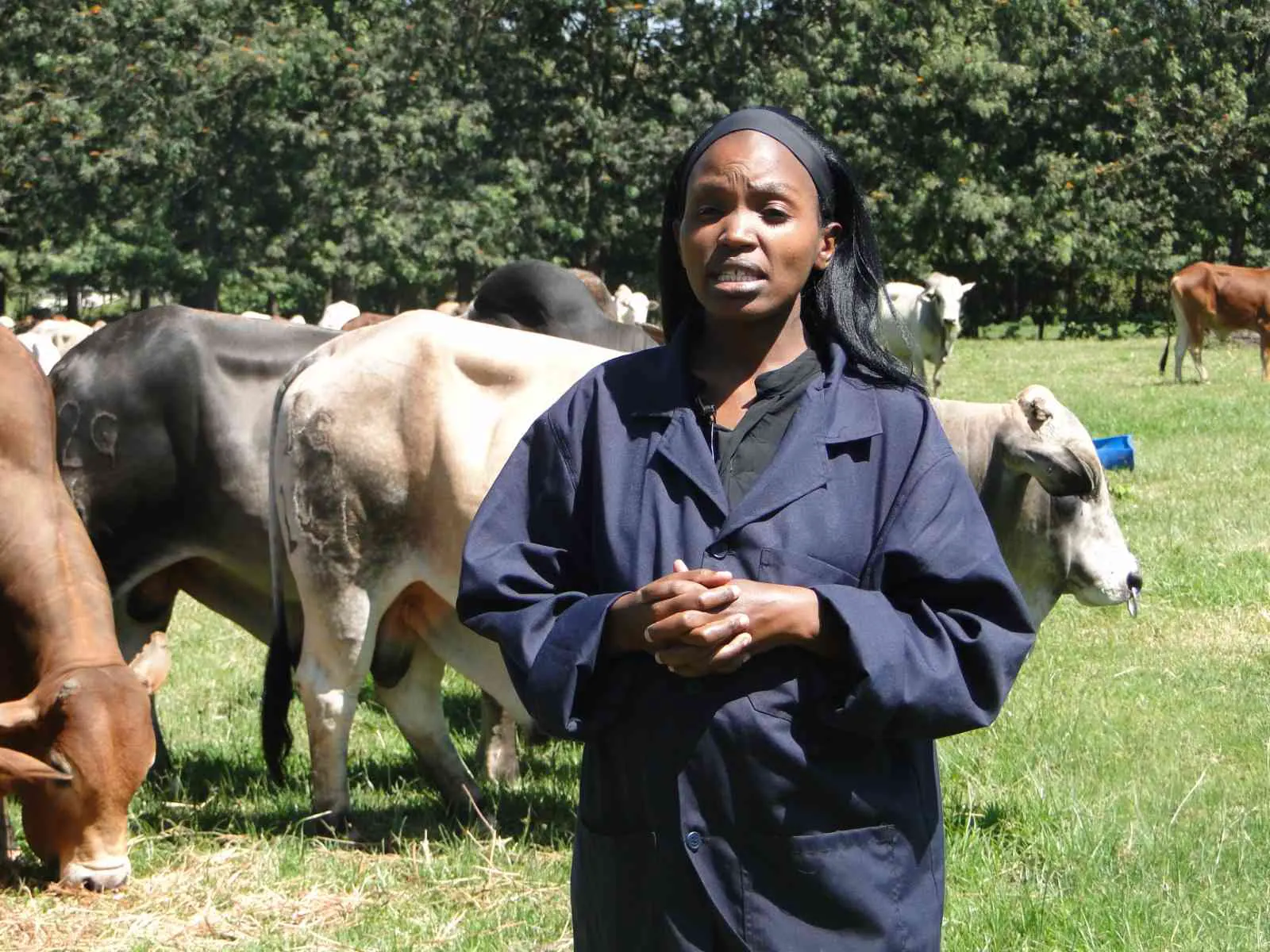
Kenya is seeking to boost its beef supply by adopting improved cattle breeds, better feed, and climate-resilient pastures. This effort is part of a broader push to increase beef production, raise farmers' incomes, and help narrow the country's meat deficit. The initiative comes as discussions around the 81st United Nations General Assembly in New York focus on agrifood systems, food security, climate resilience, and sustainable production.
The Kenya Agricultural and Livestock Research Organisation (KALRO) is at the forefront of this effort, with researchers working on animal breeding, nutrition, and pasture development at the KALRO Beef Research Institute in Lanet, Nakuru County. Scientists are seeking to help farmers produce heavier animals and better-quality beef while improving feed efficiency and reducing production costs. This includes developing and evaluating pasture varieties suited to different agro-ecological zones to help farmers cope with climate change.
One of the breeds with strong potential to drive beef production in Kenya is the Improved Boran. This breed is well adapted to the local environment, heat tolerant, and can travel long distances in search of pasture and water. Bulls can reach up to 900 kilogrammes, while females can attain between 450 and 500 kilogrammes. The breed also records a dressing percentage of about 55 to 60 per cent, meaning a significant proportion of its live weight can be converted into carcass meat.
KALRO is researching traits including body weight, feed conversion efficiency, adaptability, and disease tolerance before making improved animals available to farmers. The research also includes crossbreeding to combine desirable characteristics from different cattle breeds. One programme involves crossing the Improved Boran with the Orma Boran, which is known for greater tolerance to diseases such as trypanosomiasis.
In addition to improving cattle breeds, KALRO is developing locally formulated feed rations to improve weight gain, muscle development, and meat quality in cattle raised under feedlot systems. The institute focuses on finishing steers aged between 24 and 30 months before they are taken to market. Researchers analyse the feeds before formulation and again after formulation to ensure the animals receive the right levels of energy and protein.
The feeding programme is designed to help farmers achieve faster and more efficient weight gain while producing animals that meet market requirements. KALRO has developed grass- and silage-based rations incorporating maize germ, Rhodes grass, wheat bran, canola, and sunflower concentrates, together with mineral supplements. Researchers are also examining locally available protein sources, including acacia and prosopis pods and leaves, as cheaper alternatives.
For farmers seeking breeding bulls, KALRO advises them to look beyond size and consider the animal's overall structure and reproductive potential. Farmers should assess height, body capacity, leg structure, back, and the development of the scrotum. A good beef animal should have a strong body, broad hindquarters, and sound legs capable of carrying its weight as it matures. The right breed and proper management can make beef farming profitable, with cattle ranging between Sh150,000 for a dairy cow and Sh250,000 for a bull.
Key points
- KALRO is developing improved cattle breeds and locally formulated feed rations to boost Kenya's beef supply.
- The Improved Boran breed has strong potential to drive beef production in Kenya's arid and semi-arid areas.
- KALRO's research includes crossbreeding and developing climate-resilient pastures to help farmers cope with climate change.