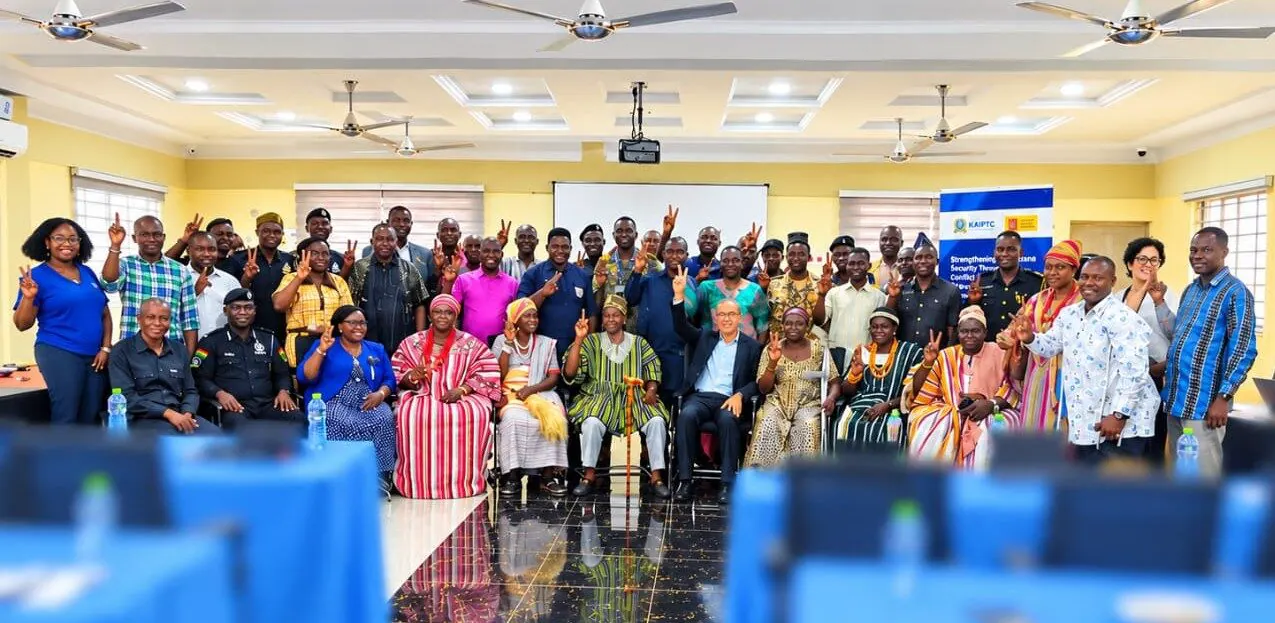
The Kofi Annan International Peacekeeping Training Centre (KAIPTC) has partnered with the National Peace Council (NPC) to organise a workshop aimed at strengthening trust and collaboration between security agencies and civilians in the Upper West Region. The two-day workshop, dubbed: “Strengthening Civilian Security Trust and Community Resilience in Preventing Violent Extremism Workshop,” was funded by the Government of Spain. The engagement brought together over 40 participants from security agencies, traditional and religious institutions, Civil Society Organisations (CSOs), women and youth groups, persons with disabilities, and the media.
Addressing participants at the workshop in Wa, Ambassador of Spain to Ghana, His Excellency Ángel Lossada Torres-Quevedo, emphasised that security was a shared responsibility that required trust and cooperation among all sections of society. He observed that building confidence and trust among communities, authorities, and other stakeholders was essential to addressing major security threats. The Ambassador also stressed the need to ensure the involvement of women, persons with disabilities, and other minority groups in efforts to strengthen national security.
Air Vice Marshal David Anetey Akrong, the Commandant of KAIPTC, noted that effective prevention of violent extremism depended on relationships and trust between communities and security institutions. He said prevention must begin much earlier, when communities were resilient enough to withstand extremist narratives, and when young people had confidence in their institutions. The Commandant added that women, traditional and religious leaders, and marginalised communities must have meaningful opportunities to contribute to preventing violent extremism.
The workshop culminated in the development of a regional action plan and recommendations towards preventing violent extremism. Mr Frank Wilson Bodza, Director in charge of Conflict Management and Resolution at the National Peace Council, observed that civilians played a critical role in supporting security agencies to identify and respond to emerging threats within communities. He said the workshop was part of programme interventions to be implemented in the Upper West, Savannah, North East, and Upper East Regions.
DCOP Mr Francis Yiribaare, the Upper West Regional Police Commander, reiterated that trust was a vital instrument for effective law enforcement and the prevention of violent extremism. He said trust was closely linked to accountability, fairness, respect for human rights, and the responsiveness of security agencies to the communities they served. The Police Commander challenged security institutions to be proactive, fair, and accountable, including acknowledging mistakes and apologising when they went wrong.
The discussions at the workshop focused on regional security context and trust between communities and security institutions; civilian and security collaboration, communication, and accountability; and the roles of traditional authorities, religious leaders, women, and youth in peacebuilding. The participants emphasised the need for stronger collaboration and cohesion among Ghana’s security agencies, local authorities, businesses, and other stakeholders to strengthen the country’s resilience to violent extremism.
The KAIPTC and NPC have taken steps to ensure that the outcomes of the workshop are implemented. The engagement demonstrated that preventing violent extremism required the collective efforts of state and non-state actors. The stakeholders at the workshop agreed to work together to implement the regional action plan and recommendations.
Key points
- The Kofi Annan International Peacekeeping Training Centre and National Peace Council have partnered to strengthen trust and collaboration between security agencies and civilians in preventing violent extremism.
- The workshop brought together over 40 participants from various sectors to discuss regional security context and trust between communities and security institutions.
- The engagement culminated in the development of a regional action plan and recommendations towards preventing violent extremism.