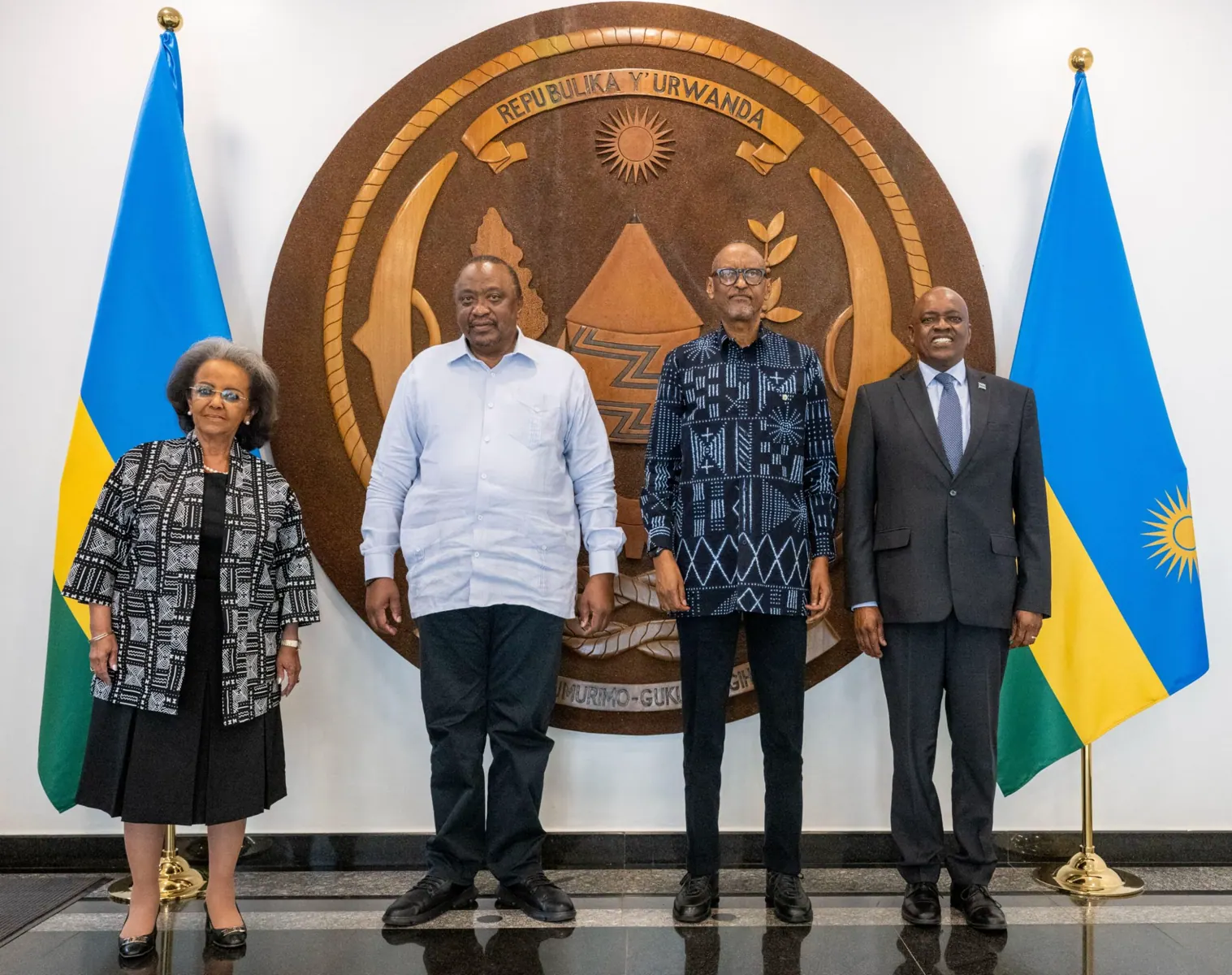
The African Union Peace Panel, tasked with advancing a political peace process in eastern Democratic Republic of Congo, met with Rwandan President Paul Kagame in Kigali on October 5. The panel, comprising former Ethiopian President Sahle-Work Zewde, former Kenyan President Uhuru Kenyatta, and former Botswana President Mokgweetsi Masisi, aimed to gather perspectives on the peace process, security, and humanitarian situation in the region. The meeting followed consultations with the leadership of AFC/M23 in Goma, a significant development in the peace process.
The AU panel's visit to Goma and subsequent meeting with President Kagame are crucial steps in advancing the peace process. AFC/M23, which controls substantial territory in North and South Kivu, including Goma, must be directly involved in any process seeking to address the conflict through political negotiations. The group's participation is central to achieving a lasting resolution to the conflict. The AU panel's consultations with various stakeholders, including MONUSCO, OCHA, and the International Committee of the Red Cross, demonstrate its commitment to understanding the complexities of the conflict.
The peace process in eastern DRC has been ongoing, with repeated agreements and mediation efforts. However, violence and displacement have continued. The current process, which includes the Doha talks between Kinshasa and AFC/M23 and the Washington process between Rwanda and the DRC, has more defined mechanisms, timelines, and international coordination than earlier efforts. The AU panel's engagement with key actors, including AFC/M23 and Rwanda, aims to connect the different strands of the peace effort and ensure tangible improvements for communities affected by the conflict.
President Kagame received the AU panel at Urugwiro Village, where discussions focused on the AU-led peace process, its next steps, and addressing the root causes of instability in eastern DRC. The visit also followed a meeting between Foreign Minister Olivier Nduhungirehe and Kenyatta, during which Rwanda and the AU delegation discussed the work of the panel and efforts to advance the continental peace process. The AU panel's mission allows facilitators to take positions and concerns gathered from actors on the ground into discussions with regional governments involved in the wider peace architecture.
The AU's six-month roadmap, adopted in July, assigns the facilitators work ranging from political analysis and security issues to humanitarian access, dialogue with armed groups, regional economic cooperation, and engagement with civil society. The roadmap also calls for closer coordination with the Washington and Doha processes and measurable implementation of existing commitments. The AU panel's latest mission appears designed to connect the different strands of the peace effort rather than create another separate negotiation.
In August, Kinshasa and AFC/M23 agreed on a roadmap setting out sequenced steps and timelines for negotiations under the Doha framework. Similarly, Rwanda and the DRC agreed to advance measures aimed at strengthening monitoring and verification of their commitments, alongside preparations for an October trilateral planning conference. The AU facilitators' growing engagement with AFC/M23, Rwanda, and other parties aims to turn existing structures into compliance on the ground.
The challenge for the AU facilitators is whether their engagement can help translate commitments into tangible improvements for communities affected by the conflict. Years of conflict in eastern DRC have produced repeated agreements, declarations, and mediation efforts, while violence and displacement have continued. The current process has a more defined mechanism, timelines, and international coordination than many earlier efforts. The AU panel's engagement with key actors will be crucial in determining the success of the peace process.
Key points
- The African Union Peace Panel met with Rwandan President Paul Kagame to discuss the peace process in eastern Democratic Republic of Congo.
- The AU panel's visit to Goma and meeting with AFC/M23 leadership is a significant development in the peace process.
- The peace process in eastern DRC has been ongoing, with repeated agreements and mediation efforts, but the current process has a more defined mechanism, timelines, and international coordination.