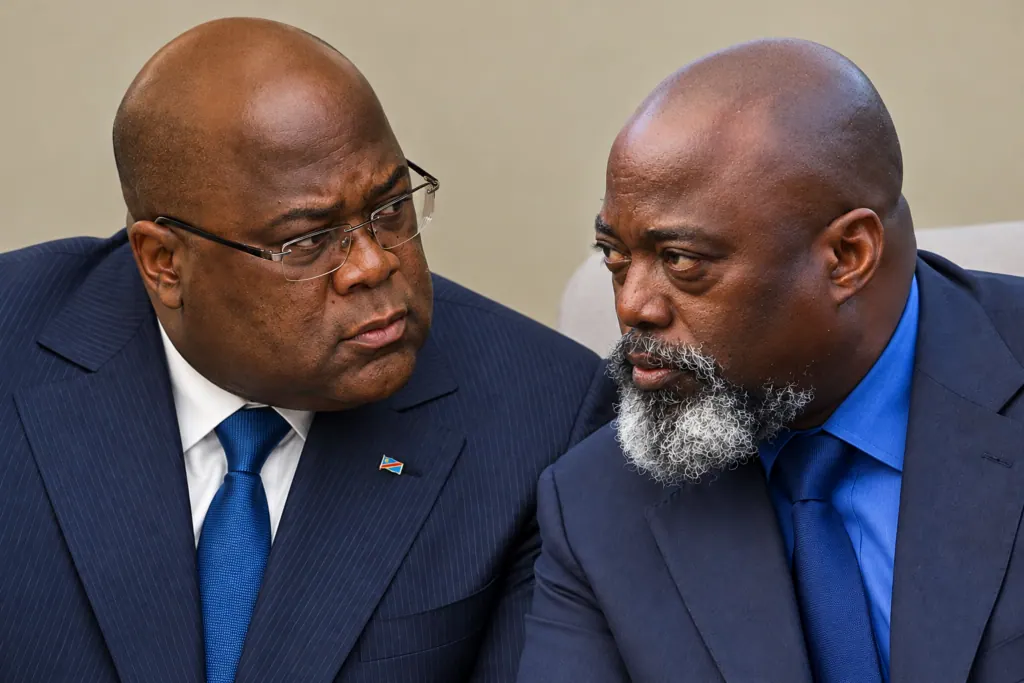
Former Democratic Republic of the Congo (DRC) President Joseph Kabila has cautioned current President Félix Tshisekedi against assuming that a recently signed agreement with the United States on critical minerals guarantees Washington's unconditional political support. In a national address from Goma, in AFC-M23 rebel-held territory, Kabila stated that the agreement between two states remains in force regardless of changes in political leadership. He emphasized that the rights and obligations under such agreements are guaranteed by the principle of state continuity, not by the permanence of the regime in power.
Kabila's address was part of a broader attack on Tshisekedi's administration, which he accused of undermining democratic institutions, worsening insecurity, and mismanaging the country's natural resources. He claimed that the government had little prospect of resolving the country's multiple crises, prioritizing remaining in power over serving the public interest. Kabila also criticized the management of the country's mineral wealth, stating that the sell-off of critical minerals had compromised national independence and the interests of future generations.
The DRC holds substantial reserves of minerals, including cobalt and copper, crucial for batteries, electric vehicles, and advanced technologies. The country's mineral resources have attracted growing international interest, including from the United States, which seeks to strengthen critical mineral supply chains. Kabila did not provide details of the specific provisions of the agreement with Washington or identify any breached clauses, focusing instead on the distinction between state commitments and government survival.
Kabila, who led the DRC from 2001 to 2019, stated that the country faces a crisis threatening its national unity, stability, and future as a state. He accused Tshisekedi's government of pursuing a military strategy in eastern DRC that it lacked the capacity or political will to win. Kabila called for an inclusive national dialogue to resolve the crisis and urged Congolese citizens to take responsibility for the country's future.
The former president concluded by announcing that he would outline further proposals in the coming hours, days, and weeks. His address marks another public intervention by Kabila, who has increasingly criticized the direction of the country under his successor. Kabila's comments raise questions about the political implications of the minerals agreement with the United States, particularly whether closer economic ties with Washington can translate into lasting political support for the government in Kinshasa.
According to Kabila, the country's public debt has exceeded $18 billion, citing what he described as corruption, embezzlement of public funds, and unfair contracts. He emphasized that agreements bind states, not individual leaders or the political regimes they represent. Kabila's position is that such support cannot be assumed simply because an agreement has been signed.
The address has sparked interest in the implications of the minerals agreement and Kabila's growing criticism of Tshisekedi's administration. As the country navigates multiple crises, Kabila's call for an inclusive national dialogue and his emphasis on state continuity and responsibility may resonate with some citizens. The situation remains complex, with various stakeholders vying for influence and solutions to the country's challenges.
Key points
- Kabila warns Tshisekedi that a US minerals deal does not guarantee regime survival.
- Kabila accuses Tshisekedi's administration of undermining democratic institutions and mismanaging natural resources.
- The DRC holds substantial reserves of critical minerals, including cobalt and copper.