Kabale University is seeking additional government funding to operationalise its proposed campuses in Kisoro and Rukungiri districts. The university cites financial constraints, inadequate staffing, and a shortage of infrastructure as major challenges. To expand, the university requires substantial investment in recruiting academic and administrative staff, constructing facilities, and acquiring equipment to support teaching and learning.
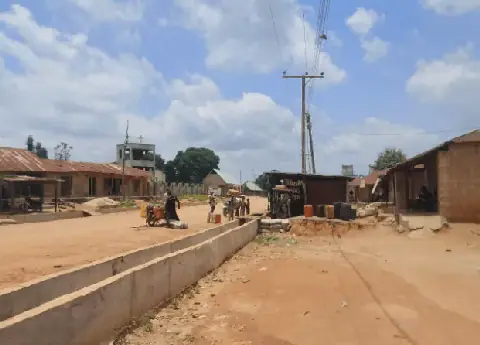
Kabale University attained public university status in July 2016 and has since opened a branch in Rukungiri District in May 2025. In February 2026, it signed an agreement with Kisoro District Local Government to take over the defunct Kisoro Primary Teachers' College and establish a campus offering health sciences programmes. The expansion aims to bring university education closer to learners in Rukungiri, Kanungu, and neighbouring districts.
The Kisoro campus is expected to attract students from Rwanda and the eastern Democratic Republic of Congo. University Council Chairperson Adison Kakuru said the institution needed additional resources to implement its expansion programme. Kakuru noted that the new campuses had created additional financial obligations that the university could not meet under its current funding arrangements.
Kakuru appealed to the government to increase funding to enable the university to recruit more staff, develop infrastructure, and acquire the facilities required to make the campuses fully operational. University Chancellor Canon Matthew Rukikaire disclosed that the institution was operating with approximately 25 per cent of its approved staff establishment. This staffing shortage affects the university's capacity to meet its growing academic and administrative demands.
Rukikaire called on the government to provide additional resources to facilitate staff recruitment and the construction of modern teaching and learning facilities. However, neither Kakuru nor Rukikaire disclosed the amount of money required to operationalise the two campuses and address the university's staffing and infrastructure needs.
Prime Minister Robinah Nabbanja pledged to present the university's funding concerns to the Ministries of Education and Sports and Finance for consideration. Nabbanja urged universities to equip graduates with practical skills aligned with the government's four priority areas: Agro-industrialisation, Tourism, Mineral development, and Science, Technology and Innovation.
Nabbanja emphasized that these priorities are central to Uganda's ambition of building a $500 billion economy by 2040, requiring a skilled workforce capable of supporting industrial and technological growth. The Prime Minister's message was delivered by the Minister of Security, Maj. Gen. Jim Muhwezi, who represented her as chief guest at the university's 11th graduation ceremony, where 2,469 students graduated.
Key points
- Kabale University requires government funding to operationalise its new campuses in Kisoro and Rukungiri districts.
- The university faces financial constraints, inadequate staffing, and a shortage of infrastructure.
- The government has pledged to consider the university's funding concerns.