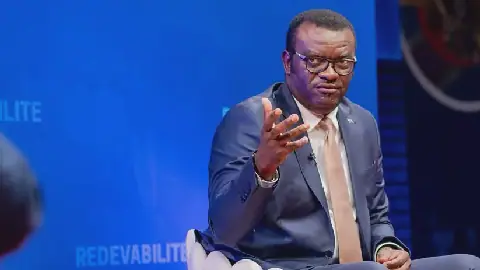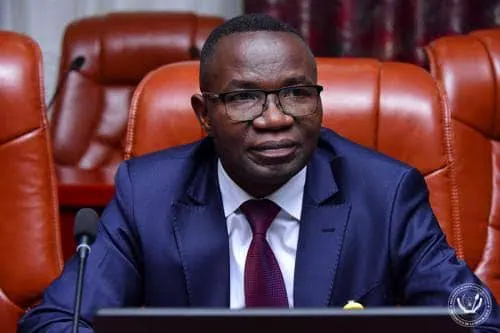
Julien Paluku, a prominent figure in the Democratic Republic of Congo's government, has been given multiple opportunities to serve in various capacities, including as governor of North Kivu, minister of industry, and minister of external trade. Despite his lack of tangible results, Paluku has continued to be reappointed, illustrating a Congolese phenomenon where political failure does not necessarily lead to removal from office. Instead, it often results in a promotion or a new role.
Paluku's tenure as governor of North Kivu was marked by controversy, with multiple motions of no confidence filed against him between 2007 and 2013. Despite these challenges, he managed to survive and eventually transition to a role in the national government. As minister of industry, Paluku launched an ambitious industrialization plan, which included the development of special economic zones and a focus on agro-food, pharmaceutical, chemical, and textile industries.
The industrialization plan, which was approved by the government in 2021, had an estimated budget of $58 billion and aimed to substitute imports with local production, develop six industrial areas, and prioritize specific industries. However, five years after the plan's launch, the results have been disappointing. According to the World Bank, the Congolese economy's growth in 2025 was primarily driven by the extractive sector, with mining activity increasing by 10.1%, while non-mining sectors grew by only 3.1%.
The country's trade data also paints a bleak picture, with copper cathodes accounting for 60.2% of exports, followed by cobalt products at 17.2%, and copper ores and concentrates at 7.8%. Other mining products make up the bulk of the country's exports, while domestically created products are virtually non-existent. This has led to criticism that Paluku's industrialization plan has failed to deliver on its promises.
Paluku's survival in politics has been attributed to his ability to build strong relationships with various stakeholders, including regional and partisan groups. He has demonstrated a talent for "entrepreneurial politics," which allows him to leverage his community ties to stay in power. However, this has come at the cost of tangible results, with many questioning the effectiveness of his leadership.
Despite the lack of progress, Paluku continues to be a key figure in the Congolese government, with his recent appointment to a new role sparking concerns about the country's ability to implement meaningful reforms. As the government looks to the future, it remains to be seen whether Paluku's new role will bring about a change in approach or a continuation of the status quo.
The Democratic Republic of Congo's economy is at a crossroads, with the government facing pressure to diversify its economy and reduce its dependence on extractive industries. With Paluku's industrialization plan having failed to deliver, the government will need to develop new strategies to drive growth and create jobs.
Key points
- Julien Paluku's industrialization plan in the Democratic Republic of Congo has failed to deliver on its promises.
- The country's economy remains largely dependent on extractive industries, with copper and cobalt making up the bulk of exports.
- Paluku's survival in politics has been attributed to his ability to build strong relationships with various stakeholders.