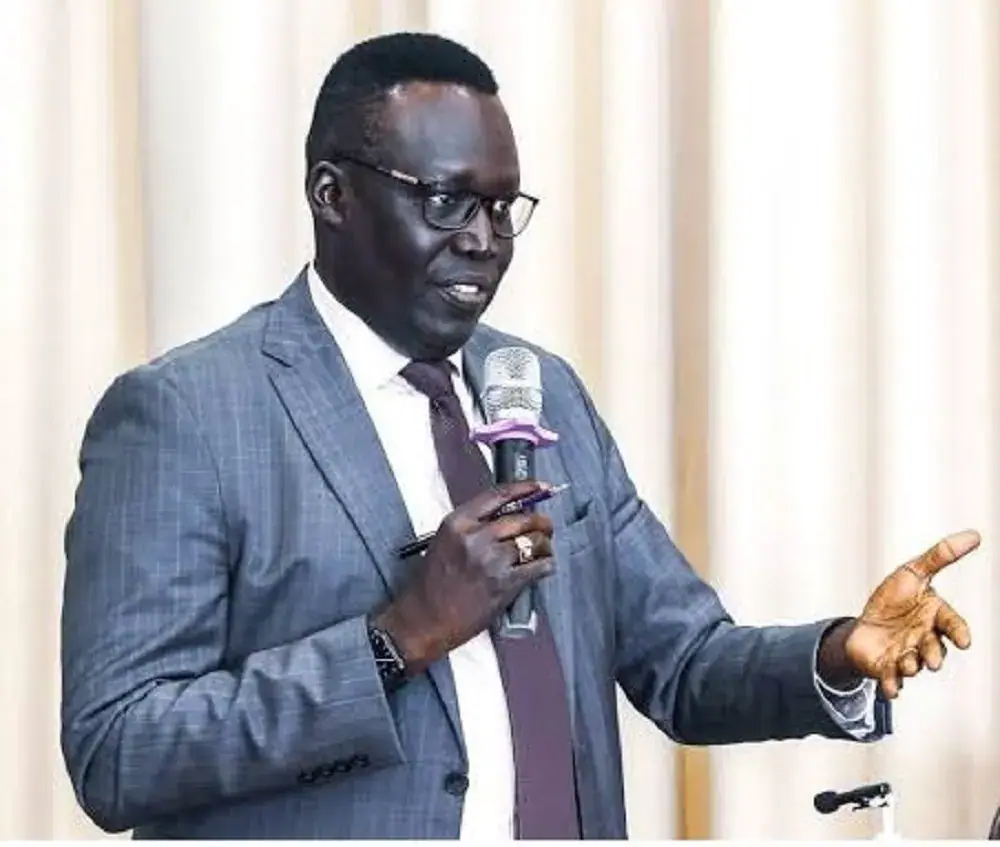
The Juba City Council has taken disciplinary action against 32 employees over malpractice in tax revenue collection. An investigation found that the council was losing about 50 percent of its revenue through financial leakages. Caretaker Mayor Christopher Sarafino Wani Swaka announced the dismissals at a press conference in Juba, stating that those implicated had undergone investigations and audits, and some had admitted to the malpractice.
The council's internal and external audits uncovered irregularities involving revenue collectors, administrative officers, and other personnel responsible for collecting and handling public funds. Swaka stated that the sample size of the investigation revealed that the city council was losing about 50% of its revenue towards leakages, which he described as "very serious." The mayor emphasized that the reform agenda was necessary to address the issue.
To improve accountability and prevent the diversion of public funds, the city council authority has shifted from manual tax collection to a digital system. The council has migrated all its revenue operations from the manual system to a digital platform, providing a legal basis for the new system through a digitalization law passed by the Juba City Council Legislative Council. Swaka stated that the digital platform would enable the council to monitor revenue collections in real-time.
The digital platform allows revenue collectors to use point-of-sale (POS) devices to process payments, while traders can check official charges through the council's website. The approved rates are programmed into the system to prevent officials from changing them or demanding unauthorized payments. Additionally, the council is introducing uniforms and identification numbers for revenue collectors to help residents identify officials and report misconduct.
The council has established an information and communications technology department, fully staffed, and introduced a toll-free line to respond to complaints from traders. Swaka stated that the current initiative was intended to address problems that affected earlier attempts to introduce electronic revenue collection. A similar digital revenue collection system was first introduced in 2015, which increased revenue collections by about 70 percent.
However, the 2015 platform was discontinued following administrative changes, and a subsequent attempt introduced through a mayoral executive order in 2021 was halted around 2023/24 following an audit review and concerns over the system. Swaka emphasized that the current platform was established through legislation rather than an executive order, giving it a stronger institutional and legal foundation.
The council relies on taxes, fees, and other local revenue to finance its operations and provide services, including road maintenance, waste management, security, and urban infrastructure. The mayor stated that the digitalization drive was part of a wider reform agenda covering institutional restructuring, financial management, public engagement, and legal frameworks, aimed at restoring public confidence in the council.
Key points
- The Juba City Council has dismissed 32 employees over tax revenue malpractice and introduced a digital system to improve accountability and transparency.
- The council aims to prevent the diversion of public funds and ensure that money collected from businesses and residents is properly accounted for and used to improve services in the capital.
- The digital revenue collection system was established through legislation to provide a stronger institutional and legal foundation.