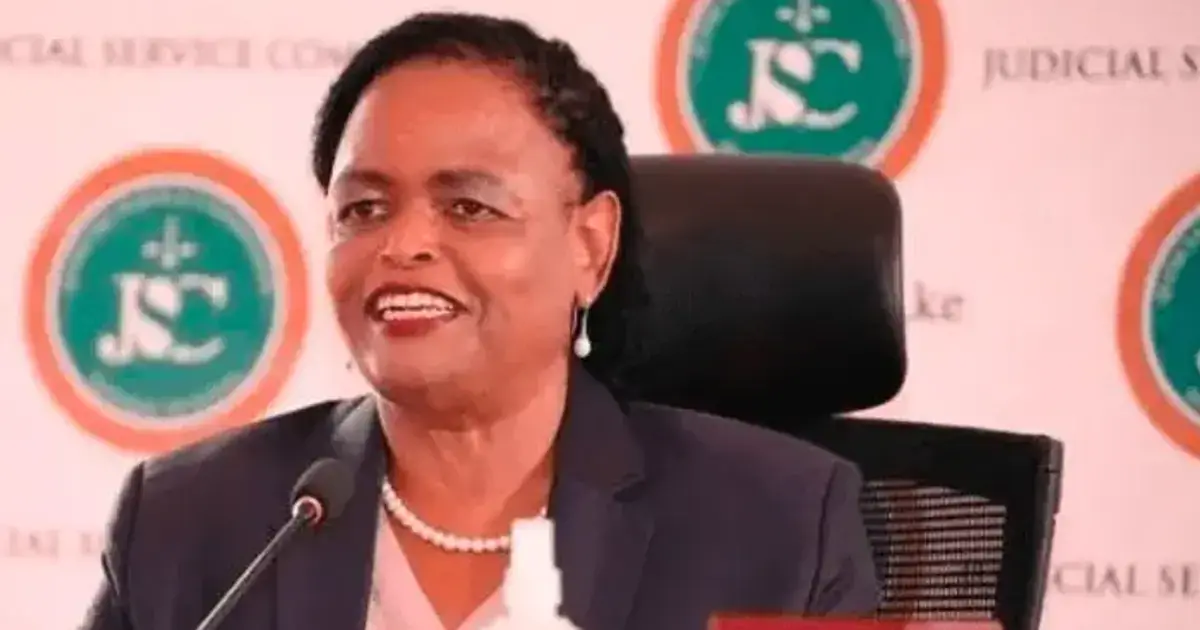
The Judicial Service Commission (JSC) of Kenya has begun a two-day interview process for nine shortlisted candidates vying for the position of Chief Kadhi. The interviews, which started on November 2, 2026, and will conclude on November 3, 2026, aim to identify a qualified leader to head the Kadhis' Courts. The Chief Kadhi is Kenya's senior judicial officer responsible for overseeing Islamic law and heading the Kadhis' Courts, which handle Muslim personal status matters.
The vacancy arose following the passing of the former Chief Kadhi, Sheikh Athman Abdul-Halim Hussein, in mid-2025. Sheikh Hussein was appointed to the role in 2023 and passed away shortly after, leaving a leadership vacuum in the Kadhis' Courts. The JSC officially invited applications for the Chief Kadhi position in January 2026, alongside other senior judicial and administrative vacancies, as part of its efforts to fill key vacancies and strengthen the administration of justice in Kenya.
The Chief Kadhi serves as the administrative leader of the Kadhis' Courts, which handle Muslim personal status matters such as marriage, divorce, and inheritance. The office holder is also responsible for supervising other Kadhis and providing leadership within the Kadhis' Courts system. The JSC has emphasized transparency and integrity throughout the recruitment exercise, reiterating its strict stance on external influence during the application and interview phases.
To ensure fairness, the JSC has warned that canvassing in any form will lead to automatic disqualification, and only shortlisted and successful candidates will be contacted. The Commission is mandated by the Constitution of Kenya to independently recruit and recommend qualified individuals for appointment to various judicial offices, including those presiding over the Kadhis' Courts.
The Kadhis' Courts are constitutionally established to determine questions of Muslim law relating to personal status, marriage, divorce, and inheritance. These courts exercise jurisdiction specifically where all involved parties profess the Muslim religion and voluntarily submit to their authority. The appointment of a new Chief Kadhi is expected to fill the leadership vacuum and ensure continuity, stability, and robust administration of justice for Muslim communities across Kenya.
The recruitment process is a critical milestone in finding a qualified leader for the judiciary, and the JSC is expected to recommend a candidate for appointment to the position. The interviews represent a crucial step in ensuring that the selected candidate possesses the necessary qualifications and expertise to lead the Kadhis' Courts effectively.
The successful candidate will be tasked with providing administrative leadership to the Kadhis' Courts and overseeing the implementation of Islamic law in Kenya. The appointment is expected to bring stability and continuity to the Kadhis' Courts, ensuring that Muslim communities in Kenya continue to access justice in accordance with their faith.
Key points
- The JSC has shortlisted nine candidates for the Chief Kadhi position, which became vacant following the passing of Sheikh Athman Abdul-Halim Hussein in mid-2025.
- The Chief Kadhi is responsible for overseeing Islamic law and heading the Kadhis' Courts, which handle Muslim personal status matters such as marriage, divorce, and inheritance.
- The JSC has emphasized transparency and integrity throughout the recruitment exercise, warning that canvassing in any form will lead to automatic disqualification.