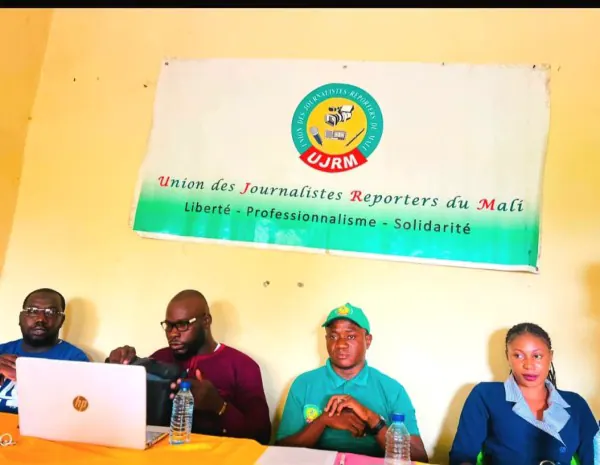
The Union of Journalists of Mali (UJRM) recently organized a meeting to discuss the collective agreement of the press, which has been in place since 2009. The meeting was held in response to concerns about the future of the profession and the working conditions of journalists. According to Boubacar Kanouté, president of the UJRM, the collective agreement is a vital document that must be understood and applied by all parties involved.
Kanouté noted that many journalists employed in the industry are unaware of the existence or content of the collective agreement, despite its importance in outlining their rights and obligations. He emphasized that the document must not remain a mere formality, but rather a living document that guides the relationships between employers and employees in the media sector. The UJRM has taken it upon itself to create a platform for journalists to understand and discuss the collective agreement.
The meeting featured a presentation by Sékou Issa Diarra, an expert in human resources and decentralization. Diarra highlighted the importance of the collective agreement in protecting the rights of journalists and ensuring fair treatment. He noted that the agreement sets a minimum salary for journalists, which cannot be lower than the inter-professional minimum wage (SMIG) of 40,000 FCFA, which has been in place since January 2016.
However, Diarra also acknowledged that the cost of living has changed significantly since 2009, and that the collective agreement must be revised to reflect these changes. He emphasized that the revision must prioritize the social protections of journalists, who are often vulnerable to social risks. The UJRM has welcomed the initiative to revise the collective agreement, which is seen as a crucial step towards improving the working conditions of journalists.
Kanouté also noted that the media landscape in Mali has undergone significant changes since 2009, with the rise of digital media and new challenges for journalists. He emphasized that the collective agreement must be adapted to these changes, and that the UJRM is committed to working with all parties involved to ensure that the agreement is revised and implemented effectively.
The revision of the collective agreement is seen as a key step towards promoting a more professional and sustainable media sector in Mali. The UJRM has called on all stakeholders to support the revision process, which is expected to improve the working conditions and protections of journalists. The organization has also emphasized the importance of social dialogue and collaboration between employers and employees in the media sector.
The meeting was part of a broader effort to promote the rights and interests of journalists in Mali. The UJRM has been actively engaged in promoting the welfare of journalists, and has called on the government and media owners to prioritize the protection and support of journalists. The organization has also highlighted the importance of a free and independent press in promoting democracy and development in Mali.
Key points
- The Union of Journalists of Mali has organized a meeting to discuss the collective agreement of the press.
- The collective agreement outlines the rights and obligations of journalists and must be understood and applied by all parties involved.
- The agreement must be revised to reflect changes in the cost of living and the media landscape in Mali.