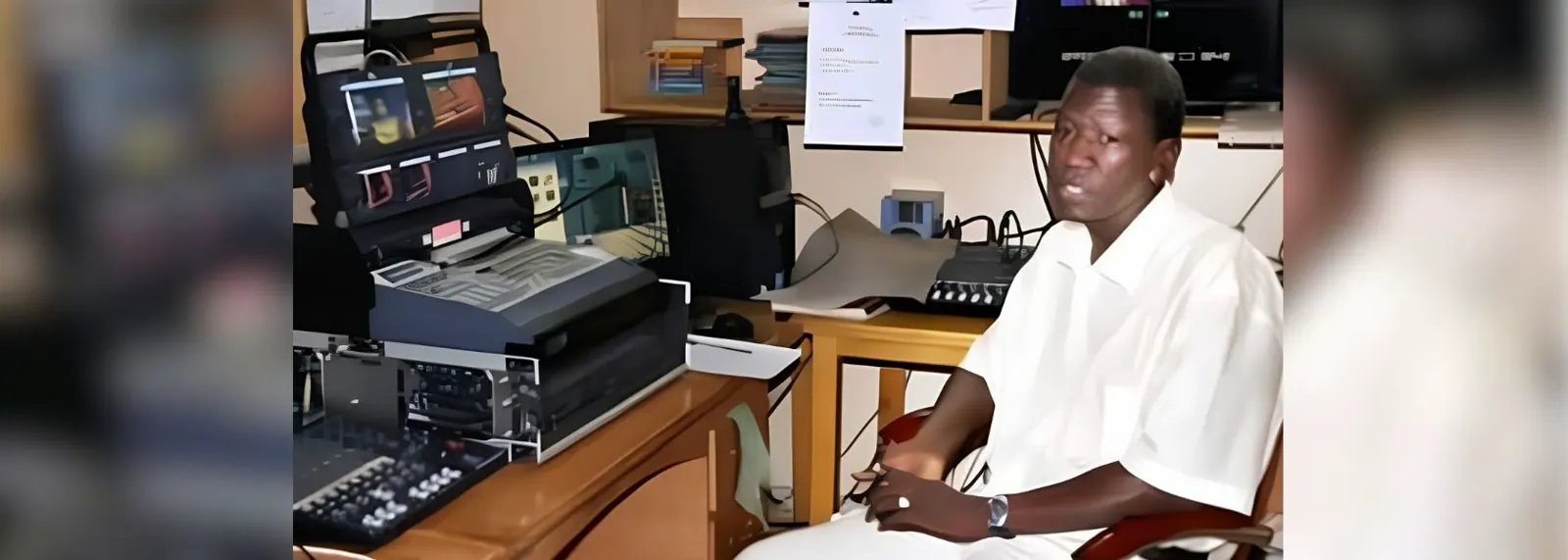
Moussa Kaka, a prominent journalist in Niger, has been confirmed alive after weeks of uncertainty surrounding his disappearance. His detention was confirmed by the Nigerien Minister of Justice and Human Rights, Alio Daouda, following an intense mobilization effort by various organizations and individuals. Kaka, who heads the Radio Television Saraounia (RTS), had been missing since August 31, 2026, amid a restrictive press environment in West Africa.
The confirmation of Kaka's detention has brought relief to his colleagues and supporters, who had feared the worst. His disappearance occurred in the aftermath of a failed coup attempt by a faction of the military in late August. The Nigerien authorities have not disclosed the charges against Kaka, but his history of confrontations with the government suggests that his detention may be related to his journalistic work.
The effort to secure information about Kaka's whereabouts was led by Reporters Without Borders (RSF), which had contacted the African Union's special rapporteur on freedom of expression and access to information, as well as the UN's working group on enforced or involuntary disappearances. The mobilization effort also involved the Observatory for the Protection of Human Rights Defenders, the International Federation for Human Rights (FIDH), Amnesty International, and the African Meeting for the Defense of Human Rights (Raddho).
In Niger, the collective G25-Niger, a civil society organization, played a significant role in identifying Kaka's place of detention. The combined pressure from these organizations and individuals compelled the Niamey authorities to acknowledge that Kaka was in their custody. This development demonstrates that concerted action can still yield results, even in a challenging environment.
While Kaka's detention has been confirmed, his exact location and the conditions of his detention remain unclear. The next step is to secure his release and ensure that he can resume his work without fear of persecution. The fact that Kaka is alive is a welcome development, but it also highlights the ongoing challenges faced by journalists in West Africa.
Kaka's case is not isolated, as several other journalists are still missing in the region, including Habib Marouane Camara and Atiana Serge Oulon. The situation underscores the need for continued mobilization and pressure on governments to respect the rights of journalists and ensure their safety.
The confirmation of Kaka's detention also raises questions about the broader context of press freedom in West Africa. The region has seen a decline in press freedom in recent years, with governments increasingly using repression and intimidation to silence critical voices.
Key points
- Moussa Kaka's detention highlights the challenges faced by journalists in West Africa.
- The mobilization effort by various organizations and individuals led to the confirmation of Kaka's detention.
- Kaka's case underscores the need for continued pressure on governments to respect the rights of journalists.