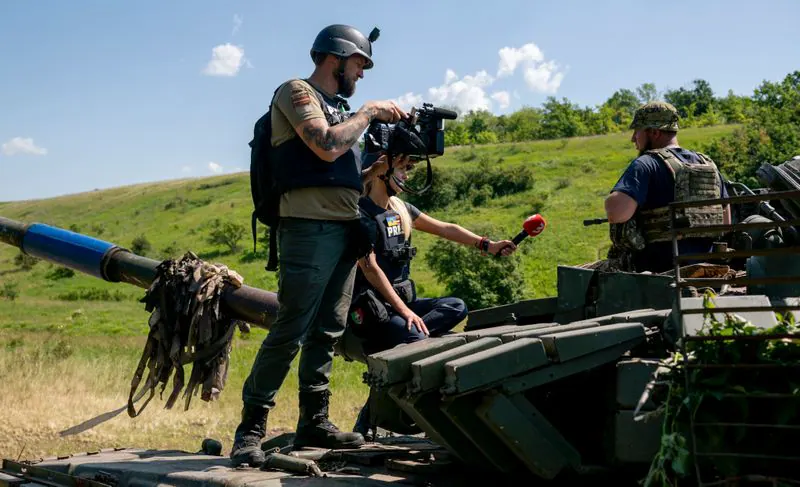
The world is facing numerous challenges, from wildfires and geopolitical shocks to endless wars and the spread of misinformation online. In such times, journalists play a vital role in providing facts and clarity, enabling citizens to make informed decisions and participate meaningfully in public life. According to Meera Selva, CEO of Internews Europe, journalists are essential for making sense of crises and giving communities a voice.
Journalists are the storytellers who probe, question, and irritate the powerful, holding them accountable for their actions. They sit with the grieving, listen to the furious, and try to understand their perspectives. In every community, village, town, and region, there are natural journalists who observe, record, analyze, and challenge, often working for local and independent media outlets that might not have significant market support.
These local journalists are often the eyes and ears of their communities, holding cameras and trying to capture the stories that need to be told. They are the ones who spot irregularities, such as diggers rolling into a remote town, and wonder if the activities are legal. They also listen to the voiceless, allowing them to have a voice and tell their stories.
Journalists need recognition, protection, and support to continue doing their job. They require legal covers to safeguard them from powerful individuals who try to stop them from asking difficult questions and uncovering answers. They also need backup when fighting technology companies that profit from their work without paying for it.
The importance of a plurality of journalists cannot be overstated. Small, independent outlets are crucial for harnessing the energy of the streets, while large, well-established newsrooms are necessary for taking on big fights. This diversity is essential for the functioning of information ecosystems, which rely on a range of perspectives and approaches to storytelling.
The challenge of supporting journalists and promoting media trust is a generational one. Young people are picking up cameras and phones to record their own stories and engage with public life, presenting an opportunity for new mobile-first outlets and established newsrooms to win the trust of younger audiences.
Ultimately, the role of journalism in providing facts and clarity is crucial for meaningful civil participation. Without reliable information, citizens are unable to make informed decisions or participate effectively in public life. As Meera Selva notes, anyone who wants to sow confusion and misery tries to take away information, silence questioners, and deny people the right to know about the world around them.
Key points
- Journalists play a vital role in providing facts and clarity in times of crisis.
- Local and independent journalists are essential for telling the stories that need to be told in their communities.
- A plurality of journalists, including small and large outlets, is necessary for the functioning of information ecosystems.