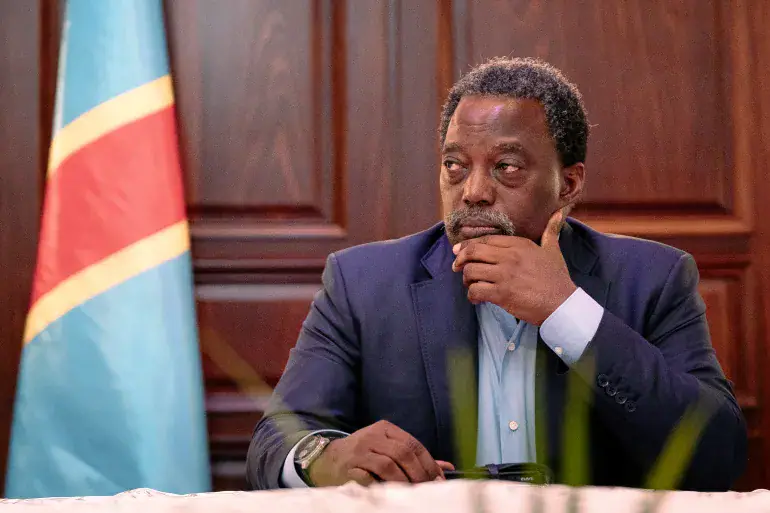
Former Democratic Republic of Congo President Joseph Kabila has accused the current administration of Félix Tshisekedi of collaborating with the Forces Démocratiques de Libération du Rwanda (FDLR), a group formed by Hutu extremists responsible for the 1994 genocide against Tutsis in Rwanda. In an interview with Conspiracy Tracker Great Lakes, Kabila claimed that the FDLR is currently enjoying support and protection from the Tshisekedi administration. He expressed concern over the group's continued influence in the region.
Kabila, who now leads the Front pour la Refondation de la Nation (FRN) opposition group, heavily criticized the military operations of the Tshisekedi administration, saying they lack the will and capacity to defeat the FDLR and other armed groups. He also accused the administration of failing to honor agreements made with neighboring countries and the international community to combat these groups. Kabila pointed to the Doha agreement as an example of unfulfilled commitments.
The former president emphasized that the security situation in eastern DRC cannot be understood without considering the historical context of the region, particularly the aftermath of the 1994 genocide. He stated that the FDLR and other groups have continued to spread their ideology of hate, which was brought to the Congo by those who participated in the genocide. Kabila noted that his administration had taken steps to combat these groups, including using military force.
According to Kabila, since 2006, the DRC has worked with neighboring countries and the international community to combat the FDLR, ADF, and other armed groups, but these efforts have not been 100% successful. He claimed that progress made in this area was reversed after he left office in 2019, and that the Tshisekedi administration has instead provided support to these groups. Kabila alleged that the FDLR is now openly receiving arms and has been integrated into the military and security apparatus.
A 2026 report by UN experts confirmed that DRC military forces have been collaborating with the FDLR. Kabila stressed that the FDLR issue must be resolved by the DRC itself, rather than being turned into a problem for Rwanda or other countries. He emphasized that the DRC must build its capacity to address the issue, using all necessary means, including dialogue and education, to counter the genocidal ideology.
Kabila also criticized the way Rwanda is being used in DRC politics, saying that attacks on Rwanda have become a standard political tactic for the Kinshasa administration. He expressed concern that this approach will not lead to a lasting solution to the security challenges in the region. Instead, Kabila advocated for a more nuanced approach that addresses the root causes of the problem.
Kabila's comments have sparked a new wave of tensions between the DRC and Rwanda, with many calling for calm and a renewed focus on regional cooperation to address the security challenges. The situation remains complex, with multiple armed groups operating in the region and a long history of conflict and mistrust between countries.
Key points
- Joseph Kabila accused the Tshisekedi administration of collaborating with the FDLR.
- Kabila criticized the military operations of the Tshisekedi administration.
- Kabila emphasized that the FDLR issue must be resolved by the DRC itself.