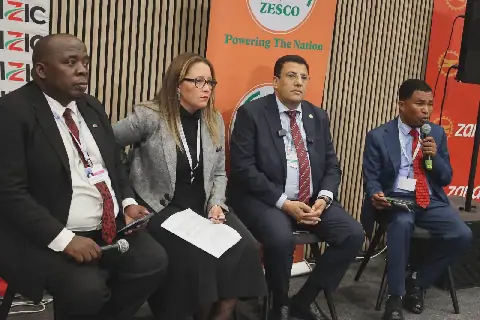
Former Nigerian President Goodluck Jonathan has called for an end to identity politics in Nigeria, stating that the country's development is being hindered by the practice of selecting leaders based on religion, ethnicity, and language. Speaking at the Herbert Macaulay Colloquium in Lagos, Mr. Jonathan emphasized that Nigeria must prioritize competence and merit in leadership recruitment to move forward. He cited the example of a southern Nigerian state where a Christian denomination dominates, making it difficult for others to become governor.
Mr. Jonathan identified several factors impeding Nigeria's progress, including institutional weaknesses, corruption, policy inconsistency, inadequate infrastructure, and insecurity. He stressed that the country's democratic system needs comprehensive reforms, describing the current system as "opaque and amorphous." According to Mr. Jonathan, Nigeria's democratic framework must be reviewed to ensure popular participation, the rule of law, respect for human rights, judicial independence, accountability, pluralism, and a vibrant civil society.
The former president emphasized the importance of human capital development, particularly in education. He advocated for functional education and research-intensive universities that can drive technological advancement and innovation. Citing India, Singapore, and South Korea as examples, Mr. Jonathan noted that these nations had leveraged quality education to achieve remarkable growth. He warned that Nigeria cannot compete globally with weak educational institutions.
Mr. Jonathan urged Nigeria to invest in its best minds and build world-class universities. He stated that the country must deliberately prioritize education to achieve development. The former president also paid tribute to Herbert Macaulay and other founding nationalists, stating that the greatest honor the country could accord them was not merely celebrating their sacrifices but building a nation that reflected the ideals for which they fought.
The Herbert Macaulay Colloquium marked the 162nd anniversary of the birth of the nationalist pioneer. Mr. Jonathan's address was well-received by the audience, who acknowledged the need for Nigeria to reform its leadership recruitment process and prioritize education. The event provided a platform for stakeholders to discuss the country's development challenges and potential solutions.
Mr. Jonathan's call for reform is not new, but his emphasis on the need for Nigeria to move away from identity politics and prioritize competence and merit in leadership recruitment resonated with the audience. The former president's comments come at a time when Nigeria is facing significant development challenges, including high levels of poverty, unemployment, and insecurity.
The Nigerian government has been criticized for its handling of various development challenges. Mr. Jonathan's comments are seen as a call to action for the government to prioritize reforms and invest in education. The country's development prospects depend on its ability to address these challenges and create a more inclusive and competitive economy.
Key points
- Nigeria must prioritize competence and merit in leadership recruitment to achieve development.
- The country's democratic system needs comprehensive reforms to ensure popular participation and accountability.
- Education is critical to Nigeria's development, and the country must invest in functional education and research-intensive universities.