As the local government elections approach, residents of Johannesburg are expressing frustration with the lack of basic services, corruption, and unemployment. Parts of the inner city have been without electricity for over a week following a fire at City Power's Central Substation on September 26. The prolonged outage has left residents questioning whether voting will bring any change to their lives. Many residents have expressed disappointment with the current state of affairs, citing corruption, unemployment, and lack of basic services as major concerns.
Browns Langa, a 24-year-old resident of Marshalltown, has never voted and sees no reason to do so. He dropped out of school in 2021 during the Covid-19 pandemic after his unemployed parents could no longer afford his school fees. Langa said he would only consider voting once he sees meaningful change. He is currently using generators to survive, which he believes is a waste of money. Langa's experience is not unique, as many young people in Johannesburg are struggling to find stable employment and access basic services.
City Power spokesperson Isaac Mangena said technical teams are working to restore power to the affected areas. Significant progress has been made, with power restored to four distributors supplying Marshall Street East, Grahamstown, Standard Bank, and Carlton Centre. However, customers in parts of Selby West, Selby East, and Albert Street West are still awaiting restoration. Mangena estimated that full restoration will be completed by Thursday, October 8, subject to the completion of outstanding repairs, testing, and safety checks.
The electricity crisis in Johannesburg is not an isolated incident. The fire at City Power's Central Substation was suspected to be linked to criminal syndicates targeting the network. This incident highlights the vulnerability of the city's infrastructure and the need for effective measures to prevent such incidents in the future. Residents like Bhekumuzi Ntuli, who originally from Newcastle, KwaZulu-Natal, have lost faith in the system. Ntuli moved to Johannesburg for work in 2005 but stopped voting in 2010, citing corruption and lack of change.
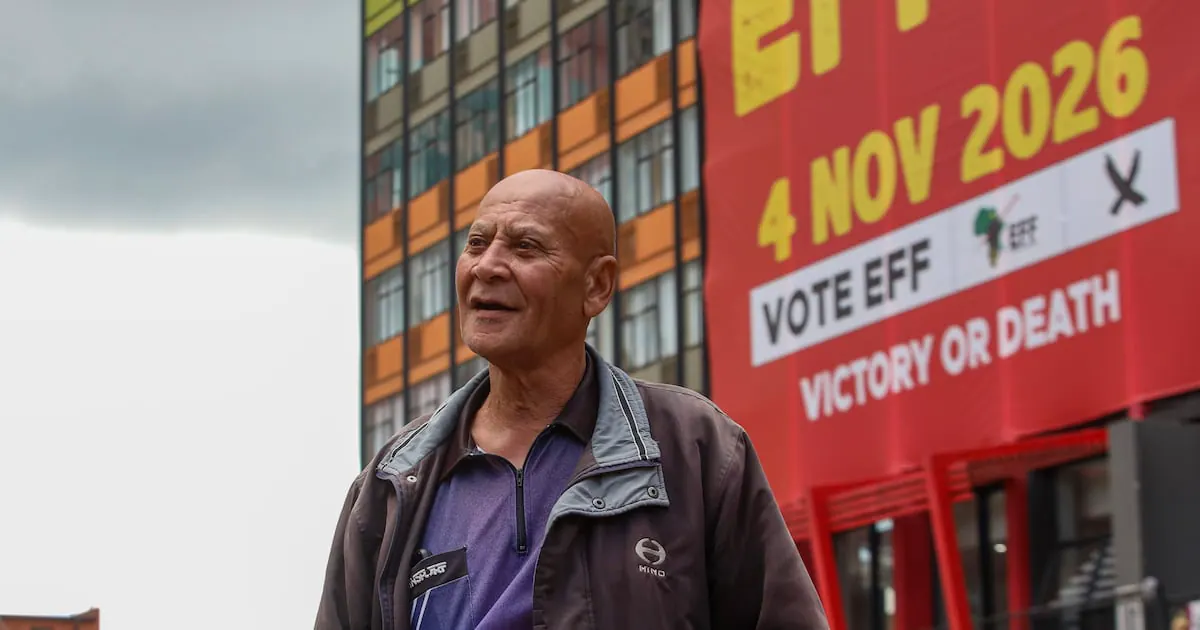
Ntuli is not alone in his frustration. Many residents believe that the rising cost of living is making it increasingly difficult for people to survive. Petrol prices have increased, and the cost of basic goods like bread and oil has also gone up. Nicholas Abrahams, a 72-year-old resident from Florida, has registered to vote because he believes not voting could benefit the ruling party. Abrahams expressed uncertainty about the direction South Africa is taking, citing corruption as a major concern.
Lenga Mamy, a resident of the CBD, had a negative experience during the 2021 elections. He was turned away from voting because he is a foreign national, despite having his documents in check. Mamy said the experience left him frustrated and feeling like he has no voice. He believes that young people need more opportunities, particularly jobs and programmes that can help them build stable careers. Mamy also thinks that young people should be brought to power, and old people should retire.
As the local government elections approach, residents of Johannesburg are calling for change. They want to see effective service delivery, job opportunities, and an end to corruption. The city's residents are eager for a better future, and it remains to be seen whether the upcoming elections will bring about the change they desire.
Key points
- Johannesburg residents are frustrated with the lack of basic services, corruption, and unemployment.
- The prolonged electricity outage has left residents questioning whether voting will bring any change to their lives.
- Residents are calling for effective service delivery, job opportunities, and an end to corruption ahead of the local government elections.