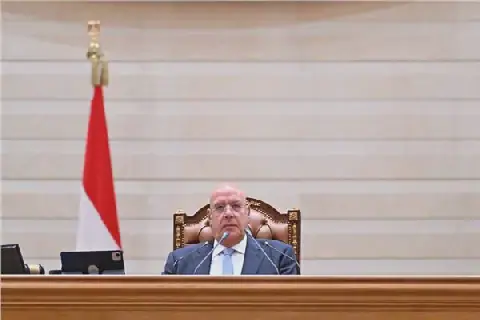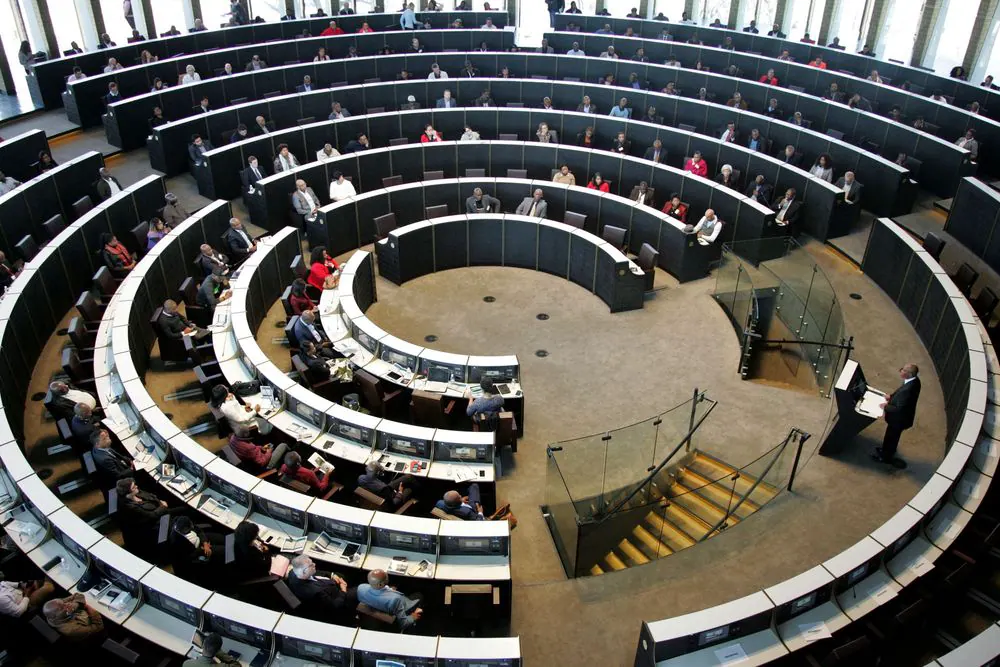
The City of Johannesburg's proposed R25.3 billion capital funding plan for 2026/27 to 2028/29 has been rejected by the council due to insufficient votes. The ANC-led administration secured 117 votes in favour, but fell short of the required 136-vote majority in the 270-seat council. The plan aimed to secure financial stability and fund critical infrastructure projects over a three-year period through substantial borrowing.
The proposal also sought to enable municipal entities such as City Power and Johannesburg Water to secure independent borrowing on their balance sheets. However, opposition parties, led by the DA and ActionSA, blocked the vote, citing concerns over the city's financial sustainability and the potential for financial collapse. The DA expressed skepticism regarding the city's ability to manage its finances and warned of possible court action to halt the borrowing process.
ActionSA maintained that the municipality must demonstrate its capacity to "borrow, spend and repay" its debts before being granted broad authorisation for further loans. The party's concerns centred on the structure and scope of the plan, the assurances provided to the council, and the controls that will apply to the money and resulting obligations. The party demanded that every rand borrowed be accounted for and that investments strengthen service delivery.
ANC spokesperson Mantombi Nkosi accused the DA and ActionSA of political hypocrisy, stating that they frequently highlight Johannesburg's severe service delivery failures, such as electricity outages and water supply interruptions, while opposing investment in infrastructure. Nkosi questioned the opposition parties' lack of an alternative plan, saying, "If the DA and ActionSA believed that the Funding Plan was financially irresponsible, where was their alternative?"
The city is facing severe financial distress due to a massive debt burden, a controversial wage agreement, and an unfunded budget that has left cash reserves critically low. The city owes creditors roughly R25.2bn, including unpaid bills to state utilities such as Eskom and water boards, while holding only about R3.9bn in cash reserves. A two-year salary agreement signed with the South Africa Municipal Workers Union was deemed unaffordable and illegal by the National Treasury.
The National Treasury assessments also revealed an unfunded budget gap of R2.1bn, driven by overstated revenue collections and understated expenditures. The municipality has lost a significant amount of water and electricity to leaks, theft, and non-payment, crippling internal cash flow. The ANC Greater Joburg region accused both the DA and ActionSA of deliberately blocking essential funding meant to fix the City of Johannesburg's crumbling infrastructure.
DA leader in Johannesburg, Belinda Kayser-Echeozonjoku, said the party is not opposed to infrastructure development but wants sufficient information to properly interrogate the proposal. Kayser-Echeozonjoku stated that the city’s own document shows that about R14.1bn of the three-year capital programme is funded through grants and other contributions, while approximately R10bn is funded through loans. The party demands that the ANC-led coalition demonstrate that it has properly pursued and used all appropriate grant funding available for municipal infrastructure.
Key points
- The City of Johannesburg's R25.3 billion capital funding plan was rejected due to insufficient votes in the council.
- Opposition parties, led by the DA and ActionSA, cited concerns over the city's financial sustainability and the potential for financial collapse.
- The city faces severe financial distress due to a massive debt burden, a controversial wage agreement, and an unfunded budget.