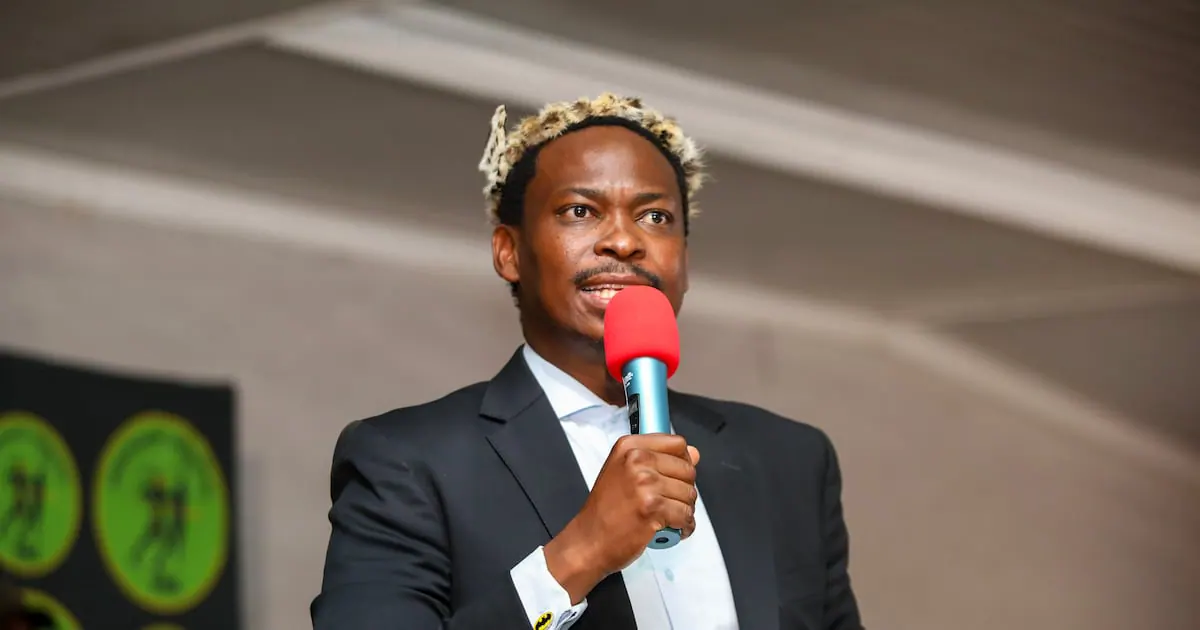
Johannesburg mayoral candidate Bongani Baloyi of the MK Party has urged the city to develop administrative systems that can outlast political changes. He emphasized the need for a plan that endures regardless of who is in charge. Currently, the city's template allows political arrangements to overshadow professional administration, leading to a lack of accountability across departments and entities. This, Baloyi argues, results in projects being delayed or abandoned without anyone taking responsibility.
Baloyi's vision for Johannesburg involves a clear distinction between the political sphere and the city's institutional operations. He believes that the city's governance structure needs to change, rather than simply replacing the mayor. If the system remains unchanged, the same failures can recur. According to Baloyi, political leaders should set the direction, while professional administrators manage the institution, and departments and entities execute the plans.
The MK Party mayoral hopeful made these remarks during a gathering in Orange Farm, where he engaged with residents. He stressed that Johannesburg does not need to be governed by personality, but rather by a stable and effective administrative system. Baloyi argued that an engineer's work should not be affected by a coalition collapse, and a professional official should not require political patronage to perform their job.
Baloyi outlined the numerous challenges facing the city, including infrastructure issues, financial mismanagement, and service delivery disruptions. He reflected on the past political tenure, describing it as a period of instability that has hindered the city's progress. The city's institution is expected to deliver essential services despite changes in political configurations and coalitions.
The MK Party candidate warned of the dangers of allowing political instability to affect the administration, citing its impact on service delivery. He emphasized that long-term investments and projects cannot be restarted every time the balance of power in the council changes. Baloyi argued that political instability becomes a service-delivery problem when it interrupts administration, delays decisions, and weakens accountability.
Under MK Party leadership, Baloyi proposed prioritizing the development of the township economy and the formalization of informal settlements. He acknowledged that the crisis does not only affect the inner city, but also communities across all seven regions, including Alexandra, Diepsloot, Orange Farm, and Soweto. These areas face common challenges, such as unreliable services, deteriorating infrastructure, and limited economic opportunities.
Baloyi also addressed the issue of illegal immigration, announcing plans to clamp down on the problem. He intends to work with the national government to delegate functions and address the crisis. The MK Party candidate emphasized that immigration is a national function, but Johannesburg must enforce what it controls and collaborate with relevant authorities, such as home affairs and the Border Management Authority.
Key points
- The city's administrative systems need to be strong enough to survive political instability.
- The MK Party plans to prioritize the development of the township economy and formalization of informal settlements.
- Baloyi aims to clamp down on illegal immigration in collaboration with national authorities.