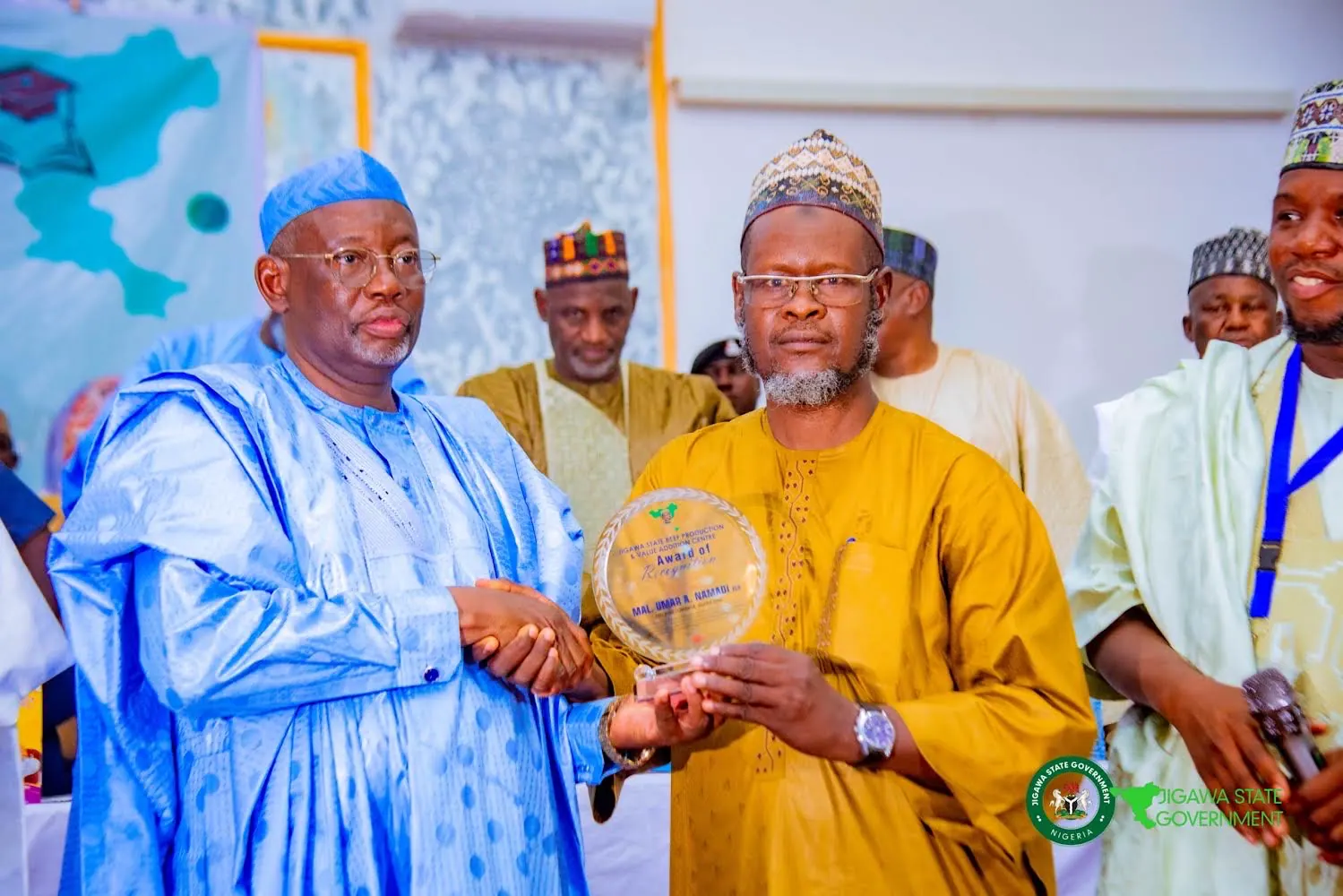
Jigawa State Governor Umar Namadi has announced that the state's next phase of development will focus on knowledge, research, and evidence-based policymaking. Speaking at an interactive session with the Forum of Jigawa Academics, Namadi emphasized the need for collaboration between government and academics to address the state's development challenges. The session, held at the Government House in Dutse, aimed to provide a platform for informed dialogue and practical ideas to strengthen the implementation of the 12-Point Agenda.
The 12-Point Agenda, introduced in May 2023, has guided the state's development program, with a focus on building an inclusive and productive economy, expanding human-development opportunities, and strengthening infrastructure. Namadi stated that the agenda was designed to be dynamic, responding to changing realities, milestones achieved, and the aspirations of the people. The governor highlighted progress made in various sectors, including agriculture, education, and healthcare, and emphasized the need to build on these gains through evidence-based policymaking.
In the agricultural sector, Namadi revealed that the state had established the Jigawa Agricultural Transformation Agency and created a dedicated Ministry of Livestock Development. The state has also partnered with national and international institutions to improve rice production, seed systems, and livestock development. Additionally, the state has invested in agricultural research and knowledge development, including support for PhD and MSc researchers under the Wheat Value Chain Research Programme.
Education remains a priority for the state, with at least 26 percent of the annual government expenditure allocated to the sector. Namadi listed interventions covering infrastructure, instructional materials, and teacher development, including the recruitment of 7,500 J-TEACH staff in basic education. The state has also supported its seven institutions of higher learning with infrastructure, accreditation, and staff development, and sponsored over 90 academic staff for higher degrees in India.
The state has made significant progress in the healthcare sector, revitalizing 180 apex Primary Healthcare Centres and completing and equipping General Hospitals in several areas. Namadi also disclosed that the state had recruited over 1,370 permanent and pensionable health workers and expanded specialist services, including free dialysis and treatment for various diseases.
Infrastructure development has also been a focus, with the state completing over 300 kilometers of inherited road projects and awarding contracts for the construction, rehabilitation, and maintenance of about 1,100 kilometers of roads. The governor highlighted the state's renewable-energy initiatives, investment facilitation efforts, and social protection interventions, including youth and women empowerment programs.
Looking ahead, Namadi outlined three priorities for the next phase of the administration: completing ongoing programs, establishing what works through evidence, and institutionalizing successful reforms. The state's 12-Point Agenda complements President Bola Ahmed Tinubu's Renewed Hope Agenda, particularly in areas such as food security, economic diversification, and human-capital development.
Key points
- Jigawa State's development will be driven by knowledge, research, and evidence-based policymaking.
- The state has made significant progress in various sectors, including agriculture, education, and healthcare.
- The state's 12-Point Agenda complements President Bola Ahmed Tinubu's Renewed Hope Agenda.