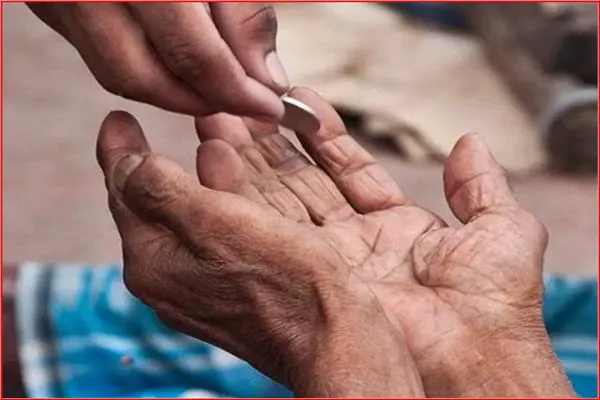
Egypt is struggling to address the growing phenomenon of begging, which has transformed from an occasional sight to a widespread social and economic issue. The practice has spread beyond traditional areas to metro stations, markets, and tourist sites, and even onto social media platforms. This has led to daily problems for pedestrians, particularly when begging turns into harassment or demands for money in exchange for allowing people to pass.
The situation worsens when begging becomes a profession for some groups, relying on it as a source of income, while children are forced into exploitation by being made to beg or sell items on the streets. Despite needing care, protection, and education at this age, children are instead exposed to the dangers of the streets. The issue extends beyond the aesthetic appearance of streets and squares, as the presence of beggars in public areas and transportation hubs poses a challenge to authorities.
With the widespread use of social media platforms, begging has moved into the digital world, using accounts and pages that rely on stirring users' emotions to obtain money and assistance. Various methods are used, including creating pages related to charity work or animal care and publishing emotional stories and videos to attract sympathy and encourage financial support. This has made the phenomenon more complex, allowing it to reach a larger number of people in a short time.
The negative impacts of begging do not stop at the local community and streets but also extend to the tourism sector, particularly when scenes of begging appear in archaeological areas and tourist destinations. Continuous harassment can affect tourists' psychological experience, causing them to reduce their time in certain areas or avoid crowded places. Repeated scenes of begging can also negatively impact the image of a tourist destination.
Egyptian authorities are intensifying campaigns to address various forms of begging and the exploitation of children on the streets and in squares. According to data, thousands of begging cases were arrested in July, a 40% increase compared to the previous year. This reflects the ongoing security campaigns and the expanded scope of dealing with the phenomenon. The security campaign is parallel to a legal framework that criminalizes different forms of begging.
Dr. Hamdi Arefa, a professor of government and local administration, emphasized that addressing the phenomenon does not rely solely on campaigns but requires cooperation between governorates, the Ministry of Social Solidarity, the Ministry of Education, and law enforcement agencies. He pointed out that the most dangerous aspect of the phenomenon is the exploitation of children and their involvement in begging at a young age.
Dr. Arefa and others stress that a database is needed to track the phenomenon, and that a long-term plan is required to address its roots. They also call for the protection of children and the provision of alternative environments to prevent them from returning to the streets. The goal is to move from a policy of "chasing beggars" to one of "drying up the sources of begging" by supporting the most needy families and providing opportunities for vocational training and education.
Key points
- Egypt struggles with rising begging phenomenon
- Authorities intensify campaigns against begging
- Experts call for comprehensive plan to address root causes