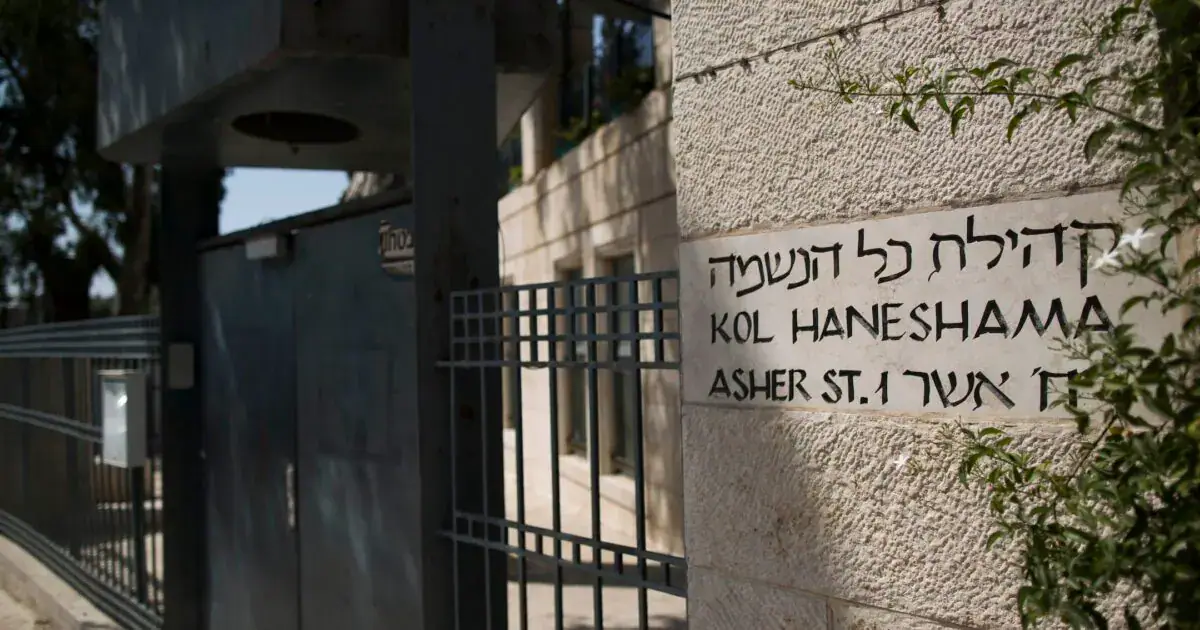
Kol HaNeshama, a Reform synagogue in Jerusalem, has faced a surge in hostility, with five incidents of break-ins, vandalism, and harassment occurring over several weeks. The congregation's leaders attribute the intolerance to a hardening of Israeli society, which they say has been fueled by inflammatory rhetoric from political leaders and a lack of condemnation for the attacks.
The synagogue, founded in 1984 by Levi Weiman-Kelman, has a history of facing opposition. In 1986, a confrontation with a group of followers of Sephardic Rabbi Eliahu Abergil turned physical, with some trying to wrest Torah scrolls away from worshippers. Despite this, the congregation has grown to around 280 member families and serves a larger circle of worshippers from various Jewish backgrounds.
Recently, the synagogue received a show of solidarity from Orthodox rabbis and congregations, who signed letters of support and attended a gathering in the synagogue's sukkah. Rabbi Oded Mazor, the current rabbi of Kol HaNeshama, said that some Orthodox communities explicitly stated that they value the synagogue and will defend its right to exist, despite differences in theology and practice.
The attacks on Kol HaNeshama appear to be motivated by more than just its Reform identity, with congregants reporting harassment and homophobic comments. A large Pride flag in the synagogue's sukkah was targeted, leading Mazor to believe that the attacks were also aimed at the congregation's embrace of LGBTQ+ inclusion.
A solidarity gathering at the synagogue was attended by around 200 people, representing a wide cross-section of Jerusalem's Jewish life. The event was organized with the support of Reshut Harabim, an umbrella network of over 65 Jewish organizations working to promote pluralistic Jewish life in Jerusalem.
The response to the attacks on Kol HaNeshama marks a significant shift from the 1980s, when the congregation faced opposition with little support. Rabbi David Goodman of Moreshet Avraham congregation said that networks like Reshut Harabim help explain the growing support for Kol HaNeshama, saying "what were once disparate communities have become a network that knows how to stand together."
Kol HaNeshama has become an integral part of Jerusalem's Jewish community, with a unique blend of traditional and innovative practices. The synagogue's congregation includes native Israelis and immigrants from various Jewish backgrounds, and its services reflect a participatory and inclusive approach to Jewish worship.
Key points
- The attacks on Kol HaNeshama were motivated by its Reform identity and its embrace of LGBTQ+ inclusion.
- Orthodox rabbis and congregations have shown solidarity with Kol HaNeshama, despite differences in theology and practice.
- The response to the attacks on Kol HaNeshama reflects a growing network of support for pluralistic Jewish life in Jerusalem.