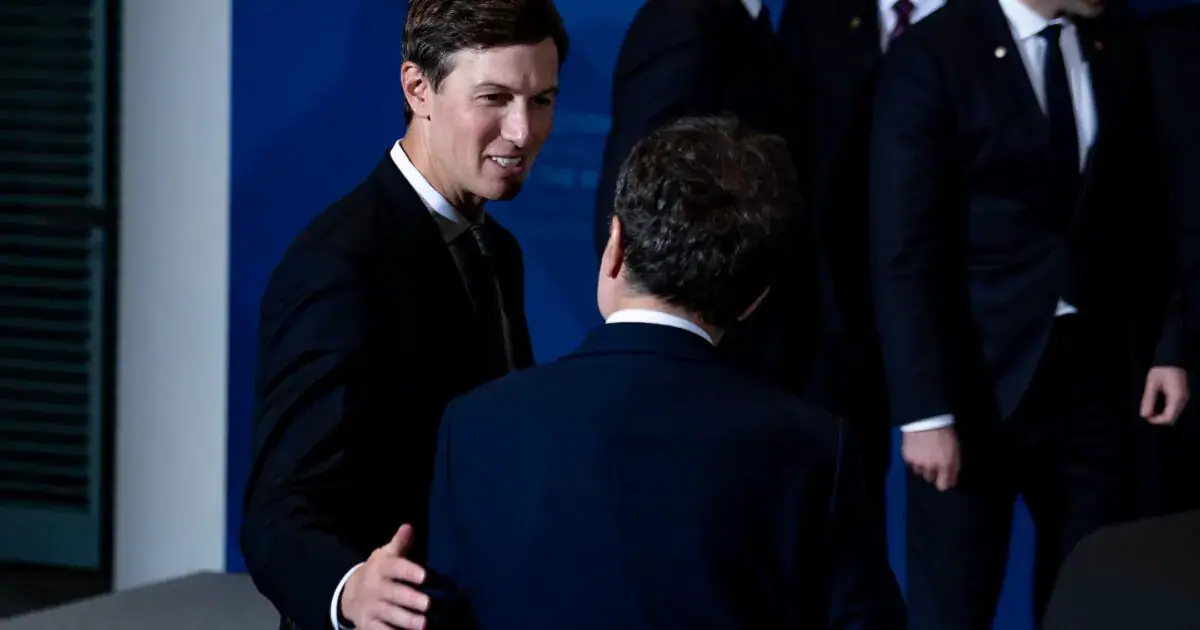
US Special Envoy Jared Kushner has warned Israel that it stands at a critical juncture, with two possible paths ahead: one leading to enhanced security and global integration, and the other to international isolation. In a recent interview with New York Magazine, Kushner emphasized that Israel's future depends on the choices it makes now. His comments come at a time of strained relations between Israeli Prime Minister Benjamin Netanyahu and US President Donald Trump. Kushner's statements reflect his concerns about the current trajectory of Israel's policies.
Kushner's remarks highlight his frustration with the stalled plans for Gaza, where the Israeli army remains deployed. He noted that Israel could emerge from the tragedy of October 7 more secure and integrated into the world or trend toward global pariah status. As a key figure in Middle East diplomacy, Kushner played a significant role in the 2020 Abraham Accords, establishing peaceful relations between Israel and Arab neighbors. His involvement in the 2025 ceasefire and hostage-release negotiations between Israel and Hamas further underscores his influence in the region.
Kushner's comments on Israel's situation coincide with reports of Netanyahu's resistance to a gradual disarmament plan proposed by the Board of Peace, of which Kushner is a founding executive board member. The plan, agreed to by Hamas this summer, suggests a phased approach to disarmament, but Netanyahu insists on complete disarmament before Israeli troops withdraw from Gaza. This disagreement has led to continued Israeli strikes in the territory, complicating efforts to achieve lasting peace.
The dynamics between Netanyahu and Trump have added complexity to the situation, with Trump's decision to launch a war with Iran, encouraged by Netanyahu, contributing to significant losses for Republicans in the November midterms. Adam Boehler, a colleague of Kushner's involved in Gaza negotiations, echoed concerns about Israel's leadership, suggesting that Netanyahu risks alienating US support. Boehler's comments reflect a growing unease about the implications of Netanyahu's policies for Israel's relationships with its allies.
Kushner's reflections on his experiences in Middle East diplomacy provide insight into his perspectives on Israel's current challenges. He described the 2025 ceasefire and hostage-release negotiations as a complex operation, noting that Netanyahu was skeptical about the feasibility of these efforts. Kushner's account underscores the difficulties in achieving consensus on peace initiatives, particularly when key stakeholders have divergent views.
The stark contrast between the potential paths for Israel, as outlined by Kushner, highlights the critical nature of the decisions facing the country. On one hand, Israel could enhance its security and strengthen its global standing through diplomatic engagement and cooperation. On the other hand, continued conflict and resistance to peace initiatives could lead to increased isolation and diminished international support.
As Israel navigates this critical juncture, the international community is watching closely. The choices made by Israel's leaders in the coming months will likely have far-reaching consequences for the country's future. Kushner's warnings serve as a reminder of the importance of diplomatic engagement and cooperation in achieving lasting peace and security in the region.
Key points
- Kushner warns Israel of a choice between security and global pariah status.
- Netanyahu's resistance to a gradual disarmament plan has complicated peace efforts in Gaza.
- Kushner's comments reflect frustration with stalled plans for Gaza and concerns about Israel's trajectory.