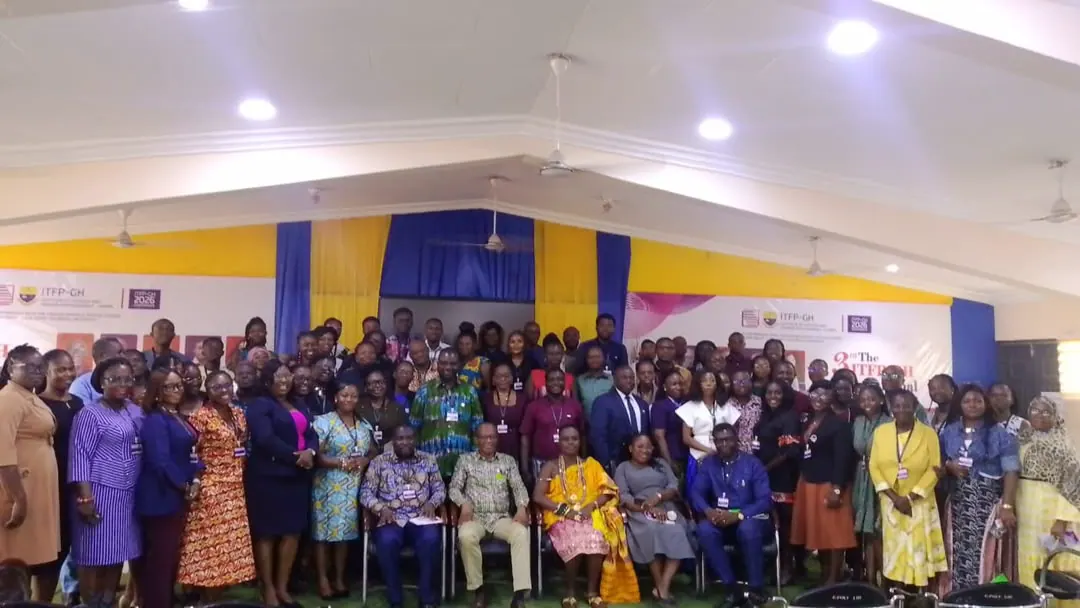
The Institute of Textile and Fashion Professionals (ITFP)-Ghana has called for a dedicated training institute to strengthen standardization, metrology and conformity assessment in the country's textile and garment industry. This institute would equip industry players with technical knowledge and skills to meet international standards, improve product quality and enhance competitiveness of locally manufactured textiles and garments globally. Professor Charles Frimpong, a Professor at Kwame Nkrumah University of Science and Technology (KNUST), made the call at the third international conference of ITFP-Ghana.
The conference, organized in partnership with the Fashion Design and Textiles Studies Department at Cape Coast Technical University (CCTU), was held under the theme "Advancing Textile and Fashion Futures: Smart Innovation, Sustainability, Ethics and Inclusion." Professor Frimpong's keynote address emphasized that the proposed institute would serve as a centre for specialized training, research and technical capacity development in textile testing, measurement, quality assurance and conformity assessment. This would help build consumer confidence, facilitate trade and position Ghana and Africa to benefit from global textile and garment industry opportunities.
The conference brought together industry professionals, designers, manufacturers, academics and stakeholders to discuss strategies for advancing the textile and fashion sector through innovation, sustainability and adherence to international standards. Participants stressed the need for stronger collaboration among government, industry, educational institutions and regulatory bodies to address sector challenges. They also highlighted the importance of equipping professionals with modern skills and technologies to improve productivity, promote ethical practices and support sustainable production.
ITFP-Ghana emphasized that a robust standards framework would help local manufacturers meet market requirements, reduce trade barriers and expand access to regional and international markets. The institute called on stakeholders to support initiatives aimed at strengthening technical education, promoting innovation and creating an enabling environment for industry growth. This would enable Ghana's textile and garment industry to become more competitive, inclusive and resilient.
Professor Richard Acquaye, National President of ITFP-Ghana, welcomed participants and emphasized that transforming Ghana's textile and garment industry required a collective national effort. He questioned how the industry could balance growing demand for creativity, fashion and economic growth with environmental sustainability, ethical production and social responsibility. Acquaye urged industry players to rethink their approach to designing, producing, consuming, reusing, recycling and disposing of textiles and fashion products.
The conference reaffirmed the importance of standards, sustainability and professional development in building a competitive textile and fashion industry in Ghana and Africa. Participants recognized the need for a holistic approach to address industry challenges and capitalize on opportunities. This includes promoting innovation, sustainability and adherence to international standards.
Key stakeholders, including government, industry, academia and regulatory bodies, are expected to collaborate to address the challenges facing Ghana's textile and garment industry. The industry's growth and competitiveness depend on the implementation of strategies discussed during the conference, including the establishment of a training institute for standardization, metrology and conformity assessment.
Key points
- Establishment of a training institute for standardization, metrology and conformity assessment is crucial to enhance the competitiveness of Ghana's textile and garment industry.
- A robust standards framework is necessary for local manufacturers to meet market requirements and expand access to regional and international markets.
- Collaboration among government, industry, educational institutions and regulatory bodies is essential to address challenges facing the textile and fashion sector.