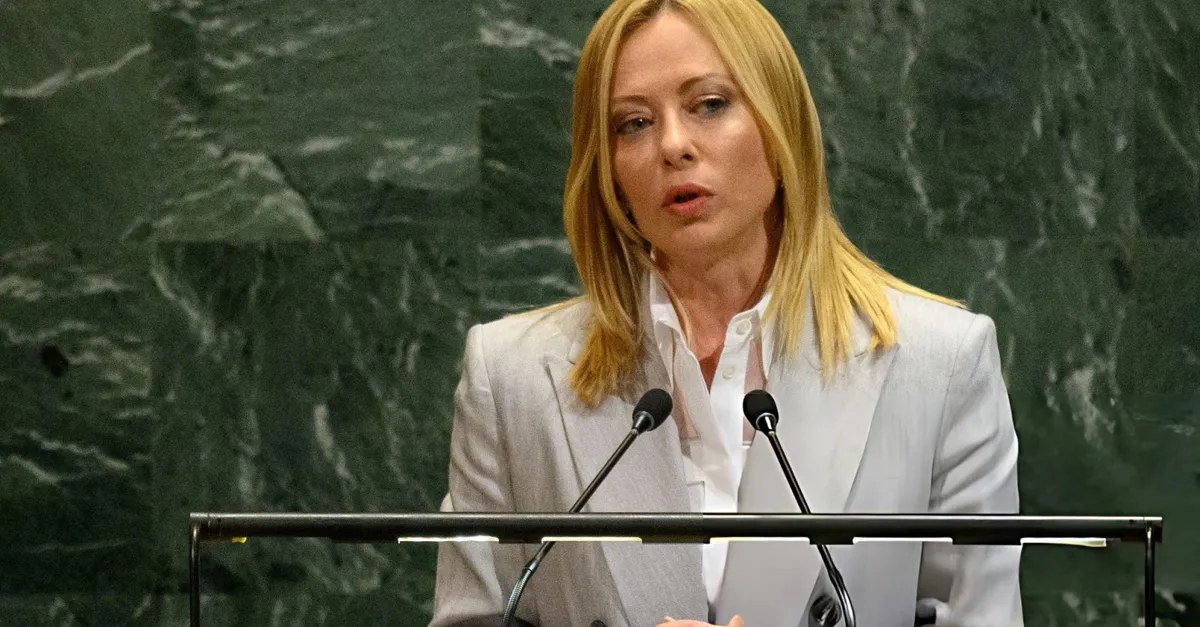
Italian Prime Minister Giorgia Meloni has announced that her government is preparing to introduce new measures to limit the number of foreign students in schools and ban the wearing of hijabs. The measures are part of her government's efforts to address migration and integration. Meloni made the announcement during an annual event organized by the youth wing of her Brothers of Italy party. She stated that the government will soon present a proposal to the Council of Ministers to establish a legal limit on the number of foreign students in each class.
The proposed measures aim to ensure that students can integrate into Italian schools. Meloni argued that having a limited number of non-Italian speaking students in a class can be managed with the help of teachers and classmates. However, when the number of non-Italian speaking students becomes too high, it can lead to neglect rather than integration. The government also plans to require parents of foreign students who struggle to integrate into the education system to learn Italian.
The number of foreign students in Italian schools has been increasing. According to research institution ISMO, students without Italian citizenship make up around 11.6% of total students enrolled in Italian schools, which is approximately 12 students per 100. In the 2023-2024 academic year, the number of students without Italian citizenship exceeded 930,000. This represents a significant increase from 2003-2004, when foreign students made up around 3.5% of total students.
The proposed ban on hijabs has sparked controversy. Meloni linked the ban to the issue of integration, stating that Italian schools should be places where students can attend with their faces uncovered. She emphasized that young women should be able to attend school with their faces visible, and that no one can decide to hide their face in the name of a tradition or alleged tradition.
The issue of integration and migration has been a contentious topic in Italy. The country has been one of the most affected by migration flows in Europe due to its location in the Mediterranean. The government's new measures aim to address these challenges and promote integration. The proposals have sparked debate about the role of religion and cultural identity in Italian schools.
The government plans to make language and integration a priority in education policy. The proposed measures not only aim to regulate the number of foreign students but also require parents who struggle with integration to learn Italian. This approach is part of a broader effort to address the challenges associated with migration flows and cultural diversity in schools.
The proposals are expected to be presented to the Council of Ministers, but the timeline and final details are yet to be determined. The impact of the measures on schools and students will depend on the final legislation. Key points: - Italy plans to limit the number of foreign students in schools - A ban on hijabs in schools is also proposed - The measures aim to promote integration and address migration challenges