Vittorio Reggianini was an Italian painter born in 1858 and passed away in 1939. He was celebrated for his detailed and vibrant portrayals of the middle and upper classes. Reggianini's work primarily focused on children and women, capturing the essence of the bourgeoisie. His artistic journey began at the Academy of Fine Arts in Modena, his hometown, where he later became a professor. Reggianini was part of a group of artists known as "Costume Painters," who sought to revive the grandeur of the past through romanticized depictions of historical culture.
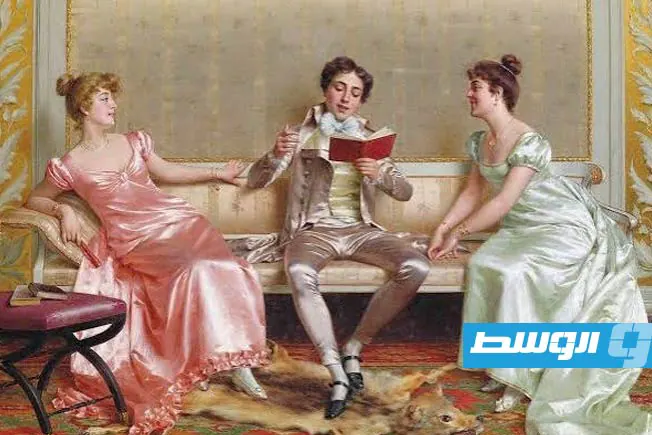
Reggianini's artistic style was significantly influenced by his surroundings and the artists he contemporized with. After moving to Florence, he showcased his work between 1907 and 1911. During this period, his paintings reflected the influence of other Florentine artists, such as Federico Andreotti and Francesco Vinea. The similarities in their subjects and use of models were notable. Reggianini's expertise in capturing the details of fabrics, particularly silk and satin, earned him recognition. Critics praised his ability to render intricate textures and patterns, often stating he was more skilled in this aspect than in other areas of his work.
Reggianini's paintings were distinguished by their sensory qualities, with a particular emphasis on the representation of textiles and embroidered fabrics. Unlike many of his peers, he excelled in depicting not only the opulence of the upper class but also the modest lives of peasants. His work provided a comprehensive view of societal layers during his time. The artist's attention to detail extended to furniture, flooring, and wall decorations, showcasing his versatility and skill.
Throughout his career, Reggianini's work was exhibited in numerous museums, with notable displays at the Mainz Museum in Germany. His contributions to the art world, particularly in historical costume painting, have been well-documented. Reggianini's legacy as a master of his craft continues to be celebrated by art enthusiasts and historians alike.
Reggianini's early life and education played a significant role in shaping his artistic style. Born in Modena, he was exposed to the city's rich cultural heritage from a young age. His enrollment at the Academy of Fine Arts in Modena provided him with a solid foundation in the arts. Under the guidance of experienced instructors, Reggianini honed his skills and developed his unique approach to historical costume painting.
The artist's affiliation with the "Costume Painters" group was instrumental in defining his artistic direction. This collective of artists sought to revive interest in historical culture through their work. Reggianini's participation in this group not only influenced his style but also provided him with opportunities to showcase his work alongside like-minded artists.
Reggianini's impact on the art world extends beyond his own work. He inspired a new generation of artists to explore historical costume painting. His legacy serves as a testament to the enduring appeal of this art form. Reggianini's work continues to be celebrated for its beauty, attention to detail, and historical significance.
Key points
- Reggianini's expertise in capturing the details of fabrics and textiles earned him recognition as a master of his craft.