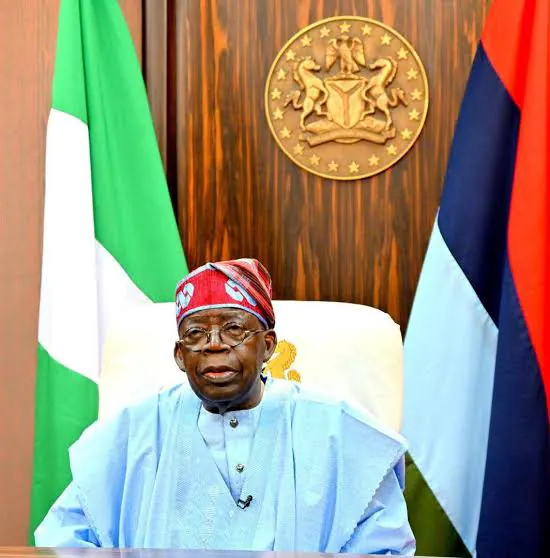
Nigeria marked its 66th Independence Anniversary on October 1, 2026, with President Bola Ahmed Tinubu delivering a nationwide address. Tinubu, who recently returned from a four-week vacation in Europe, highlighted economic gains and achievements under his administration. The government opted for a low-key celebration, including a presidential broadcast, public lecture, and religious services, rather than a traditional military parade.
In his address, Tinubu emphasized the government's central economic objective had shifted from correcting the country's economic course to achieving "shared and widespread prosperity." He acknowledged the efforts of security forces in tackling insecurity but did not specifically address the rising wave of killings, kidnappings, and attacks on communities. According to reports, over 800 people were kidnapped in the last three months, and several others were killed in different attacks across the country.
The President had previously vowed to reduce transportation costs, directing the rollout of 1,000 CNG refuelling stations across the country. He claimed that the initiative had already started yielding results, with Nigerians enjoying cheaper fares. However, many Nigerians countered his claims, saying transportation fares have not reduced. Tinubu's administration had also removed fuel subsidies, generating N15.8 trillion in savings for the federation between June 2023 and December 2025.
Despite the government's savings from subsidy removal, Nigerians continue to bear the brunt of the action. The President defended the policy, warning that returning to the subsidy regime could take the country backwards. He maintained that the reforms were necessary steps to strengthen the country's economy but did not discuss the breakdown of the savings or how they had been invested.
Tinubu's address also omitted specific discussions on electricity challenges, despite his campaign promise to provide constant electricity within four years. The Nigerian Independent System Operator reported a continued decline in electricity generation due to persistent gas supply constraints. Nigeria's 28 electricity power plants have a combined capacity to produce 13,625 megawatts of electricity but produce an average of 5,395.72MW per hour due to existing challenges.
The President mentioned using gas to power new industries and supporting businesses to bring factories back to life in industrial centers. However, he did not provide specific details on how this would be achieved or address the current electricity challenges. Civil society organizations and the National Human Rights Commission have expressed concerns over the rising insecurity and called on authorities to stem the tide of violence.
As Nigerians continue to face various challenges, including insecurity, high transportation costs, and electricity issues, the government's efforts to address these concerns remain unclear. The President's address highlighted the administration's priorities, but many issues were left unaddressed or briefly mentioned. The government's actions and investments to improve the quality of life for Nigerians will likely be closely monitored in the coming months.
Key points
- President Tinubu's 66th Independence Day speech omitted pressing issues, including insecurity and electricity challenges.
- The government has generated N15.8 trillion in savings from subsidy removal.
- Nigerians continue to face high transportation costs and electricity challenges despite government promises.