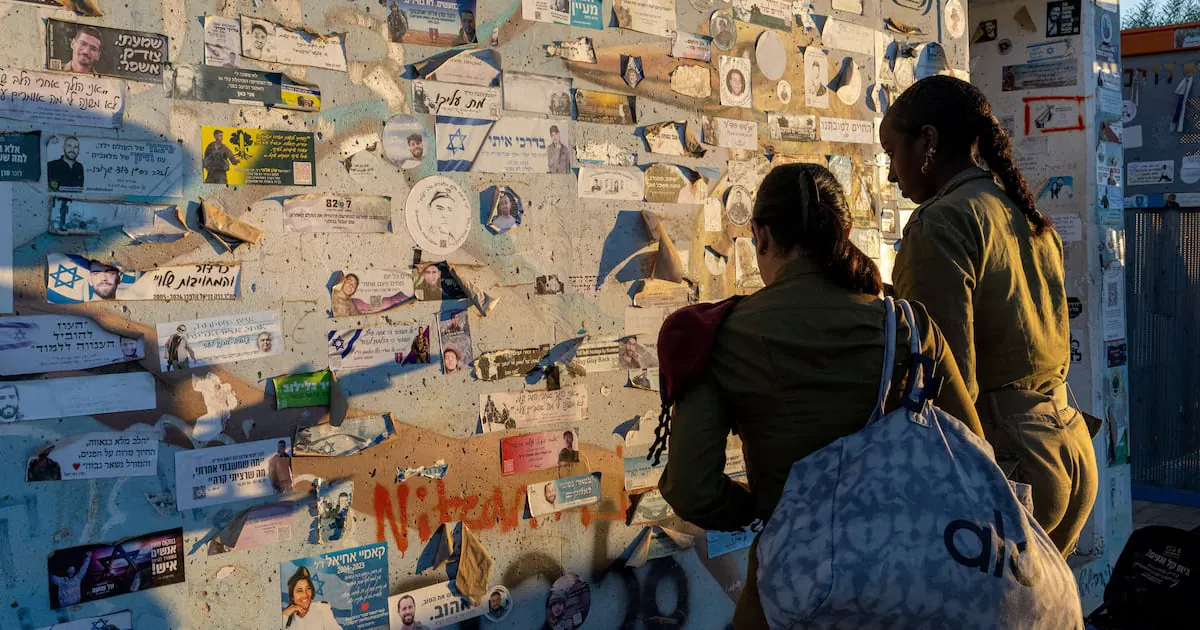
Israelis observed a somber vigil on Wednesday, marking the third anniversary of the October 7 Hamas attack that resulted in 1,200 fatalities and 251 hostages. The attacks, which occurred in 2023, were the deadliest day in Israel's history. In the kibbutz of Kfar Aza, near the Gaza border, residents gathered in silence, standing as a trumpet played a solemn bugle call. A resident read out a roll call of the dead, evoking emotions of grief and pain.
The attack had a profound impact on the residents of Kfar Aza, with many still displaced and traumatized by the events of that day. Zion Regev, a community leader in the kibbutz, stated that most residents have yet to return, and the trauma of October 7 continues to shape their lives. The vigil was a significant event for the community, with Regev saying, "This is the first time we are doing all the things here in the kibbutz. It's a very emotional day, it's a very difficult day for our community, three years after October 7."
Protests were held in Jerusalem, with demonstrators expressing frustration with Prime Minister Benjamin Netanyahu's handling of the security breach. Protesters blamed Netanyahu for refusing an independent inquiry into the attack, holding signs that read: "The people will remember October 7 on October 27," a reference to the upcoming Israeli general election. Shaked Arrad, a protester, emphasized the need for change and accountability, saying, "We need the change and we need hope and we need to know that we have a government that cares about the public and doesn't work also only for themselves."
Netanyahu has rejected blame for the security breach and resisted calls for an independent investigation, frustrating many in Israel, including families of those killed in the attacks. Some families have joined the election race, seeking to bring about change. On the eve of the anniversary, Netanyahu addressed a cabinet meeting, stating that Israelis "remember with grief and pain our heroes who fell in the War of Redemption and our brothers and sisters who fell in the terrible massacre in the Gaza border communities."
The anniversary marks a significant moment in the ongoing conflict, with the October 10, 2025 ceasefire deal leaving Israel in control of about two-thirds of Gaza. Hamas controls the remaining third of the territory, where the 2-million population mostly live in makeshift tents and bombed-out buildings. The ceasefire has not brought an end to violence, with Gaza medics reporting that Israeli air strikes in Beit Lahia and Khan Younis had killed at least two Palestinians and wounded others.
The Israeli military confirmed that it had struck a militant target in Beit Lahia, but did not provide details on the strike in Khan Younis. The ongoing violence has contributed to a challenging situation in Gaza, with residents facing significant hardship. The anniversary serves as a reminder of the devastating consequences of the conflict and the need for a lasting resolution.
The Israeli general election, set for October 27, is being viewed as a referendum on Netanyahu's long tenure in power. Election polls show that neither Netanyahu nor his main competitors would muster enough seats in parliament to form a coalition if a vote were held today. The outcome of the election may have significant implications for the future of Israel and its relations with Gaza and the international community.
Key points
- The October 7 Hamas attack resulted in 1,200 fatalities and 251 hostages, making it the deadliest day in Israel's history.
- Israel's subsequent bombardment and ground operations in Gaza have allegedly killed more than 74,000 people.
- The anniversary of the attack has sparked protests and calls for accountability, with many Israelis demanding an independent inquiry into the security breach.