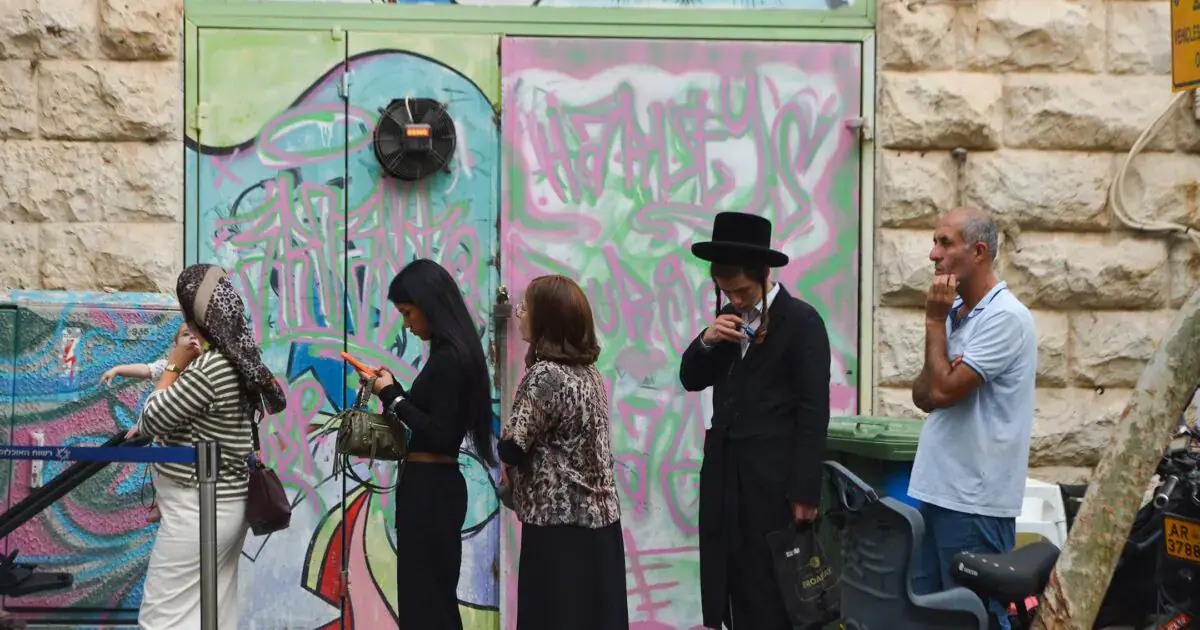
Israelis went to the polls on Tuesday in an election being hailed as the most consequential in the country's 78-year history. Over 7.3 million Israelis were eligible to vote, with many viewing the election as a referendum on the future character of the country as a democratic and liberal state. The election comes amid security concerns, with Prime Minister Benjamin Netanyahu framing it as a fight for "Israel's existence" following a mass attack by Hamas on October 7.
The election is seen as a crucial test for Netanyahu and his coalition of far-right and ultra-Orthodox parties, which were in office when the Hamas attacks occurred. Facing off against Netanyahu's bloc is an ideologically diverse group of opposition parties led by former army chief Gadi Eisenkot. Analysts say the vote is more about domestic issues, particularly Netanyahu's performance and accountability for the people who were in charge on October 7.
According to data from the Central Elections Committee, 12,018 polling stations were set up across the country, with around 18,000 ballot boxes and 450 million ballot papers printed for the election. Thousands of election workers and volunteers staffed the polling stations, while around 20,000 police officers were deployed nationwide to ensure that all eligible voters could safely reach the polling stations and exercise their right to vote.
The election committee also used approximately 15,000 cameras to help detect irregularities at polling stations, while police cyber units worked to prevent the spread of disinformation online. These measures were implemented as the country prepared for a closer-than-ever and high-stakes election, with neither of the main political blocs projected to secure the 61 seats needed for a majority in the 120-member Knesset.
Although Israelis do not vote directly for a prime minister, Netanyahu and Eisenkot are the leading contenders to form the next government. The outcome will depend on which party leaders can assemble a parliamentary majority. Most polls published in the final days of the campaign put Netanyahu's bloc at around 50 seats, while Eisenkot's Yashar party and its potential partners appeared better positioned but still short of a majority.
The two Arab-majority political groupings, the Joint List and Ra'am, were projected to win a combined 14 or 15 seats, but neither was expected to join a government led by Netanyahu. Some analysts believed that one or both could support an opposition-led minority government, although the terms of any such arrangement remained uncertain. Three other parties were also hovering near the electoral threshold, and their success could significantly alter the distribution of seats.
Analysts predicted that the most likely scenario was that neither bloc would win a clear majority, leading to a possible repeat of the 2019-2020 election cycle. In this scenario, Netanyahu's aim would be to stay on as prime minister during additional rounds, while the change bloc would need to increase its numbers enough to replace the government without depending on Arab parties.
Key points
- The election is seen as a referendum on the future character of Israel as a democratic and liberal state.
- The outcome of the election will depend on which party leaders can assemble a parliamentary majority.
- The election is being viewed as a crucial test for Prime Minister Benjamin Netanyahu and his coalition of far-right and ultra-Orthodox parties.