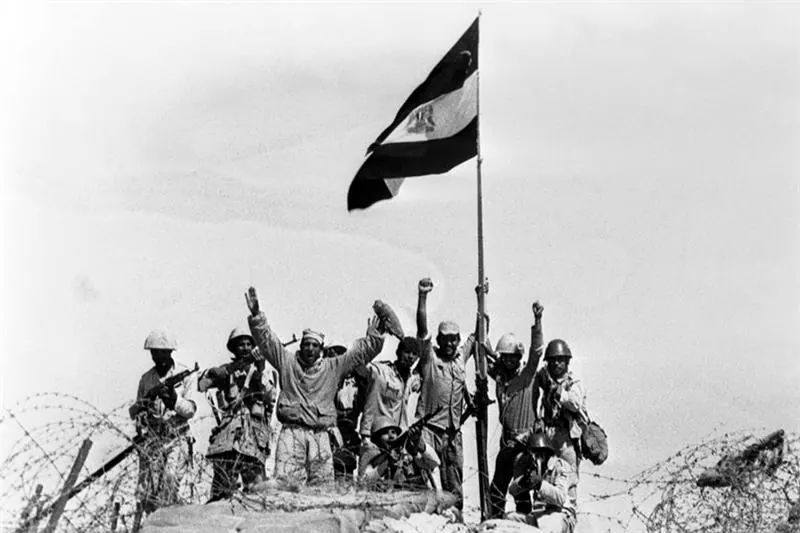
On October 12, 1973, Maariv columnist Shalom Rosenfeld urged Israeli newspapers to "tell us the truth" about the war, as reports of Egyptian gains and Israeli losses contradicted initial reassuring accounts. This appeal came five days after newspapers acknowledged Egyptian troops crossing the Suez Canal and capturing Israeli strongpoints. Despite this, newspapers portrayed these gains as limited, containable, or already being reversed.
Israeli newspapers, including Maariv, Davar, and Al HaMishmar, reported Egyptian advances but downplayed their significance. Predictions of reversal frequently softened the implications of Egyptian gains, and accounts of individual Israeli successes were emphasized. Assertions that the wider defensive system remained intact added to the reassuring picture. This mixed reporting has been examined in later Israeli research, which helps explain how this reassuring picture survived.
On October 7, 1973, Maariv's front page announced heavy defensive battles in Sinai and the Golan Heights, while asserting that Egyptians had failed to move armor across the canal during the night. However, the accompanying report acknowledged Egyptian forces at two main bridgeheads, where bridges had been established, and small armored forces had crossed. The report maintained that neither Egypt nor Syria had achieved anything of significance along the fronts.
Davar's edition on October 7 reproduced Prime Minister Golda Meir's assurance that "we were not taken by surprise." Reports of fighting and Israeli military successes surrounded the official message. By October 8, however, Davar reported that 400 Egyptian tanks had crossed the canal. This substantial Egyptian armored presence east of the canal was acknowledged early, alongside accounts emphasizing Israeli effectiveness.
The capture of Israeli strongpoints was also reported from the outset. Al HaMishmar's front page on October 7 stated that Egyptians had crossed at about five points between the strongpoints, constructed two bridges, and captured several positions. However, the report immediately followed these admissions with assertions that Egyptian armor had suffered very heavy losses and had been forced to retreat in most places.
A study by Ephraim Lapid and Ron Gavian, published in 2023, examined the reporting process during the war. The study recorded that a correction contradicting reassuring broadcasts about containing the Egyptians was blocked on October 8. A military liaison rejected the correction due to lack of updated information and inconsistencies with other dispatches. This episode documents a correction being blocked amid failures in information flow.
By October 10, the prospect of a quick conclusion to the war was being challenged prominently. Al HaMishmar and other newspapers described Israeli counterattacks and large Egyptian and Syrian equipment losses. However, the language of isolated pockets suggested containment, and the accompanying details described an Egyptian foothold that continued to receive reinforcements.
Key points
- Israeli newspapers' coverage of the 1973 October War showed a mixed tone, with reassuring reports alongside acknowledgments of Egyptian gains.
- The Israeli military's handling of information and corrections during the war influenced the reporting.
- The war's early coverage downplayed the significance of Egyptian advances and emphasized Israeli effectiveness.