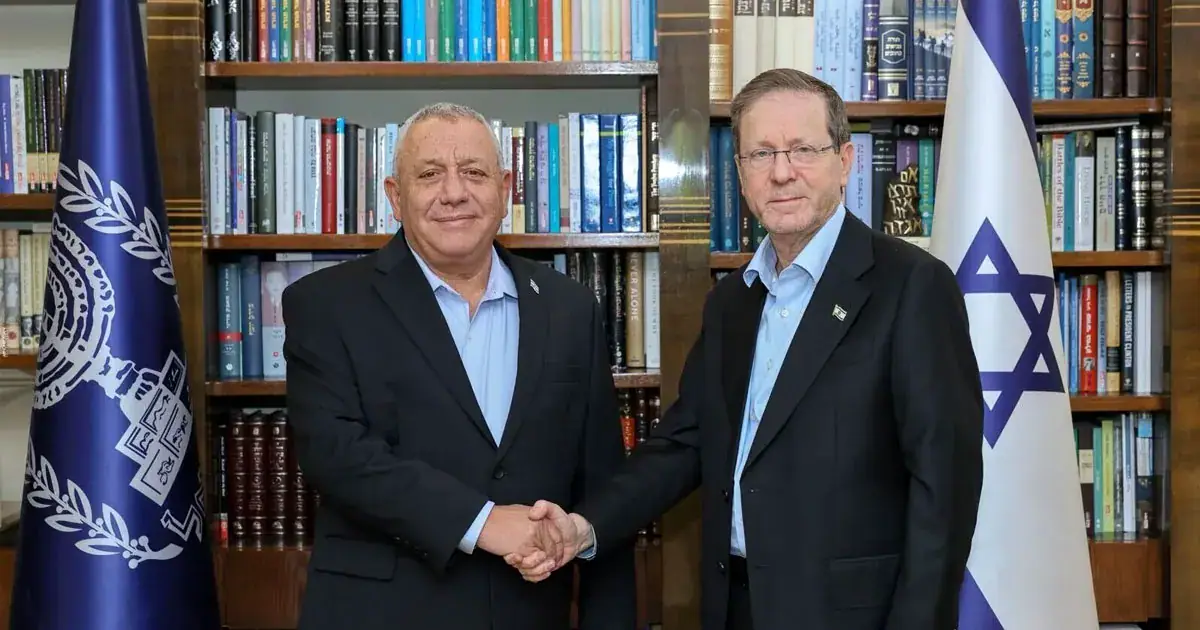
On November 7, Israeli President Isaac Herzog announced that he has tasked Gadi Eisenkot with forming the country's next government. This decision comes after Eisenkot received 67 recommendations, surpassing Benjamin Netanyahu's 46. The recommendations from Arab parties, including Ra'am and the Joint List, played a crucial role in Eisenkot's selection. This development marks a significant shift in Israeli politics, where Arab parties' support has become essential in forming a government.
The 19 seats won by Arab parties in the October 27 elections have had a substantial impact on the formation of the next government. The Joint List and Ra'am, led by Mansour Abbas, unanimously recommended Eisenkot, while the Ultra-Orthodox party, United Torah Judaism, chose not to recommend anyone. This has led to a change in the balance of power, allowing Eisenkot to take the lead in forming a government. However, it remains to be seen whether he can successfully form a coalition.
The selection of Eisenkot has significant implications for Israeli politics, as it challenges the long-standing "Jewish majority" rule. For decades, Israeli politics has been guided by an unwritten rule that decisions affecting the state's future must be based on a "Jewish majority." However, with Arab parties now playing a crucial role in government formation, this doctrine is being reevaluated. The 2018 Nation-State Law, which enshrined the Jewish people's right to national self-determination, has been criticized for marginalizing Arab citizens.
Eisenkot faces significant challenges in forming a government, particularly from within his own camp. Avigdor Liberman and Naftali Bennett have expressed their opposition to a government that relies on Arab parties' support. Liberman has also ruled out a minority government supported by Arab parties from outside. Eisenkot has set conditions for any potential partnership, including universal conscription, recognition of Israel as a Jewish state, and designation of Hamas as a terrorist organization.
The Arab parties that recommended Eisenkot have made it clear that they will not participate in the government. Ahmad Tibi, a member of the Joint List, warned that "without the Arab parties, there will be no change." This highlights the complexities of Israeli politics, where Arab parties' support is crucial, but their participation in government is not guaranteed. The experience of Benny Gantz in 2020, who received the mandate with Arab parties' support but ultimately formed a government with Netanyahu, serves as a cautionary tale.
The current situation presents an opportunity for change in Israeli politics, particularly with regards to the status of Arab citizens. The fact that Arab parties' support is now essential for government formation could lead to a reevaluation of their role in Israeli society. However, this will require a shift in the country's ethno-national framework, which has long marginalized Arab citizens. Eisenkot's conditions for partnership highlight the challenges that lie ahead.
As Eisenkot begins his 28-day term to form a government, he faces significant challenges. He must navigate the complexities of Israeli politics, where Arab parties' support is crucial, but their participation in government is not guaranteed. The outcome will have far-reaching implications for Israeli society, particularly with regards to the status of Arab citizens. Ultimately, the question remains whether Israel will be able to govern with the support of its Arab citizens, rather than relying on their votes as a mere formality.
Key points
- Israeli President Isaac Herzog has tasked Gadi Eisenkot with forming the country's next government, thanks to support from Arab parties.
- The 19 seats won by Arab parties in the October 27 elections have had a significant impact on the formation of the next government.
- The selection of Eisenkot challenges the long-standing "Jewish majority" rule in Israeli politics.