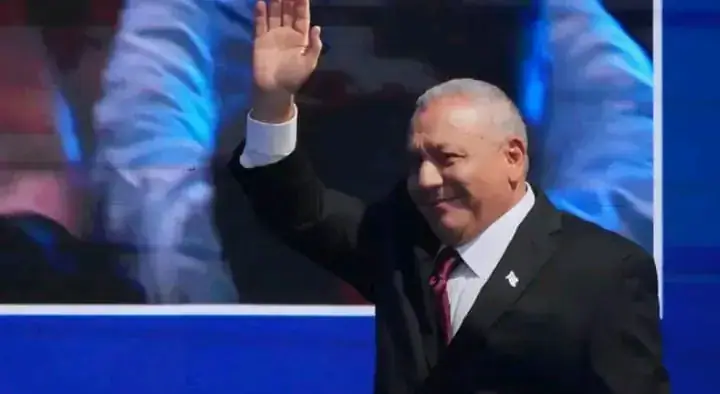
Israeli President Isaac Herzog announced on November 7, 2026, that he has given Gadi Eisenkot the first opportunity to form a coalition government following the October 27 elections. Herzog informed Eisenkot of his intention on November 7 and invited him to the presidential residence the next day at 5 pm to officially hand over the mandate. This announcement does not yet mean a government is formed; Eisenkot is merely a candidate tasked with constituting one.
Neither Eisenkot nor Prime Minister Benjamin Netanyahu secured a clear majority in the vote. Eisenkot, a former army chief and leader of the Yashar party, has emerged as Netanyahu's main adversary. During Herzog's consultations, factions representing 67 lawmakers recommended Eisenkot, while 46 backed Netanyahu. This 21-vote difference, described by Yashar as the strongest support for a candidate since 2015, influenced Herzog's decision.
However, Herzog tempered the significance of this arithmetic, noting that he is not obligated to choose the most recommended candidate. Instead, he must determine who can form a government, considering the "mutual vetoes" between and within blocs. The 67 recommendations for Eisenkot exceed his own camp, with Netanyahu's bloc, including ultra-orthodox parties, holding 53 seats in the new parliament, compared to 48 for Eisenkot's bloc.
Eisenkot's bloc has refused to ally with Arab parties, which could provide a majority, but Arab leaders, frustrated with Netanyahu's policy and his far-right allies, have still recommended Eisenkot. A recommendation does not guarantee participation in a coalition, posing a challenge. Another significant signal is that the United Torah Judaism party, which had supported Netanyahu in the previous five elections, refused to recommend him again, without committing to Eisenkot.
This withdrawal denies Netanyahu a historical ally without ensuring Eisenkot's support. The path to forming a government is complex, with various factions and interests at play. Eisenkot's ability to navigate these dynamics and secure the necessary support remains uncertain. The outcome will likely have significant implications for Israel's future.
Gadi Eisenkot's designation as the candidate to form a government marks a setback for Netanyahu, Israel's longest-serving leader. Netanyahu's prospects of retaining power have been diminished, but he has not been entirely ruled out. The coming days will be crucial in determining the composition of the next Israeli government and the policies it will pursue.
The decision by President Herzog to task Gadi Eisenkot with forming a government reflects the intricate nature of Israeli politics, where coalitions and alliances play a critical role. The success of Eisenkot's efforts will depend on his ability to build a stable coalition that can govern effectively. This development has set the stage for a period of intense political maneuvering in Israel.
Key points
- Gadi Eisenkot has been chosen by Israeli President Isaac Herzog to form a coalition government.
- The decision marks a setback for Prime Minister Benjamin Netanyahu's prospects of retaining power.
- Eisenkot faces the challenge of securing support from various factions to form a stable government.