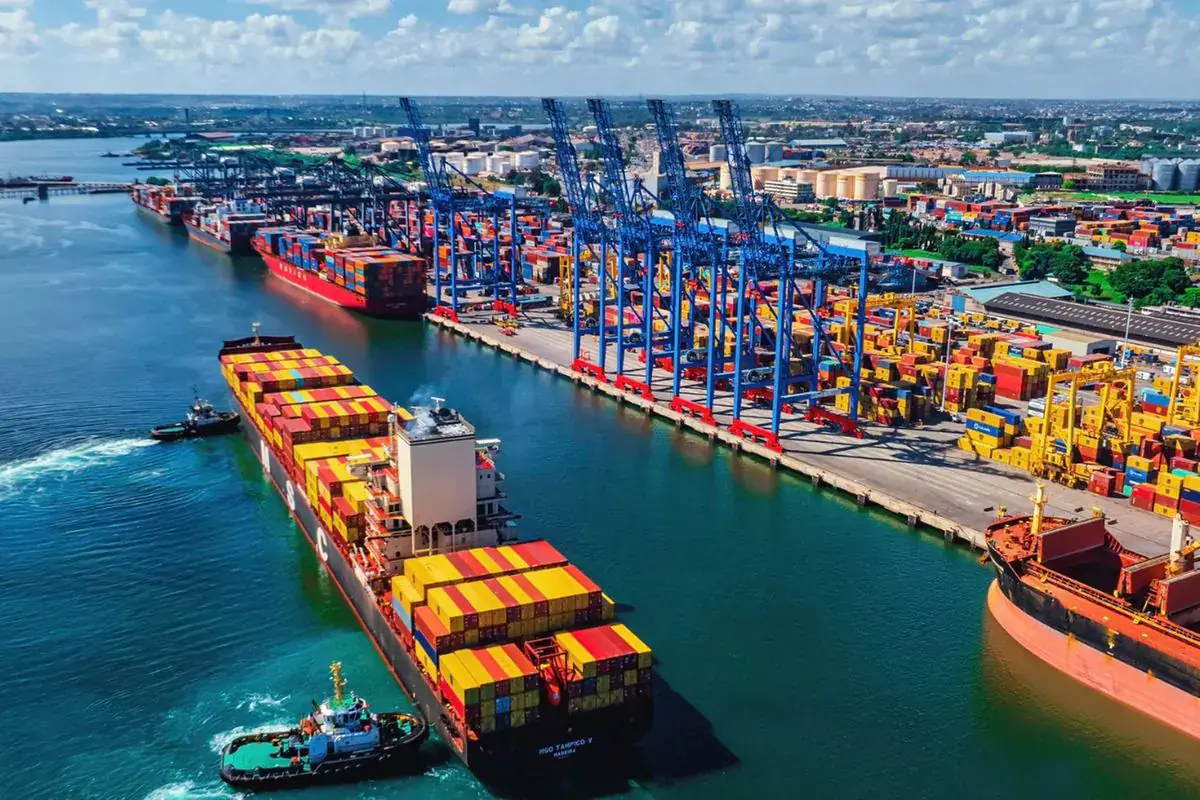
The Port of Dar es Salaam has seen significant growth in container volumes, reaching 418,826 twenty-foot equivalent units (TEUs) in the first ten months of 2026. This represents a substantial increase from 256,328 TEUs in the corresponding period in 2025. The growth is attributed to a major investment and modernisation drive at the port, led by global port operator DP World. The investment has increased capacity and improved operational efficiency, strengthening the port's position as one of East Africa's key trade hubs.
The terminal has recorded a monthly high of 37,652 roll-on/roll-off (RoRo) units in October, taking vehicle handling in the first ten months to 271,443 units. This is compared with 175,122 units in the same period in 2025. The investment drive, launched in April 2024, is a five-year, $250 million commitment by DP World. So far, $175 million has been invested in infrastructure, modern equipment, and technology at Terminal 1. The terminal has a 1,580-metre quay covering berths 0 to 7.
Before the investment, congestion, infrastructure constraints, and lengthy vessel waiting times frequently disrupted maritime trade and regional economic activity. The partnership was established to address these challenges by increasing cargo-handling capacity, reducing vessel waiting times, and improving trade efficiency. The upgraded infrastructure has generated more than $750 million in direct savings for trade. The investment's impact was reflected in the terminal's October performance, with significant throughput recorded across its operations.
According to DP World, the terminal's cargo-handling performance is an important indicator of trade activity and regional economic integration across East and Central Africa. Between January and October 2026, cargo volumes increased across all four main terminal categories compared with the corresponding period in 2025. Dry bulk handling reached a record monthly volume of 508,556 tonnes in October, taking the cumulative total for the first ten months to approximately 3.39 million tonnes.
General cargo throughput also rose to approximately 2.08 million tonnes during the ten months, compared with 1.94 million tonnes in 2025. Growth across dry bulk, general cargo, RoRo, and container handling points to increased trade activity through the port and improved logistics links serving land-linked economies in the region. The modernisation of port operations has created more than 3,500 direct jobs, supporting livelihoods and helping develop skills in the maritime sector.
A comparison of terminal performance since DP World began operations in 2023 shows a 211 percent increase in container volumes, a 118 percent rise in general cargo, a 68 percent increase in RoRo units, and a 29 percent expansion in dry bulk handling. For Tanzanian importers, exporters, supply chain providers, and inland transport operators, this growth could translate into increased commercial activity, shorter transit times, and greater certainty across the logistics chain.
As DP World continues implementing its five-year investment plan, the Port of Dar es Salaam is seeking to strengthen its position as a regional maritime gateway serving Tanzania and neighbouring economies. The terminal's economic impact extends beyond Tanzania's borders, serving as a multi-purpose gateway linking Tanzania and more than nine land-linked neighbouring countries to international supply chains. Reliable terminal operations are important to businesses and communities, and DP World remains focused on working with customers and port stakeholders to support trade flows.
Key points
- DP World's $250 million investment in the Port of Dar es Salaam has increased capacity and improved operational efficiency.
- The port has seen significant growth in container volumes, reaching 418,826 TEUs in the first ten months of 2026.
- The modernisation of port operations has created more than 3,500 direct jobs, supporting livelihoods and helping develop skills in the maritime sector.